How to Choose Composite Needle Punched Nonwoven Specifications? A Buyer’s Guide to GSM, Thickness, and Width
For importers, wholesalers, distributors, and product manufacturers, one of the most common questions when purchasing composite needle punched nonwoven is: What GSM, thickness, and width should I choose?
Many buyers instinctively believe that a thicker and heavier material must be better. In reality, different applications have very different requirements for needle punched nonwoven felt. From floor protection and Painter Felt to automotive interiors and industrial filtration, each application may require a different balance of flexibility, sound absorption, cushioning, waterproofing, abrasion resistance, and structural stability.
Therefore, there is no single “universal specification” suitable for every product. The correct purchasing approach is to determine the material specification according to the following sequence:
Final Application → Performance Requirements → Fiber Type → Punching Density → GSM → Thickness → Width → Roll Length → Composite Structure
By working backward from the final application, buyers can select a specification that matches the actual product requirements instead of simply choosing the heaviest or thickest material.
Why Shouldn’t Buyers Choose Composite Needle Punched Nonwoven Based Only on GSM?
GSM, or grams per square meter, represents the weight of the material per square meter and is one of the most common purchasing specifications for nonwoven products.
However, the same GSM does not necessarily mean the same performance. Composite needle punched nonwoven products with the same GSM may use different fiber combinations, punching densities, and thicknesses. As a result, they can differ significantly in strength, hand feel, density, and overall performance.
For example, common needle punched nonwoven products can cover a wide range of GSM specifications, while different manufacturing processes can also produce materials with very different thicknesses and structures. This means the industry can provide everything from lightweight materials for separation and insulation to much heavier materials for cushioning and protection.
The most important consideration when choosing GSM is therefore the performance required by the final product.
If the application requires lightweight construction, air permeability, and cost control, a lower GSM may be more appropriate. If it requires abrasion resistance, cushioning, and structural strength, a higher GSM may be considered.
For Floor Protection Roll, the buyer needs to balance protection, absorbency, roll weight, and installation convenience. For industrial filtration materials, the fiber structure and density need to be determined according to the filtration medium and required airflow.
Therefore, when purchasing composite needle punched nonwoven, GSM should be treated as a basic specification, not an isolated quality indicator. GSM needs to be evaluated together with fiber structure, punching density, thickness, and the final application rather than simply assuming that higher GSM is always better.
How Should Buyers Choose Thickness? Structural Stability and Hand Feel Matter
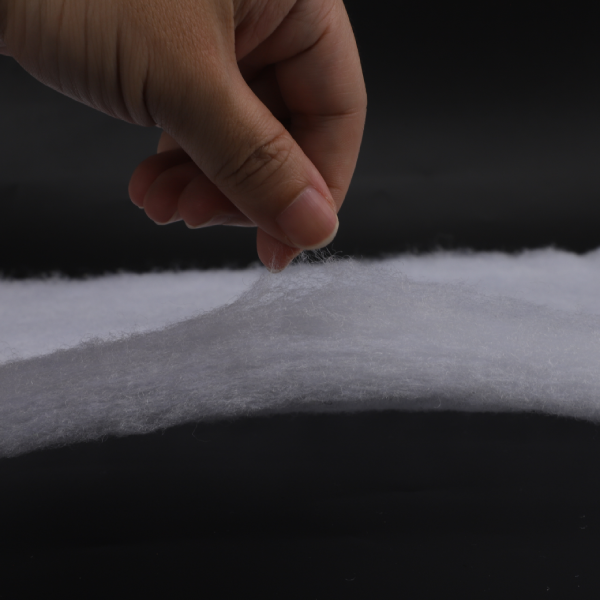
Thickness is an important factor affecting the cushioning performance, sound absorption, and installation characteristics of needle punched nonwoven felt.
However, products with similar thicknesses can still have very different performance because of differences in GSM, fiber type, density, and needle punching process.
For example, two products may have a similar thickness, but if one uses a relatively loose, low-density fiber structure while the other has a denser construction, their hand feel, compression resistance, and abrasion resistance can be significantly different.
Therefore, buyers should first define the function and final application instead of simply telling a supplier, “I need a thick material.”
A better approach is to determine the target GSM and hand feel first, and then allow the manufacturer to adjust the thickness according to the fiber type and punching density.
For products requiring stronger cushioning performance and resilience, a higher GSM combined with an appropriate thickness may be suitable. For applications with limited installation space where a compact structure is required, a higher-density but thinner material may achieve the required performance.
For long-term OEM purchasing, GSM + Thickness should be clearly included in the product specification sheet and used as a reference standard for future production. This is much more reliable than selecting specifications based only on the appearance or feel of one sample.
Width and Roll Length: Consider Downstream Processing and Production Efficiency
Many buyers pay close attention to GSM and thickness but overlook how width and roll length affect production cost and operating efficiency.
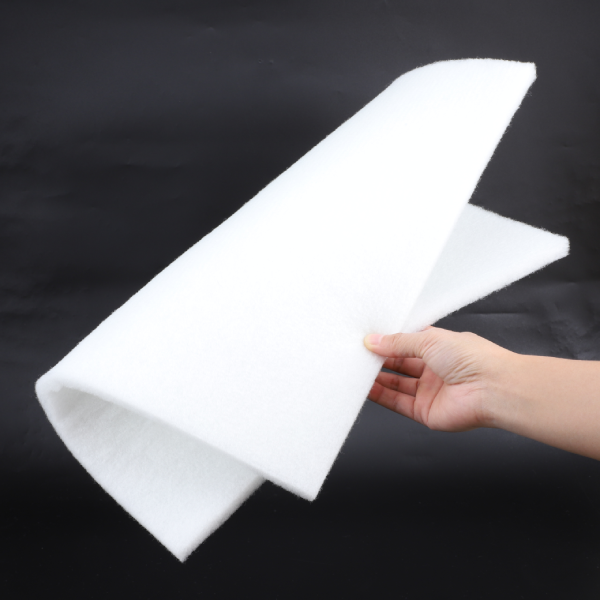
For roll materials, width directly influences downstream cutting, automated installation, and material utilization. If the width does not match the buyer’s processing equipment or installation environment, it may result in additional edge waste or make installation more difficult.
For example, floor protection materials may use widths such as 1 meter or 2 meters depending on the working area, installation method, and ease of handling. For industrial automated production, the material width should also be compatible with the feeding width of the processing equipment.
Roll length affects transportation, container loading, handling, and continuous installation. Rolls that are too short may create more joints and interruptions during installation, while rolls that are too long may become too heavy and difficult to handle.
Overseas buyers usually determine an appropriate roll length according to the target market, packaging method, transportation requirements, and installation process. For example, roll lengths may be designed around 20–50 meters or calculated according to container loading requirements.
For OEM orders, both width and roll length can be customized. Confirming these requirements with the manufacturer at an early stage can help buyers reduce downstream processing costs and improve material utilization.
Fiber Type and Punching Density: The Foundation of Material Performance
Before determining GSM and thickness, buyers should first select an appropriate fiber type.
Different fibers can have a significant impact on the performance and application range of needle punched nonwoven materials.
Polyester needle punched nonwoven is widely used because of its good durability and strength. Fibers such as viscose, polypropylene, and cotton can provide different combinations of softness and moisture-related properties. Specialty fibers such as aramid and PPS can be considered for applications requiring higher temperature resistance or specific flame-retardant performance.
The fiber type determines the basic performance range of the material, while punching density affects the degree of fiber entanglement and structural stability.
Under the same GSM, a product with a higher punching density may have a denser structure and different strength and thickness characteristics compared with a product produced with a lower punching density.
Therefore, buyers should not only tell the manufacturer a surface requirement such as “I need waterproof material.” They should also explain the actual operating environment and performance objectives.
Does the product need moisture resistance or oil resistance? Does it require thermal insulation or sound absorption? Is softness important? Are durability and abrasion resistance more important?
A professional custom nonwoven felt manufacturer can use the final application to help determine the appropriate fiber composition and needle punching structure instead of simply producing a material according to a single specification provided by the buyer.
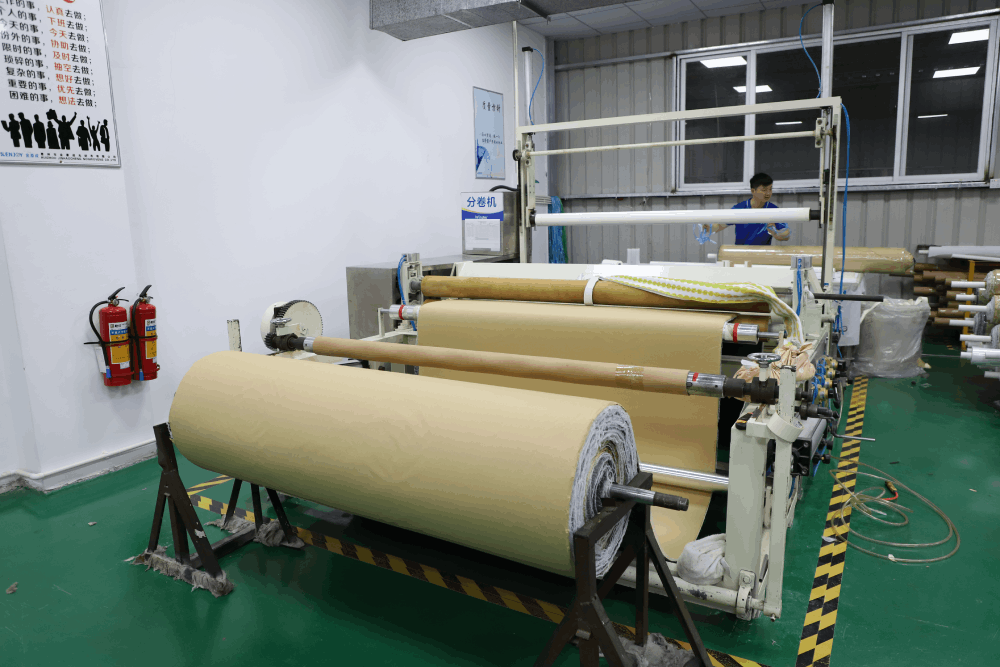
Backing Material: Adding Extra Functional Performance
In addition to the basic structural specifications discussed above, buyers may need to consider backing materials and composite structures when the final product requires additional functionality.
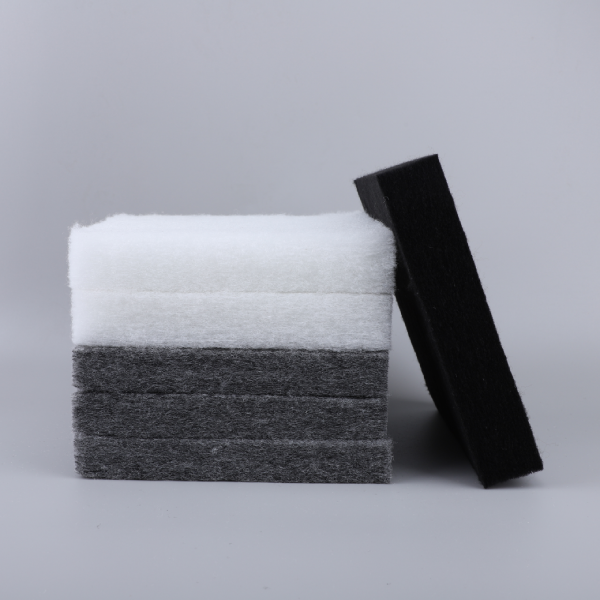
Common composite needle punched nonwoven structures can use PE, TPE, PVC, EVA, and other materials as waterproof, anti-slip, cushioning, or reinforcement layers laminated to the back of the needle punched felt.
For example, PE waterproof backing can significantly improve the water resistance of composite needle punched felt and is widely used in protective products such as Floor Protection Roll and Painter Felt.
If a product requires greater flexibility or specific reusability requirements, TPE backing can be considered. EVA or sponge layers can add cushioning and insulation characteristics, while PVC or other fabric layers can improve abrasion resistance or decorative properties.
The selection of backing material should always be based on the actual application environment.
For long-term moisture-exposed construction applications, PE or TPE backing may be considered. For environmental or recycling-related requirements, buyers can select materials according to the specific product design and market requirements. Colors can also be customized according to branding and product requirements.
The backing material, GSM, thickness, and punching density should be considered as a complete structure rather than as independent specifications.
Application / Product | Key Parameters | Specification Selection Approach |
Floor Protection Roll | GSM, Thickness, Width, Waterproofing, Abrasion Resistance | Balance protection, material weight, and installation convenience. Width and roll length should match the construction area. An appropriate GSM and thickness with PE backing can be selected according to the required protection level. |
Painter Felt | GSM, Absorbency, Liquid Resistance, Backing | Select GSM according to paint protection and absorption requirements. PE backing can improve water resistance. Roll width should match the working area and installation method. |
Automotive Interior / Sound Insulation Mat | GSM, Thickness, Density, Flexibility | Determine thickness and density according to vehicle structure and available space. More porous fiber structures may be considered for sound absorption, while lightweight fibers can help meet weight requirements. |
Industrial Filtration Material | Fiber Type, Density, Air Permeability, Filtration Performance | Select GSM and thickness according to the filtration medium and airflow requirements. Multi-layer composite structures may be used to improve filtration performance, while specialty fibers can be selected for specific temperature or chemical resistance requirements. |
Sound Absorption / Thermal Insulation Material | Fiber Type, Thickness, Porosity | Select porous structures and appropriate thickness according to sound absorption or insulation requirements. A lofted needle punched layer can be combined with aluminum foil or sponge backing when required by the application. |
Cushioning Protection Material | GSM, Thickness, Resilience | Select a relatively higher GSM and appropriate thickness with a dense needle punched structure. Sponge or EVA layers can be laminated to increase cushioning and compression performance. |
Other Customized Engineering Applications | Performance Requirements, Special Functions | Develop the structure according to the specific application, such as anti-slip dot coating or surface treatment. Special backing materials and surface treatments can also be considered for requirements such as flame resistance or oil contamination protection. |
Table: Reference approach for selecting composite needle punched nonwoven specifications for different end applications.
By working backward from the product requirements, buyers can avoid unnecessary costs caused by simply choosing higher GSM or greater thickness.
Why “Thicker and Heavier Is Better” Is Not the Right Purchasing Logic
A common mistake in nonwoven purchasing is to assume that a higher GSM or greater thickness automatically means a better product.
In reality, material performance is determined by a combination of fiber type, GSM, thickness, punching density, composite structure, and processing technology.
A material that is unnecessarily heavy may increase transportation and handling costs without providing meaningful additional value for the final application.
Likewise, an excessively thick material may not fit downstream processing equipment or the installation space of the finished product.
The better purchasing strategy is therefore to identify the actual performance requirements first and then select the most appropriate material structure.
How Can Buyers Quickly Determine the Right Composite Needle Punched Nonwoven Specifications?
When requesting a quotation from a supplier, buyers should provide more than just “GSM and width.”
A more complete specification request should include the final application, required performance, fiber type, target GSM, thickness, width, roll length, punching density, backing material, color, surface treatment, and packaging requirements.
For example, a buyer looking for floor protection material should explain whether the product is intended for renovation, painting, construction, or another environment. The manufacturer can then recommend an appropriate combination of GSM, thickness, width, roll length, and waterproof backing.
For industrial applications, buyers should provide information about the operating environment, filtration requirements, temperature, chemical exposure, compression, abrasion, or other relevant conditions.
The more clearly the final application is defined, the more accurately a manufacturer can develop the material specification.
Why Do OEM Buyers Need the Manufacturer to Participate in Specification Design?
For standard products, buyers can often select from existing specifications. However, for OEM projects, the correct specification may not be obvious at the beginning.
A professional manufacturer can evaluate the relationship between fiber type, punching density, GSM, thickness, width, roll length, and backing material and help buyers develop a structure suitable for the final product.
This is particularly important when the buyer is developing a new product or needs to replace an existing material.
Instead of simply asking, “What is your heaviest felt?” buyers can ask a more useful question:
“What material structure would you recommend for my application?”
This changes the purchasing process from simply buying a standard material to developing a material solution around the final product.
Why Is Jinhaocheng Suitable for Customized Composite Needle Punched Nonwoven Specifications?
For overseas buyers looking for a stable long-term supplier, choosing a real manufacturing partner is important.
Jinhaocheng was established in 2005 and specializes in the development and production of needle punched nonwoven materials. The company operates a production base of approximately 26,000 m², with 15 fully automated needle punching production lines and annual production capacity of more than 10,000 tons.
As a needle punched nonwoven felt manufacturer, needle punched felt manufacturer, and needle punched felt factory China, Jinhaocheng provides OEM/ODM customization based on customer requirements.
From GSM, thickness, width, and roll length to fiber type, backing material, and surface treatment, specifications can be adjusted according to the final application and production requirements.
Jinhaocheng also uses 100% virgin raw material for relevant products, helping provide more consistent material quality for buyers who prioritize product performance and batch stability.
For importers, wholesalers, distributors, and brands, Jinhaocheng can provide composite needle punched nonwoven, PE/TPE waterproof composite felt, Floor Protection Roll, Painter Felt, and other customized needle punched felt solutions.
The goal is not simply to provide a specification sheet, but to help buyers turn their application requirements into a stable and repeatable production specification.
How Should Buyers Request a Quotation for Composite Needle Punched Nonwoven?
When sending an inquiry to a manufacturer, buyers should provide as much information as possible about the required material.
The basic information can include the final application, fiber type, GSM, thickness, width, roll length, punching structure, backing material, color, surface treatment, packaging, and estimated order quantity.
If the buyer does not know the exact GSM or thickness, it is not necessary to guess.
Instead, provide the manufacturer with the application, required performance, existing sample, drawings, photos, or other available product information. A professional custom nonwoven felt manufacturer can then evaluate the requirements and recommend a suitable specification.
This approach is especially useful for OEM and new product development projects because it allows the manufacturer to participate in the material selection process from the beginning.
Why Is Sample Testing Still Necessary After the Specification Is Confirmed?
Even when GSM, thickness, width, and backing material have been confirmed, sample testing remains important before mass production.
The reason is that the actual performance of a composite needle punched nonwoven product depends on the complete material structure rather than a single specification.
Buyers should verify whether the sample meets the required GSM, thickness, dimensions, strength, flexibility, lamination performance, waterproofing, abrasion resistance, and other application-specific requirements.
Once the sample has been approved, the confirmed specifications can be used as a reference for trial production and future bulk orders.
This helps reduce the risk of differences between the sample and mass-produced material and provides a clearer quality standard for long-term purchasing.
Why Is Specification Customization Important for Long-Term Purchasing?
Long-term buyers rarely purchase material only once. They need a supplier that can reproduce the same specification consistently across multiple orders.
For this reason, customization capability is not only about developing a special product. It is also about establishing a clear and repeatable manufacturing specification.
When GSM, thickness, width, roll length, fiber type, punching density, and backing structure are clearly defined, the buyer and manufacturer have a common technical reference for future production.
This is particularly valuable for importers, wholesalers, and brands that need to maintain consistent product performance across different purchasing batches.
Conclusion: There Is No Universal Specification—Only the Right Specification for Your Product
There is no single GSM, thickness, or width that is suitable for every composite needle punched nonwoven application.
The most important question for buyers is not:
“How thick is the material?”
or
“How many grams per square meter is it?”
The better question is:
“Can this specification meet the requirements of my final product?”
GSM, thickness, width, roll length, fiber type, punching density, and backing material should all be selected according to the final application.
For overseas buyers, finding a reliable needle punched felt manufacturer with real OEM capability is an important part of successful sourcing. A professional OEM needle punched felt factory can help transform product requirements into a stable material specification, verify the sample, and then reproduce the approved structure during bulk production.
The right purchasing strategy is therefore not simply to choose the highest specification, but to choose a material structure that is technically appropriate, commercially reasonable, and stable for long-term production.