What Can Be Customized in Composite Needle Punched Nonwoven? OEM Customization Scope Guide
For overseas importers, wholesalers, brand owners, and industrial product manufacturers, purchasing Composite Needle Punched Nonwoven does not always mean using a standard product.
Different customers may require different fibers, GSM, thickness, width, color, roll length, surface effects, composite structures, packaging, and labeling formats.
Therefore, before requesting a quotation from a factory, one practical question is:
What Can Be Customized in Composite Needle Punched Nonwoven?
In other words:
Which parts of composite needle punched nonwoven can be customized?
This article focuses only on the customization scope of composite needle punched nonwoven, helping buyers understand which product elements can typically be adjusted by a manufacturer.
This article does not discuss how to choose GSM, how to choose thickness, product testing, MOQ, price comparison, or how to select a supplier.
1. Fiber: Can the Fiber Composition Be Customized?
Fiber is the basic component of needle punched nonwoven and is one of the important elements that can be customized.
Different fibers can affect the basic characteristics of the material, such as softness, strength, abrasion resistance, liquid absorption, and temperature resistance.
Depending on the final product requirements, needle punched nonwoven can use different fiber systems or fiber combinations.
For example, Polyester Fiber is widely used in industrial materials, automotive interiors, filtration materials, protective materials, and other products.
For products with specific requirements, the fiber composition can also be adjusted according to the actual application.
Therefore, when requesting a customized product, buyers do not necessarily need to specify only one fixed fiber.
Instead, they can provide the factory with information such as:
What is the Final Product?
What Function Is Required?
What Is the Operating Environment?
Are There Any Special Requirements?
This information helps the manufacturer understand what type of fiber structure may be suitable for the project.
2. GSM: Can the Weight per Unit Area Be Customized?
GSM (Grams per Square Meter) is one of the most common customization parameters for needle punched nonwoven.
Different products can use different GSM levels according to their production requirements.
For example, customers may require:
Lightweight Nonwoven
Medium Weight Nonwoven
Heavyweight Nonwoven
Therefore, manufacturers can produce the required GSM according to the confirmed product requirements.
This section only discusses whether GSM can be customized, rather than explaining which GSM should be selected for a specific application.
The appropriate GSM should be confirmed separately according to the technical requirements of the final product.
3. Thickness: Can the Thickness Be Customized?
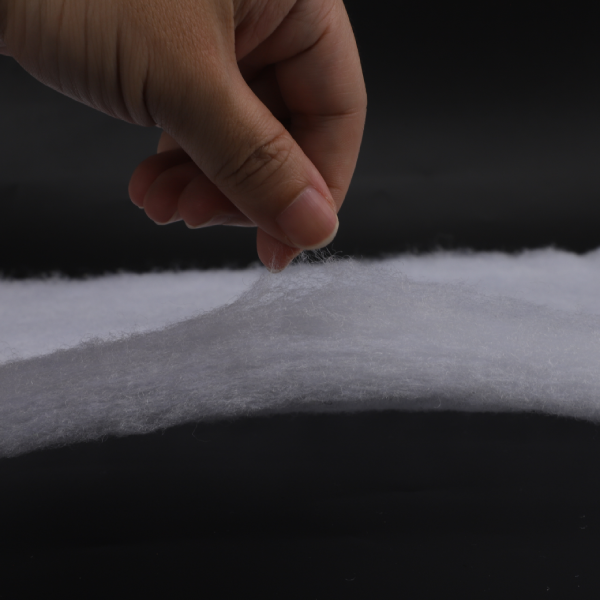
In addition to GSM, Thickness is another common customization parameter for composite needle punched nonwoven.
The same GSM does not necessarily result in exactly the same thickness.
Needle punching density, fiber structure, and production parameters can all affect the final material thickness.
Therefore, for products requiring a specific thickness, buyers can provide a target thickness or an existing product sample when requesting a customized product.
For example:
Custom Thickness
Specified Thickness
Thickness Range
If the customer already has an existing product sample, the sample can also be provided as a reference for further customization.
4. Width: Can the Width Be Customized?
Width is an important dimensional specification for roll materials.
Different end products use different production equipment and cutting methods, so customers may require different material widths.
For example:
1 Meter Width
2 Meter Width
Or another specified width.
For products that require subsequent slitting, laminating, cutting, or processing, the manufacturer can confirm the appropriate roll width according to the order requirements.
Therefore, buyers can directly provide the:
Required Width
Instead of being limited to the manufacturer's standard width.
5. Color: Can the Color Be Customized?
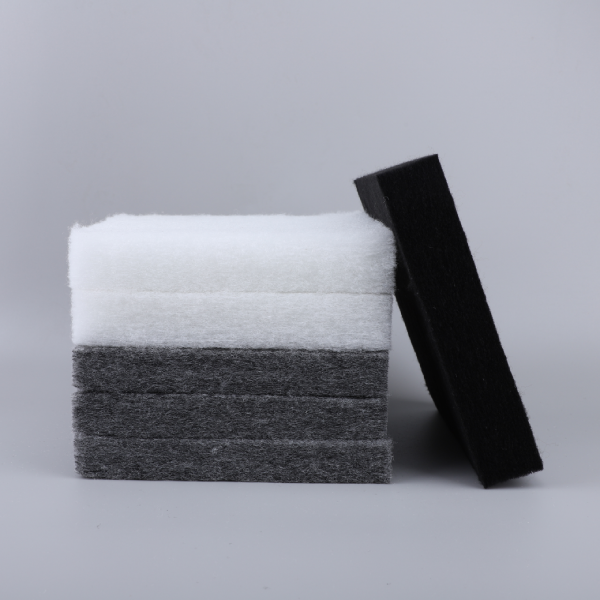
For needle punched nonwoven used in automotive interiors, furniture, home products, branded products, and other visible applications, Color is also a common customization option.
Customers can specify colors according to the requirements of the final product.
For example:
Black
Grey
White
Or another specified color.
For branded products, the required color can also be confirmed based on an existing product sample or color standard.
The main purpose of color customization is to keep the material visually consistent with the final product.
6. Roll Length: Can the Roll Length Be Customized?
In addition to width, Roll Length can also be adjusted according to the customer's production and packaging requirements.
Different customers have different production equipment, storage conditions, and usage methods, so they may not all require the same length per roll.
For example, customers may require:
Fixed Roll Length
Custom Roll Length
Specified Length per Roll
Buyers can directly tell the factory the preferred length per roll during the quotation stage, and the manufacturer can then confirm the feasible roll length according to actual production conditions.
Therefore, the complete roll specification does not only include:
GSM + Width + Thickness
It can also include:
Roll Length
7. Surface: Can the Surface Effect Be Customized?
In addition to basic material parameters, the Surface of composite needle punched nonwoven can also be adjusted according to product requirements.
Different products have different requirements for surface feel, appearance, and subsequent processing.
Possible requirements may include:
Smooth Surface
Textured Surface
Special Surface Treatment
Printed Surface
For automotive interiors, furniture, protective materials, and other products requiring a specific surface effect, surface treatment can become part of the product customization.
Buyers can provide samples, images, or surface requirements according to the final product, allowing the manufacturer to confirm the specific production solution.
8. Printing: Can the Printing Be Customized?
If composite needle punched nonwoven is used for branded products, packaging products, or applications requiring visual identification, Printing can also be included as part of the customization.
Customers can specify:
Logo
Brand Name
Product Information
Pattern
Customized Graphic
The specific printing method and achievable results need to be confirmed according to the material surface and actual production requirements.
For brand customers, this means the purchased material does not necessarily have to be a standard roll of nonwoven fabric. It can also become a customized material with specific brand identification.
9. Backing: Can the Backing Material Be Customized?
In addition to the needle punched nonwoven base, different Backing Materials can be added according to the functional requirements of the product.
Common composite materials include:
PE Film
TPE
PVC
EVA
Sponge
Aluminum Foil
As well as other functional films or materials.
Different backing materials provide different functions.
For example, some materials can be used to improve water resistance, some can provide anti-slip or cushioning properties, while aluminum foil can be used in products requiring heat reflection or thermal insulation.
Therefore, buyers can specify the Backing Material as an independent customization requirement.
The specific functions provided by different composite materials should be confirmed according to the product requirements rather than assuming that one material is suitable for every application.
10. Packaging: Can the Packaging Be Customized?
For overseas buyers, after the product itself has been customized, Packaging can also become part of the OEM customization.
Common packaging requirements include:
Roll Packaging
Individual Packaging
Outer Packaging
Customized Packaging Requirements
Different customers may have different storage, transportation, and sales methods, so packaging formats do not always need to be the same.
If a customer has specific packaging requirements, these can be provided directly during the quotation stage, including packaging format, packaging dimensions, and other relevant requirements.
11. Labeling: Can the Labels Be Customized?
In addition to outer packaging, Labeling can also be customized according to the customer's branding requirements.
For example:
Brand Label
Product Label
Specification Label
Shipping Mark
For customers selling products under their own brands over the long term, customized labels can help maintain consistent brand identification.
Therefore, in a complete OEM project, labeling is not simply a minor detail. It can be part of the final product delivery format.
12. Can Multiple Items Be Customized in One Composite Needle Punched Nonwoven OEM Product?
In actual OEM orders, customers usually do not customize only one parameter.
For example, a customer may request:
Fiber: Polyester
GSM: Customized
Thickness: Customized
Width: Customized
Color: Black
Roll Length: Customized
Backing: PE Film
Surface: Special Treatment
Printing: Customer Logo
Packaging: Customized
Labeling: Private Label
These requirements can be combined into a complete Composite Needle Punched Nonwoven OEM Specification.
Therefore, OEM customization is not about changing only one individual parameter. It is about clearly defining:
Which Parts of the Product Need to Be Customized?
13. What Composite Needle Punched Nonwoven Customization Can Jinhaocheng Provide?
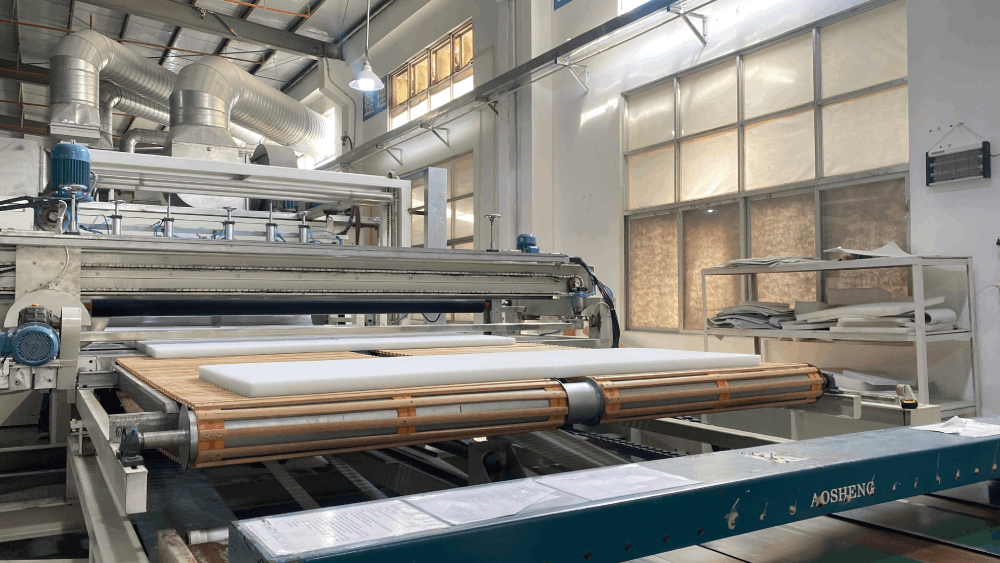
HUIZHOU JINHAOCHENG NONWOVENS CO., LTD. has been engaged in the research, development, and manufacturing of Needle Punched Nonwoven and related nonwoven materials since 2005.
The company has an approximately 26,000 m² production facility, 15 automated needle punching production lines, and annual production capacity exceeding 10,000 tons, providing stable nonwoven material production for overseas importers, wholesalers, brand customers, and industrial product manufacturers.
For Composite Needle Punched Nonwoven projects, we can confirm customization requirements including:
Fiber
GSM
Thickness
Width
Color
Roll Length
Backing Material
Surface Treatment
Printing
Packaging
Labeling
Depending on the product project, composite structures can also incorporate PE, TPE, PVC, EVA, sponge, aluminum foil, and other functional materials.
Our focus is not simply to provide one standard material, but to establish clear product specifications according to the customization requirements confirmed by the customer.
Conclusion: The Key to OEM Customization Is Defining “What Can Be Changed”
For overseas customers purchasing Composite Needle Punched Nonwoven, OEM customization is not limited to changing GSM or thickness.
From Fiber, GSM, Thickness, Width, Color, and Roll Length to Surface, Printing, Backing, Packaging, and Labeling, many parts of the product can become part of the customization scope.
Therefore, when requesting a quotation from a manufacturer, buyers can first clarify:
Which Parts of the Product Need to Be Customized?
Once the customization scope is clearly defined, the manufacturer can further confirm the corresponding production solution and product specifications.
For importers, wholesalers, and brand customers who need long-term purchasing, having a clear customization scope also helps establish consistent product specifications and provides a foundation for maintaining a consistent product format across future orders.