OEM Needle Punched Felt: A Complete Custom Order Guide for Buyers
When purchasing OEM Needle Punched Felt, customization is not simply about changing the color or adding a logo. A complete OEM order may involve material, GSM, thickness, width, roll length, color, surface treatment, backing material, logo, packaging, MOQ, and lead time.
For importers, wholesalers, distributors, and brand owners, several questions usually need to be answered before placing an order: What is the MOQ? Can the color be customized? What GSM and thickness should be selected? Can the logo be printed? Can the packaging be customized? How long will samples and bulk orders take? Most importantly, will the bulk production remain consistent with the approved sample?
Therefore, before placing an OEM order, buyers should build a complete Custom Order Specification with the supplier. This guide focuses on the key information buyers need to confirm before ordering OEM Needle Punched Felt.
Why Can’t an OEM Needle Punched Felt Order Simply Say “I Need Customization”?
A standard needle punched felt order is usually based on existing specifications, while an OEM order requires the supplier to produce according to the buyer’s specific requirements.
Even when the same polyester felt is used, different GSM, thickness, width, density, surface treatment, or backing materials can result in different product performance and applications.
Before production, buyers should clarify the material or fiber type, GSM, thickness, width, roll length, color, surface treatment, backing material, logo or printing requirements, packaging, MOQ, and delivery time.
If the buyer does not know all the technical specifications, this does not necessarily mean the OEM project cannot move forward. A professional custom nonwoven felt manufacturer can help determine suitable specifications based on the application, existing sample, product drawing, or product photos.
What Is the MOQ for OEM Needle Punched Felt? Why Does MOQ Vary Between Orders?
MOQ is one of the most common questions in OEM procurement. However, there is no single universal MOQ for all OEM needle punched felt orders.
The MOQ may depend on the product structure, raw materials, color, width, thickness, production process, and total order quantity.
Standard specifications are usually easier to arrange for production. Special colors, customized thicknesses, special widths, composite structures, or branded packaging may require additional preparation and materials, which can affect the minimum order quantity.
For this reason, the actual MOQ for a Jinhaocheng order should be confirmed according to the specific product and order requirements rather than using one fixed number for every project.
To obtain an accurate quotation and MOQ, buyers should provide the product application, material, GSM, thickness, width, color, and estimated order quantity whenever possible.
It is also important to understand that a lower MOQ does not always mean a lower overall procurement cost. Production setup, machine changeover, raw material preparation, and customized packaging can all influence the final cost.
For long-term buyers, the better approach is to balance MOQ, unit cost, inventory, production efficiency, and future purchasing volume.
Can the Color of OEM Needle Punched Felt Be Customized? Why Should Buyers Confirm Color Early?
Color can be an important part of an OEM product, especially when the material is sold under the buyer’s own brand.
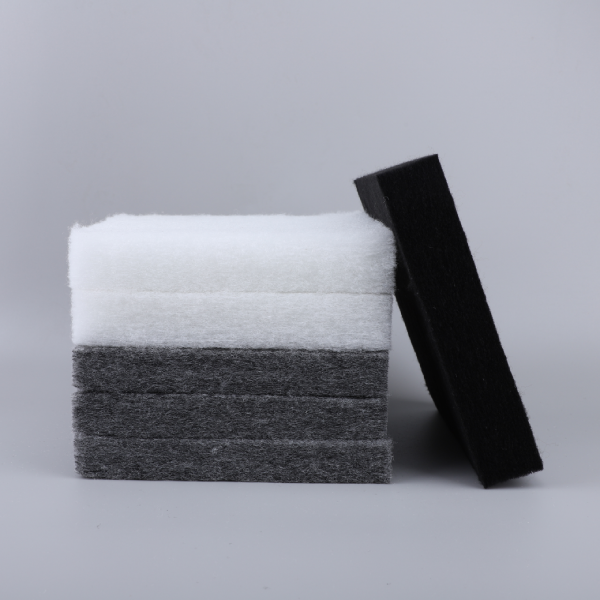
Common colors such as black, white, and grey are generally easier to arrange. If a buyer requires a specific brand color, the color standard and color-matching requirements should be confirmed before production.
Buyers should clearly confirm the required color, color standard, color-matching method, and sample approval process.
Once the color sample has been approved, it can be used as the reference standard for future repeat orders. This helps reduce color differences between different production batches.
Can the Thickness of OEM Needle Punched Felt Be Customized? Why Should Thickness Not Be Confirmed Alone?
The thickness of OEM Needle Punched Felt can be customized according to the product requirements.
However, buyers should avoid simply telling a supplier, “I need 3 mm felt.”
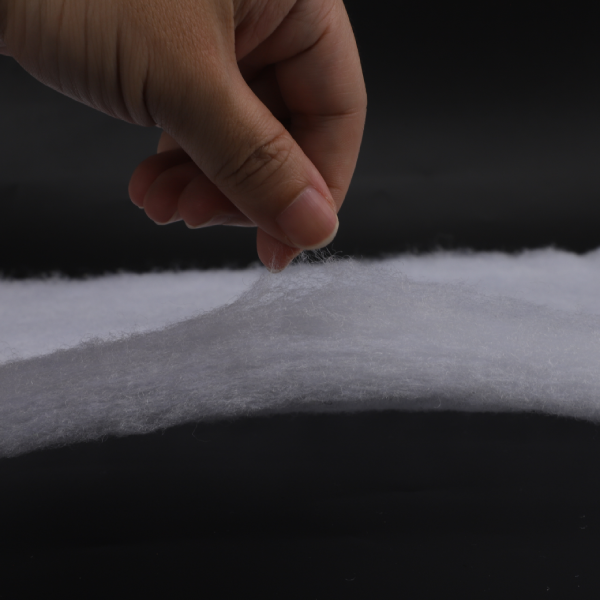
The same thickness can have different GSM, density, fiber structures, and performance characteristics. Therefore, thickness should normally be considered together with GSM, fiber type, and punching density.
For example, two materials with similar thickness may have different weights and structures, which can affect their strength, softness, cushioning, abrasion resistance, and suitability for different applications.
When the buyer is not sure which specifications are appropriate, providing an existing sample or explaining the final application can help the needle punched felt manufacturer recommend a more suitable specification.
Why Are Width and Roll Length Also Important in an OEM Needle Punched Felt Order?
Buyers often focus on GSM and thickness but overlook width and roll length.
Width directly affects downstream processing, material utilization, and potential waste. If the material needs to be cut, laminated, die-cut, or processed into another product, the correct width can significantly improve production efficiency.
Roll length also affects handling, installation, packaging, transportation, and container loading.
Therefore, width and roll length should be confirmed according to the buyer’s downstream processing requirements, application, packaging method, logistics conditions, and handling requirements.
A professional custom needle punched felt manufacturer can customize both width and roll length according to the buyer’s requirements.
Can OEM Needle Punched Felt Be Printed with a LOGO? What Should Brand Buyers Confirm?
For brand owners, adding a logo is an important part of OEM customization.
Before production, buyers should confirm the logo, logo position, logo size, printing method, label requirements, and packaging design.
For roll products, buyers should also consider the spacing and repetition of the logo, especially when the material will later be cut or processed into smaller pieces.
Packaging and labels should also be considered as part of the OEM project.
In other words, OEM needle punched felt is not only about customizing the material itself. It can also become part of the buyer’s overall brand supply chain.
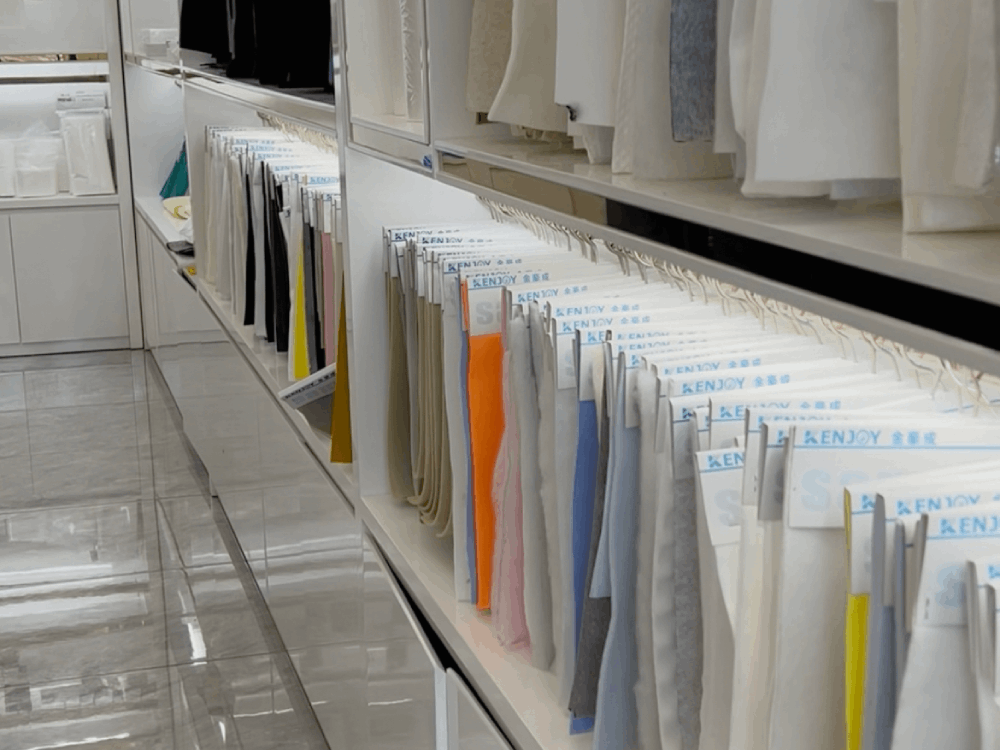
How Can OEM Needle Punched Felt Packaging Be Customized? Why Should Packaging Be Confirmed Early?
Packaging should ideally be confirmed during the quotation and specification stage rather than after production has already started.
Depending on the order requirements, packaging may include PE film, outer bags, branded packaging, pallets, labels, roll protection, and specific pallet requirements.
Packaging is not only related to product protection. It can also affect container loading, transportation efficiency, logistics costs, and delivery arrangements.
If packaging requirements are confirmed too late, the supplier may need to make additional production or packaging arrangements, which can affect the overall lead time.
Therefore, buyers should include packaging requirements in the OEM specification from the beginning.
What Is the Lead Time for OEM Needle Punched Felt? Why Should You Not Simply Ask “How Many Days Until Shipment?”
Lead time is especially important for OEM procurement because a customized order involves more steps than a standard product order.
The complete process may include Specification Confirmation → Quotation → Sample Development → Sample Approval → Raw Material Preparation → Production → QC → Packaging → Shipment.
Any changes during these stages may affect the final delivery schedule.
Instead of only asking, “How many days until shipment?”, buyers should confirm the sample lead time, bulk production lead time, packaging time, and expected shipping date separately.
Jinhaocheng’s OEM/ODM service follows a process covering consultation, sample submission, quotation, design, payment, production, delivery, and after-sales service. The company also provides free samples and free design drawings to support product development.
For this reason, buyers should leave sufficient time for sample development, testing, approval, and bulk production when planning an OEM project.
Why Is Sample Approval Such an Important Step in an OEM Needle Punched Felt Order?
For an OEM project, the sample is not simply a product quality check. It can also become the common production reference between the buyer and supplier.
Before approving the sample, buyers should confirm the material, GSM, thickness, width, color, surface appearance, softness or hardness, backing material, logo, and packaging requirements.
For composite products, the composite structure should also be confirmed.
After the sample is approved, the bulk production should follow the confirmed specifications.
A clear sample approval process helps both sides establish the same product standard and reduce misunderstandings during mass production.
Why Is Consistency Between OEM Needle Punched Felt Samples and Bulk Production So Important?
The real challenge in long-term OEM procurement is not simply producing one good sample. It is maintaining consistent quality across repeated production batches.
Buyers should pay attention to GSM, thickness, color, width, lamination quality, and overall batch stability.
A supplier may provide a qualified sample, but long-term procurement requires stable production control to ensure that later batches continue to meet the approved specifications.
For this reason, production consistency can be more important than a one-time low quotation for importers, wholesalers, distributors, and brand owners planning long-term cooperation.
Why Is Buying Directly from a Needle Punched Nonwoven Factory Better for Long-Term OEM Procurement?
OEM procurement involves much more than simply purchasing finished material. It connects product specifications, production, quality control, customization, packaging, and delivery.
Working directly with a manufacturer allows buyers to communicate specifications and production requirements directly with the production side.
When a product needs to be improved after market feedback, a direct manufacturer can also communicate production adjustments more efficiently.
For buyers looking for a long-term supplier, relevant searches may include needle punched nonwoven felt manufacturer, needle punched felt manufacturer, needle punched felt factory China, and nonwoven felt manufacturer China.
Why Is Jinhaocheng Suitable for OEM Needle Punched Felt Supply?
Jinhaocheng was established in 2005 and has more than 20 years of experience in nonwoven material research and manufacturing.
The company operates a factory of approximately 26,000 square meters with 15 automated needle punching production lines and annual production capacity of more than 10,000 tons.
For OEM and ODM projects, Jinhaocheng can customize GSM, thickness, width, roll length, color, backing material, surface treatment, logo, and packaging according to product requirements.
For importers, wholesalers, distributors, and brand owners, production scale and customization capability can provide stronger support for long-term product development and repeat orders.
Jinhaocheng’s product range also includes Floor Protection Roll, Painter Felt, industrial felt, automotive felt, and other needle punched nonwoven materials, making it possible to develop different material solutions according to different applications.
What Information Should Buyers Provide to an OEM Needle Punched Felt Manufacturer?
Before requesting a quotation, buyers should provide as much of the following information as possible: product application, material or fiber type, GSM, thickness, width, roll length, color, backing material, logo requirements, packaging requirements, and estimated order quantity.
If some technical specifications are not yet confirmed, buyers can provide an existing sample, product drawing, product photo, or description of the working environment and final application.
The goal is not to require every buyer to become a materials expert. The more useful approach is to provide enough information for the supplier to understand the product requirements and help determine suitable specifications.
What Is Most Commonly Overlooked Before Ordering OEM Needle Punched Felt?
Buyers often focus on price, MOQ, and lead time when comparing suppliers.
However, production cannot proceed smoothly if important details such as color, logo, packaging, or final specifications have not been confirmed.
A successful OEM project should therefore manage the Product Specification + Branding + Packaging + Quantity + Delivery Schedule as one complete project.
This approach can reduce repeated communication, specification changes, and unnecessary delays before bulk production.
What Is the Real Procurement Process for OEM Needle Punched Felt?
The OEM procurement process normally starts with the customer’s product requirements.
The factory receives the application, sample, drawing, photo, or basic specifications and then confirms the material structure, GSM, thickness, color, width, and other requirements.
After the specifications are confirmed, the supplier provides a quotation and develops a sample.
The buyer then tests and approves the material, size, color, logo, packaging, and other agreed specifications.
After final confirmation, the buyer and supplier confirm the MOQ, payment terms, lead time, and packaging requirements before bulk production begins.
The factory then completes production, quality control, packaging, and shipment.
Compared with standard purchasing, OEM procurement is slightly more complex, but it establishes a clear and repeatable product standard for long-term cooperation.
Why Is OEM Needle Punched Felt Suitable for Long-Term Purchasing by Importers and Wholesalers?
The value of OEM is not simply adding a logo to a standard product. It allows buyers to establish their own product specifications.
Importers and wholesalers can define the target product according to their market requirements, including color, GSM, thickness, width, roll length, and packaging.
Based on market feedback, the product structure can also be optimized for requirements such as abrasion resistance, waterproof performance, or cushioning.
For brand owners, OEM customization can help create product differentiation. For wholesalers, customized specifications can reduce direct price competition with completely standard products.
Conclusion: Confirm the Specifications Before Comparing the Price of OEM Needle Punched Felt
Price is important in OEM procurement, but it should not be the only factor considered at the beginning.
Before placing an order, buyers should confirm the MOQ, color, GSM and thickness, width and roll length, logo, packaging, sample and bulk production consistency, and lead time.
The best supplier is not necessarily the one offering the lowest quotation. A reliable OEM needle punched felt manufacturer should understand the buyer’s requirements, support customization, control batch quality, and provide stable production and delivery.
For importers, wholesalers, distributors, and brand owners, choosing a professional needle punched felt manufacturer and establishing clear specifications from the beginning can make long-term OEM purchasing more efficient and predictable.