Why Are Needle Punched Fire Resistant Felt Materials Used for Emergency Fire Blankets? How Should Buyers Choose the Right Fire Resistant Felt?
For fire safety product wholesalers, importers, brand owners, industrial safety suppliers, and customers developing OEM emergency fire blankets, choosing the right blanket material is not simply a matter of asking whether the material is flame retardant.
In actual applications, an Emergency Fire Blanket needs to be quickly unfolded and placed over a fire source or used to provide a certain level of flame isolation protection. Therefore, in addition to appropriate flame-retardant or fire-resistant performance, the material may also need to balance flexibility, structural stability, thickness, weight, foldability, processing performance, and batch-to-batch consistency.
Emergency fire blankets on the market can use different types of fire-resistant materials, including fiberglass fabrics, pre-oxidized fiber materials, and other flame-retardant or heat-resistant materials. Different materials are suitable for different applications. For example, some professional emergency fire blankets use nonwoven felt made from pre-oxidized fibers, while many common household fire blankets use fiberglass fabrics.
So, why do some emergency fire blankets use needle punched fire resistant felt?
For professional buyers, the more important questions are: What problems does this material solve? When should needle punched fire resistant felt be selected? And which specifications should buyers confirm before purchasing?
Why Can't Emergency Fire Blanket Materials Be Selected Based Only on Their Maximum Temperature Resistance?
When requesting a quotation for the first time, many buyers naturally ask:
“What is the maximum temperature this fire blanket can withstand?”
Temperature resistance is certainly an important parameter, but it is not the only factor that determines whether an emergency fire blanket material is suitable.
Different fire environments involve different forms of heat, exposure times, flame-contact conditions, and methods of material use. An emergency fire blanket may need to cover a fire source directly, provide flame isolation, protect equipment, or provide thermal protection during an emergency evacuation.
Therefore, buyers should also consider:
Does the material provide the required flame-retardant performance?
Is the material likely to melt or drip when exposed to fire?
Does the material have sufficient structural stability?
Can it withstand repeated folding without excessive damage?
Is the size and thickness suitable for practical deployment?
Can the material maintain stable performance during mass production?
These questions can be more important than comparing a single “maximum temperature” figure.
What Is Needle Punched Fire Resistant Felt?
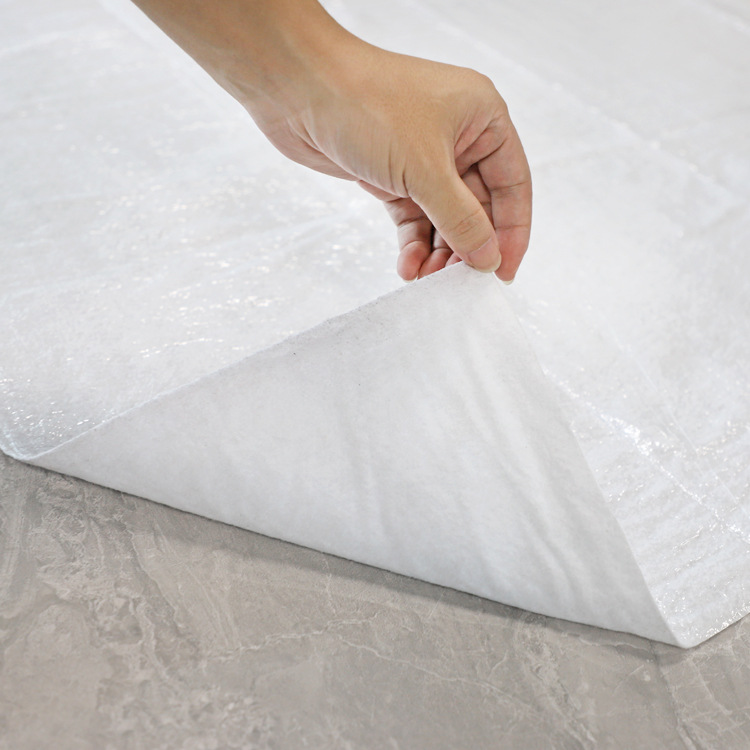
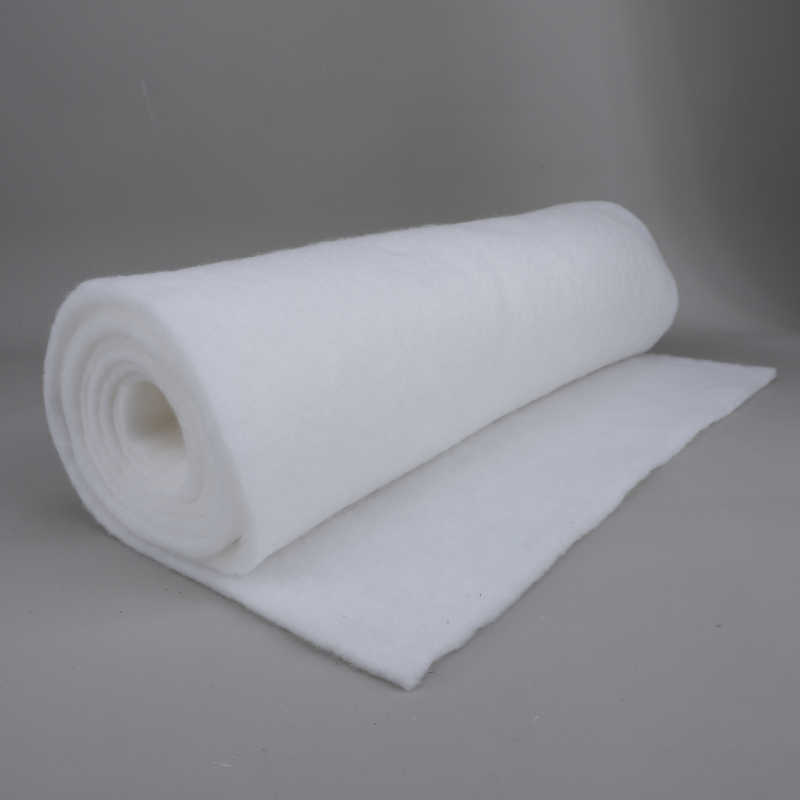
Needle punched fire resistant felt is a type of fire-resistant or flame-retardant fiber material manufactured through a needle punching nonwoven process.
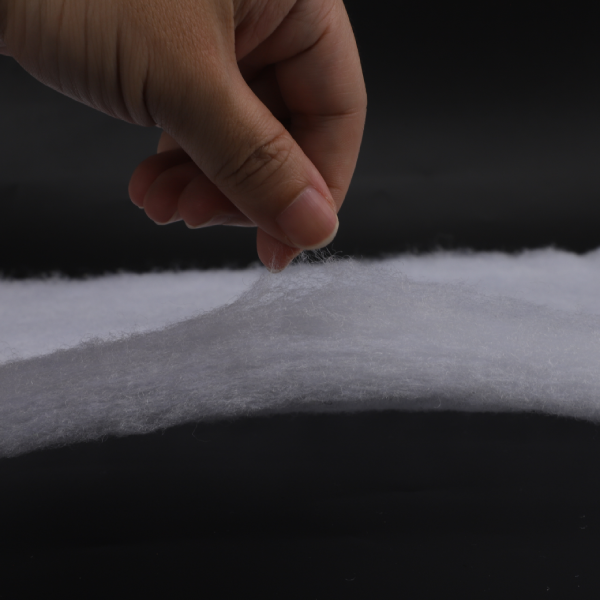
During production, fibers are opened, carded, and formed into a fiber web. Barbed needles then repeatedly penetrate the web, mechanically entangling fibers in different directions to create a three-dimensional fiber structure with controlled thickness, density, and structural stability.
Depending on the application, needle punched fire resistant felt can use different fire-resistant or flame-retardant fiber systems, including flame-retardant polyester, oxidized PAN fibers, wool, blended flame-retardant fibers, and other specialized fire-resistant fibers.
Therefore, “needle punched fire resistant felt” does not refer to one fixed material formulation. It describes a material structure and manufacturing process system.
This means professional buyers can customize fiber composition, GSM, thickness, density, dimensions, and flame-retardant grade according to the requirements of the finished product.
Why Do Some Emergency Fire Blankets Use Needle Punched Fire Resistant Felt?
First, the Needle Punched Structure Can Provide Good Flexibility
Emergency fire blankets normally need to be folded or rolled during storage and use.
For products that need to be unfolded, stored, and transported repeatedly, the material cannot focus only on fire-resistant performance. It also needs an appropriate level of flexibility.
A needle punched nonwoven structure is formed by mechanically entangling fibers rather than relying on a traditional woven warp-and-weft structure. The flexibility of the material can therefore be designed according to the fiber type, needle punching density, and material thickness.
For brands developing foldable emergency fire blankets, this structure can provide useful processing flexibility.
Second, the Material Structure Can Be Adjusted According to Application Requirements
Different emergency fire protection products have different requirements for material thickness, weight, and structure.
Some products need to be lightweight and easy to carry, while others place greater emphasis on coverage protection and material stability.
Needle punched fire resistant felt can be modified by adjusting fiber composition, GSM, thickness, density, and needle punching parameters to create different material structures.
Therefore, for OEM customers, needle punched felt can provide greater opportunities for product development than a single fixed specification.
Third, It Is Suitable for Different Sizes and Processing Requirements
For fire safety product wholesalers and brand customers, emergency fire blankets are not necessarily sold in only one standard size.
Different sales channels may require different specifications, such as household products, vehicle-use products, industrial products, or other specialized protective products.
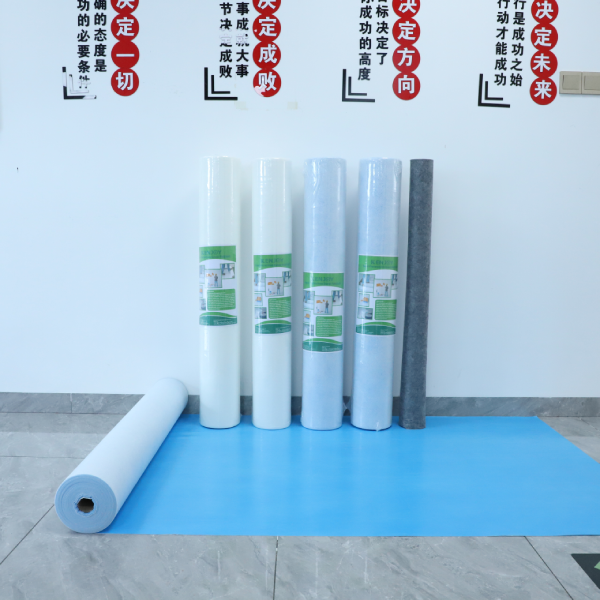
Needle punched fire resistant felt can be processed into different widths, lengths, thicknesses, and cut sizes according to customer requirements. It can also undergo further cutting, laminating, and packaging processes.
This allows buyers to develop different product specifications for their target markets instead of being restricted to standard sizes.
Fourth, the Material Structure Can Be Combined with Different Flame-Retardant Fiber Systems
For professional fire-resistant products, fiber selection can directly affect the final material performance.
Different flame-retardant polyester, oxidized fibers, wool, or blended fiber systems may differ significantly in flame resistance, heat resistance, flexibility, cost, and processing characteristics.
Therefore, the advantage of needle punched fire resistant felt is not simply that “all needle punched felt is better than other materials.” Instead, its advantage lies in the ability to select an appropriate flame-retardant fiber composition and nonwoven structure according to the product requirements.
This can be particularly important for brands developing different grades of fire safety products.
What Is the Difference Between Needle Punched Fire Resistant Felt and Fiberglass Fire Blankets?
In the emergency fire blanket market, fiberglass fabric remains a commonly used material.
For example, some standard emergency fire blankets use approximately 430 g/m² fiberglass fabric and are designed for applications such as household kitchens, commercial kitchens, and vehicles.
Therefore, buyers should not simply assume that “needle punched fire resistant felt is always better than fiberglass.”
A more practical approach is to compare the materials according to the intended application.
Fiberglass fabric has an established history of high-temperature applications and can be suitable for products that require a woven structure and high-temperature resistance.
Needle punched fire resistant felt, in comparison, emphasizes the flexibility, thickness design, and material customization possibilities offered by a nonwoven structure.
If customers need to develop fire-resistant materials with different thicknesses, GSM levels, or fiber compositions, a needle punched nonwoven structure may provide greater product development flexibility.
Therefore, for OEM customers, the real question is not:
“Which material is absolutely better?”
It is:
“Which material structure is more suitable for my product?”
Why Should Buyers Not Evaluate Emergency Fire Blanket Materials Based Only on Samples?
For wholesalers and importers, one very practical question is:
“The sample performs well, but can the bulk order maintain the same quality?”
This is especially important for fire-resistant products.
If a sample is produced using higher-quality fibers but the raw materials are changed during mass production, the flame-retardant performance, thickness, hand feel, and structure may change.
Similarly, if the sample has tightly controlled GSM but the GSM, thickness, or density fluctuates significantly during bulk production, the final product may show inconsistent performance.
Therefore, after approving a sample, buyers should establish a complete product specification sheet.
At minimum, the following parameters should be clearly confirmed:
Fiber Type
GSM
Thickness
Density
Flame Retardant Grade
Width
Length
Cut Size
Packaging
Fixing these specifications provides a stronger basis for maintaining bulk production consistency than simply asking a supplier to “produce according to the sample.”
How Should Buyers Choose GSM and Thickness for Needle Punched Fire Resistant Felt?
Many buyers naturally assume that “thicker means safer.”
In reality, not every emergency fire blanket requires the highest GSM or greatest thickness.
If the material is too heavy, it may affect product portability, folding, packaging, and transportation.
If the material is too thin, it may not provide the structural stability required by the product design.
Therefore, GSM and thickness should be selected according to the intended application, flame exposure conditions, product dimensions, storage method, and target-market requirements.
For example, customers developing portable products may place greater emphasis on weight and flexibility, while industrial safety products may place greater emphasis on material stability and protective performance.
A professional needle punched felt manufacturer should therefore help customers determine a reasonable specification based on the actual application rather than simply recommending the “thickest” product.
What Fire-Resistance Performance Should Buyers Confirm When Purchasing Emergency Fire Blanket Materials?
“Fire resistant felt” does not mean that every material has exactly the same fire performance.
Buyers should ask suppliers to clearly define the relevant testing requirements and product performance rather than accepting vague descriptions such as “Fireproof” or “Flame Retardant.”
Important factors to confirm include:
Flame-retardant grade
Self-extinguishing time
Material changes after continuous flame exposure
Whether the material melts or drips
Operating temperature range
Actual application environment
Relevant testing standards
Different fibers and material structures can have significantly different performance. Therefore, the final performance must be evaluated according to the specific material, thickness, structure, and testing conditions.
Especially for materials used in fire safety products, buyers should not determine suitability based only on a single temperature figure promoted by a supplier.
Which Buyers Should Consider Needle Punched Fire Resistant Felt for Emergency Fire Blankets?
If you are one of the following types of buyers, needle punched fire resistant felt may be worth evaluating:
Fire safety product importers
Fire safety product wholesalers
Industrial safety product suppliers
Emergency rescue product brands
Automotive safety product brands
Outdoor safety product brands
OEM/ODM product developers
Industrial customers requiring customized fire-resistant materials
For customers developing their own branded products, dimensions, thickness, color, GSM, packaging, and fiber composition may all need to be customized.
In these cases, working with a manufacturer that directly controls needle punched nonwoven production can make product development easier than purchasing standard products through trading channels.
What Other Applications Can Emergency Fire Resistant Felt Materials Serve?
Depending on the material type and specific design, emergency fire-resistant felt materials can be used for different fire protection and thermal protection products.
These may include:
Emergency Fire Blanket
Fire Suppression Blanket
Fire Protection Blanket
Welding Fire Mat
Welding Protection Mat
Heat Protection Blanket
Industrial Fire Resistant Felt
Thermal Protection Felt
However, different products have different operating environments and safety requirements.
For example, a household emergency fire blanket and an industrial welding protection blanket have significantly different working conditions. Therefore, the same material and specification should not simply be used for every application.
The final material should always be selected and tested according to the intended application.
Why Should Buyers Choose a Needle Punched Fire Resistant Felt Manufacturer That Offers Customization?
For wholesalers, standard products can meet part of the market demand. However, customization capability becomes increasingly important for companies that want to develop their own product lines.
A genuine Fire Resistant Felt Manufacturer should be able to adjust:
Fiber Composition
GSM
Thickness
Density
Width
Roll Length
Color
Flame Retardant Level
Cut Size
Packaging
OEM/ODM Requirements
This allows buyers to develop different product grades for different markets instead of being restricted to fixed specifications.
For brand owners, this can also help create greater product differentiation.
Why Choose a Professional Needle Punched Nonwoven Manufacturer for Fire Resistant Felt?
Fire-resistant felt may look like a simple piece of material, but its consistency is strongly influenced by the raw materials, production equipment, and manufacturing process behind it.
HUIZHOU JINHAOCHENG NONWOVENS CO., LTD. has more than 20 years of experience in nonwoven R&D and manufacturing. Our production base covers approximately 26,000 m² and is equipped with 15 automated needle punching production lines, providing stable production capacity for needle punched nonwoven materials.
As a professional Needle Punched Felt Manufacturer, Fire Resistant Felt Manufacturer, and Nonwoven Felt Manufacturer China, we can customize different specifications of needle punched fire resistant felt according to customer application requirements.
From fiber selection, opening and carding, and web formation to needle punching, cutting, and further processing, production specifications can be controlled according to the customer's product requirements.
For customers developing Emergency Fire Blankets, Welding Fire Resistant Felt, Industrial Fire Resistant Felt, and other flame-retardant nonwoven materials, we can provide customized material solutions based on the actual application requirements.
How Can Buyers Determine Whether an Emergency Fire Blanket Felt Supplier Is Suitable for Long-Term Cooperation?
For a one-time purchase, price may be the easiest factor to compare.
However, for long-term importers, wholesalers, and brand customers, the factors that often have a greater impact on purchasing risk and total cost include:
Raw Material Consistency
Production Capacity
Batch-to-Batch Consistency
Specification Control
Customization Capability
Delivery Stability
OEM/ODM Capability
If a supplier can only provide one good sample but cannot consistently reproduce the approved specifications, even a low sample price may create greater risks for future purchasing.
In contrast, if a manufacturer can consistently control GSM, thickness, density, fiber composition, and flame-retardant grade, it becomes easier for customers to establish a stable long-term supply chain.
Conclusion: Why Choose Needle Punched Fire Resistant Felt for Emergency Fire Blankets?
There is no single “universal material” suitable for every emergency fire blanket application.
Fiberglass fabric, pre-oxidized fiber felt, flame-retardant polyester felt, and other fire-resistant materials can all be selected according to different applications.
The main advantage of needle punched fire resistant felt lies in its flexible nonwoven structure, which allows fiber composition, GSM, thickness, density, dimensions, and flame-retardant grade to be designed and adjusted according to different application requirements.
For fire safety product wholesalers, importers, brand owners, and OEM customers, instead of simply searching for the lowest-priced fire blanket material, it is more practical to first define the product positioning and actual application requirements and then select a reliable Fire Resistant Felt Manufacturer with stable production and customization capabilities.
If you are looking for needle punched fire resistant felt, emergency fire blanket material, Fire Resistant Felt, or Flame Retardant Nonwoven, or need to develop your own OEM fire-resistant product, Jinhaocheng can provide customized needle punched nonwoven material solutions according to your product requirements.