
Footwear Foam Laminated Fabric Processing: Cutting, Sewing and Shoe Assembly
For footwear manufacturers, receiving foam laminated fabric that meets the required thickness and material specifications does not necessarily mean it is ready for immediate use on the production line.
After foam laminated fabric rolls are delivered, they usually need to be slit, cut into individual pieces, sewn, edge-bound, and assembled according to the design of each footwear component. Different shoe styles have different component shapes, material layers, and processing sequences. A composite material that works for one shoe design or processing setup may not produce the same results under other footwear manufacturing conditions.
This is particularly important for components such as shoe tongues, collars, and linings. Their dimensions, bending directions, edge structures, and sewing positions differ, which means they may also have different requirements for material processing compatibility.
Therefore, when sourcing Footwear Foam Laminated Fabric, buyers should consider not only the foam and fabric specifications but also how the material will perform during actual footwear manufacturing. This article focuses on cutting, sewing, edge binding, supply formats, and sample validation to help footwear manufacturers determine whether foam laminated fabric rolls are suitable for their production processes.
Why Does Footwear Foam Laminated Fabric Need Processing Validation Before Entering Shoe Production?
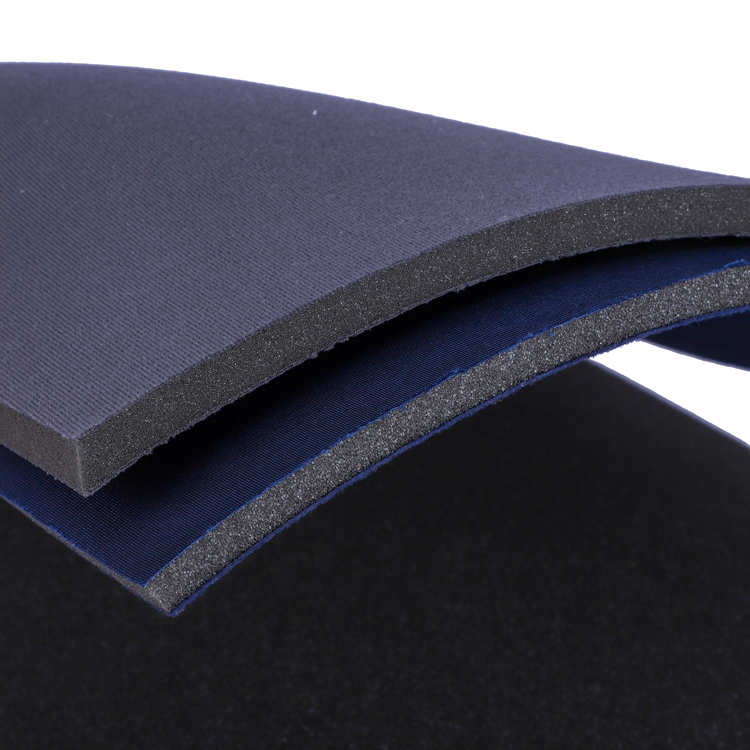
Footwear foam laminated fabric is generally an intermediate composite material made by combining foam with fabric or other substrates. It can serve as one material layer in a footwear component, but it is not a finished shoe tongue, collar, or lining that has already been cut, sewn, edge-bound, and assembled.
After the supplier delivers the rolls, the footwear factory still needs to carry out further processing according to product drawings and its manufacturing workflow. Different factories may use different cutting equipment, sewing machines, processing sequences, and component constructions. As a result, the actual material behavior may vary.
Buyers should distinguish between three separate validation stages.
Validation stage | Main items to check | Key question |
Material specification confirmation | Fabric type, foam type, number of layers, total thickness, width, etc. | Does the delivered material meet the agreed specifications? |
Material structure inspection | Fabric and foam positions, edge condition, surface condition, and layer stability | Does the composite material itself meet the basic requirements? |
Actual processing validation | Cutting, sewing, edge binding, and component assembly | Is the material suitable for the footwear factory's actual production workflow? |
These three stages cannot replace one another. A material that meets the thickness requirement is not necessarily suitable for cutting complex shapes. A flat sample that shows no obvious problems may still develop wrinkles, layer displacement, or uneven edges after sewing and edge binding.
For footwear manufacturers, a Shoe Foam Laminated Fabric Roll should be treated as an intermediate material that requires further processing validation, rather than a finished material that can automatically fit every footwear production line.
What Should Be Checked When Cutting Footwear Foam Laminated Fabric?
Cutting is a common processing step after foam laminated fabric enters footwear production. Buyers should not only confirm whether the equipment can cut the material but also inspect the condition of each layer after cutting and whether the cut edges meet the requirements of subsequent sewing, edge binding, and assembly.
Total Thickness and Number of Material Layers
Foam laminated fabric may consist of fabric and foam, or it may include additional backing fabric or other supporting layers. Different constructions have different total thicknesses and material combinations, which can also affect the number of layers being processed during cutting.
For example, a fabric-and-foam construction should not automatically be expected to behave in the same way during cutting as a three-layer structure consisting of fabric, foam, and backing fabric.
If the overall material is relatively thick or the layers have different flexibility characteristics, the cut edges may differ from those of single-layer fabric. Buyers should therefore confirm the actual total thickness of the composite material rather than judging cutting compatibility based only on foam thickness.
Foam Deformation and Cut Edge Condition
Foam has certain flexibility and compression characteristics. During cutting, the equipment and operating conditions may affect the material, potentially causing localized compression, edge deformation, or irregular cut surfaces.
Buyers can inspect whether the foam edges show obvious compression or irregular conditions, whether the fabric and foam have shifted relative to each other, and whether the cut edges meet the requirements of the next processing step.
These conditions depend on the foam type, thickness, lamination structure, and actual cutting conditions. They cannot be determined from material names such as PU or EVA alone.
Cutting Shapes and Material Direction
Footwear components may have curved edges, corners, or irregular outlines. Straight slitting, fixed-size piece cutting, and complex contour cutting do not necessarily place the same demands on the material.
If the material needs to be cut according to footwear component drawings, buyers should provide the actual cutting drawings, templates, or representative component samples. If the fabric has a distinct machine direction, cross direction, or visible construction direction, buyers should also confirm whether the cutting direction could affect subsequent bending, sewing, or edge binding.
Can the Cut Material Proceed to the Next Processing Step?
Successful cutting does not mean the material has passed processing validation. Buyers should also check whether the cut material can proceed smoothly to sewing, edge binding, and assembly.
For example, some components may require additional edge treatment. Foam may deform during handling, or the fabric and foam may shift relative to each other. These conditions can affect subsequent processing.
Therefore, when evaluating Foam Laminated Fabric Cutting, the main question is not simply whether the equipment can cut through the material. It is whether the cutting result meets the requirements of the subsequent footwear manufacturing processes.
How Do Cutting Requirements Differ for Shoe Tongues, Collars, and Linings?
Shoe tongues, collars, and linings may all use foam laminated materials, but their positions and shapes within footwear construction are different. They should not automatically use the same cutting approach.
Shoe Tongues
The shoe tongue is positioned between the upper and the lacing area. It usually needs to be cut according to the tongue's outline. Buyers should pay attention to material thickness, edge shape, sewing positions, and whether the cut material is suitable for subsequent folding or stitching.
If the tongue uses a multilayer material construction, buyers should also confirm whether the layers maintain their intended positions during cutting and handling.
Shoe Collars
The shoe collar is located around the opening of the shoe and usually has a curved outline that needs to match the collar shape and subsequent sewing construction.
For this type of component, buyers should consider not only cutting dimensions but also the edge condition after bending, localized thickness, and curved areas. A material that passes flat cutting inspection does not necessarily mean the component will meet requirements after bending and sewing.
Shoe Linings
Shoe linings are generally positioned along the inner sides or other interior surfaces of footwear. They may need to be cut according to the internal shoe shape and connected with other upper materials.
Buyers should confirm the lining dimensions, bending direction, sewing positions, and connection methods with adjacent materials. If the lining consists of mesh or knitted fabric laminated with foam, cutting validation should also consider the substrate construction and the overall laminated structure.
Footwear component | Main cutting considerations | Subsequent processing considerations |
Shoe tongue | Outline dimensions, edges, and material thickness | Folding, sewing, and construction around the lacing area |
Shoe collar | Curved outline and edge condition after bending | Edge binding, stitching, and matching the collar shape |
Shoe lining | Internal shoe outline and cutting direction | Connection with the upper and other interior materials |
These are common processing considerations for different footwear components. They do not mean that all shoe styles use the same construction or manufacturing methods. Buyers should confirm the material requirements according to the specific shoe design, drawings, and production workflow.
If your project involves developing tongue or collar padding, you can also refer to shoe tongue and collar foam padding for more information about the material structures and selection requirements of these two components.
What Should Be Considered When Sewing Foam Laminated Fabric?
For footwear components that require sewing, foam laminated fabric must meet not only the sewing requirements of the fabric itself but also the requirements created by the foam and other composite layers. These layers can affect overall thickness, flexibility, and sewing behavior.
Material Thickness and Sewing Positions
The fabric, foam, and additional backing layers combine to form a composite material with a certain total thickness. Buyers should confirm whether the material is suitable for the intended sewing construction and sewing positions.
If multiple material layers need to be sewn together, the overall thickness of the stacked materials and any noticeable thickness differences around the sewing areas should also be evaluated.
The sewing performance of a single fabric layer alone cannot determine whether the complete foam laminated material is suitable for sewing.
Relative Positions of Fabric and Foam
During sewing, the material may be affected by feeding, presser-foot pressure, and needle penetration. Buyers should observe whether the fabric and foam develop obvious misalignment, localized wrinkles, or other conditions that could affect the appearance of the finished component.
For composite structures containing multiple backing layers, buyers should also check whether the layers maintain their intended arrangement as the needle passes through different areas.
Flexibility and Component Shape
Footwear components may need to be bent, folded, or fitted into a particular shape. The flexibility of the composite material can affect feeding, corner handling, and component positioning during sewing.
If the material is relatively thick or the fabric and foam have significantly different flexibility characteristics, buyers should evaluate the sewing results using actual component samples instead of directly applying the processing settings used for ordinary single-layer fabric.
Stitch Appearance and Equipment Compatibility
Different foam thicknesses, fabric constructions, and numbers of composite layers may require different sewing machine settings. Stitch length, needle type, thread, presser foot, and feeding conditions should all be confirmed according to the actual material and equipment.
Buyers should check for obvious wrinkles, skipped stitches, deformation around the sewing area, layer displacement, or other conditions that do not meet the finished component requirements.
A fixed sewing speed or stitch length should not be treated as a universal standard for all foam laminated materials. Actual settings need to be validated using the target material and production equipment.
What Requirements Do Edge Binding and Shoe Component Assembly Place on Composite Materials?
After cutting and sewing, footwear components may also require edge binding, folding, joining, or other assembly operations. Different shoe styles have different edge constructions and assembly methods, so the composite material needs to be validated for the relevant processing steps.
Edge Binding and Folding Requirements
Shoe tongues, collars, and other footwear components may use different edge treatments, such as folding, binding tape, or stitching to secure the edges. The specific method depends on the shoe design and manufacturing process.
During edge binding, buyers should check whether bending causes obvious wrinkles, localized foam compression, fabric creasing, or uneven edge thickness.
If additional materials are layered around the binding area, buyers should also check whether the combined thickness affects sewing and component assembly.
Component Connections and Assembly
Foam laminated fabric is usually only one material layer within a footwear component. It is not equivalent to a complete shoe tongue, collar, or upper assembly.
After cutting and sewing, the material may still need to be connected to other fabrics, padding materials, or footwear components. Buyers should confirm whether the dimensions, thickness, and edge condition of the composite material are suitable for the intended assembly structure.
For example, even if a shoe tongue component has been successfully cut and sewn, its final thickness or edge shape may still affect subsequent assembly if it does not match the upper construction.
Coordination Between Different Processing Steps
Processing validation should not focus only on cutting or sewing as isolated operations. If the actual factory workflow includes slitting, piece cutting, sewing, edge binding, and assembly, buyers should confirm whether the material maintains an acceptable condition throughout these steps.
Problems that occur during one operation may affect the next. For example, irregular cut edges may cause difficulties during edge binding, while localized deformation after sewing may affect final assembly.
Therefore, buyers should evaluate the material according to the actual production sequence rather than checking the result of only one processing step.
Should Footwear Foam Laminated Fabric Be Supplied in Rolls, Sheets, or Pre-Cut Pieces?
Foam laminated materials can be supplied in different formats according to project requirements. Rolls, sheets, and pre-cut pieces have different handling and production arrangements. Buyers should choose the format based on their factory workflow and the division of processing responsibilities.
Supply format | Main characteristics | What buyers need to confirm |
Rolls | Supplied as continuous rolled material for subsequent slitting and cutting | Width, roll length, roll diameter, core specifications, and winding condition |
Sheets | Supplied in specified dimensions for sheet-based handling and processing | Length, width, thickness, dimensional tolerances, and packaging |
Pre-cut pieces | Processed in advance according to specified shapes or dimensions | Drawings, templates, dimensional accuracy, material construction, and processing responsibilities |
Rolls
Rolls are suitable for production arrangements that require further slitting or piece cutting. The footwear factory can process the material according to component drawings and production plans.
When purchasing rolls, buyers should confirm whether the width is suitable for their equipment, whether the roll length fits their production arrangements, and whether the roll diameter, core dimensions, and winding condition are suitable for storage and feeding.
If the factory uses fixed automatic cutting equipment, buyers should also confirm whether the material width, roll condition, and equipment feeding requirements are compatible. However, the fact that a material can be supplied in rolls does not guarantee that it is suitable for high-speed automatic cutting.
Sheets
Sheets are supplied in specified dimensions and may be more suitable for production arrangements that involve individual sheet handling or batch processing.
Buyers should specify the sheet length, width, thickness, and dimensional tolerances, then confirm whether the material meets the actual handling, storage, and equipment requirements.
If the finished component requires complex contour cutting, the sheet material still needs to undergo the relevant cutting validation.
Pre-Cut Pieces
Pre-cut pieces are materials processed in advance according to specified shapes or dimensions. For projects where component shapes and dimensions have already been defined, buyers can evaluate whether this supply format could reduce subsequent cutting work.
However, the availability of pre-cut pieces depends on the actual processing capabilities, drawing requirements, material construction, and order arrangements. Pre-cut pieces should not be presented as a standard supply option for every project without confirming the processing conditions.
If the sample and subsequent bulk materials differ in construction or specifications, their processing results may also differ. Buyers should record the material construction, thickness, width, and other key specifications of the approved sample as the basis for subsequent confirmation.
How Can Actual Shoe Factory Samples Validate the Processing Compatibility of Foam Laminated Fabric?
Meeting material specifications does not necessarily mean that the material is suitable for a footwear factory's production line. Buyers need to evaluate the material under conditions close to actual production before determining whether it is suitable for the target footwear components.
The following steps can be used for sample validation.
Step 1: Confirm the Target Footwear Component and Installation Position
Specify whether the material will be used for a shoe tongue, collar, lining, or another footwear component. Provide the corresponding drawings, photos, or existing samples.
Different components have different shapes, dimensions, sewing positions, and edge treatment methods. Understanding the final application helps the supplier evaluate the material construction and processing requirements more accurately.
Step 2: Confirm That the Sample Matches the Planned Production Material
The sample should be as consistent as possible with the material intended for bulk production, including fabric type, foam type, number of layers, lamination structure, thickness, and width.
If the sample uses one fabric but the bulk order changes to another fabric, or if the foam thickness and number of layers change, the original processing validation may no longer apply to the new material.
Step 3: Conduct Trial Processing in the Actual Production Sequence
If the production workflow includes slitting, piece cutting, sewing, edge binding, and assembly, validation should follow the actual sequence instead of testing only one operation.
For example, buyers should check whether the material remains suitable for sewing after cutting, whether it can be edge-bound after sewing, and whether the final shape after edge binding affects assembly. Where possible, use actual footwear components for validation.
Step 4: Record Problems After Each Processing Stage
Buyers should record cut edge conditions, foam deformation, fabric wrinkles, layer displacement, stitch appearance, edge binding results, and assembly compatibility.
If a problem occurs, identify the processing stage where it appeared, the material layer involved, and whether it affects the final component requirements. This information helps buyers and suppliers determine whether the material construction or processing conditions need adjustment.
Step 5: Confirm the Acceptance Criteria for Samples and Bulk Orders
Samples that pass trial processing should be retained as references for subsequent bulk purchasing. Both parties should confirm the key material specifications, supply format, and processing requirements to avoid unapproved differences between the bulk order and the approved sample.
If the project has requirements for peel strength, compression, durability, or other performance characteristics, the relevant test methods and acceptance criteria should be specified in advance. Without clearly defined testing requirements, performance should not be guaranteed based only on the material's appearance or name.
What Processing Information Should Footwear Manufacturers Provide to Suppliers Before Purchasing Foam Laminated Fabric?
In addition to basic material specifications, footwear manufacturers should explain the processing workflow that the material will undergo after delivery. This helps the supplier understand the actual requirements the material needs to meet inside the footwear factory.
Information category | Recommended information |
Final component | Shoe tongue, collar, shoe lining, or another footwear component |
Material installation position | Specific position and function within the footwear construction |
Material construction | Arrangement of fabric, foam, and additional backing layers |
Cutting requirements | Slitting, fixed-size piece cutting, or complex contour cutting, with relevant drawings |
Sewing requirements | Sewing positions, sewing methods, number of layers, and actual component samples |
Edge binding requirements | Folding, binding tape, or other edge treatment methods |
Assembly requirements | Connection methods and assembly requirements for other footwear components |
Supply format | Rolls, sheets, or pre-cut pieces |
Actual processing conditions | Equipment types, processing sequence, and sample validation requirements |
Inspection and testing | Customer technical standards, test methods, and acceptance criteria |
Where possible, buyers can also provide footwear component drawings, cutting templates, existing material samples, photos of sewn components, or descriptions of the production workflow. These materials help suppliers understand the actual application instead of making judgments based only on a foam thickness or fabric name.
For foam laminated material projects, HuiZhou JinHaoCheng Nonwovens Co., Ltd. has experience in laminating PU and EVA foam with different materials. These projects involve flame lamination, adhesive lamination, and hot-melt lamination. Processing arrangements may include in-house or external processing, depending on the project. This experience relates primarily to composite material development and lamination processes. It does not mean that all downstream footwear cutting, sewing, edge binding, or assembly operations are carried out by the material supplier.
Therefore, when sourcing foam laminated fabric, footwear manufacturers should combine material specification confirmation with trial processing on the actual production line. First, define the material construction and supply format. Then validate cutting, sewing, edge binding, and assembly requirements in the actual production sequence. Bulk purchasing can proceed with a clearer basis once the specific material combination has been confirmed under the target processing conditions.




