What Surfaces Can a Grill Mat Protect? A Complete Guide for Wooden Decks, Tile & Concrete Patios
In homes across Europe and North America, restaurant patios, hotel outdoor dining areas, and commercial BBQ spaces, grills are often used for long periods and at high frequency. What seems like a simple barbecue can place significant stress on flooring through continuous heat, hot grease splashes, dripping sauces, charcoal ash, food residue, equipment movement, rainwater, and cleaning liquids.
Without proper floor protection, wooden decks may develop burn marks, oil stains, and discoloration. Tile patios often collect grease inside grout lines, making cleaning difficult. Concrete surfaces can absorb oil and develop permanent dark stains, while composite decking may gradually lose its appearance after repeated exposure to heat.
For importers, wholesalers, outdoor product brands, and BBQ accessory buyers, customer complaints are rarely about whether a grill mat works—they are usually about whether it solves real problems. A mat that is too small allows grease to reach the floor, an unstable backing exposes the surface underneath, and poor-quality materials may curl, crack, deform, or become difficult to clean after repeated use.
When sourcing a Grill Mat for Patio, buyers should evaluate more than price, color, and thickness. The key is whether the product truly matches the flooring materials and usage conditions of the target market.
Why Do Different Patio Surfaces Require Different Grill Mats?
Many buyers hope that one grill mat can serve every outdoor application, reducing SKU numbers, inventory pressure, and packaging costs.
Although this strategy appears efficient, ignoring differences between flooring materials can create problems for end users.
Wood is vulnerable to heat, sparks, grease, and liquid penetration. Tile is naturally heat resistant, but grout lines easily trap grease and food residue. Concrete appears durable, yet its porous surface absorbs oil over time. Composite decking offers excellent weather resistance, but prolonged exposure to high temperatures and grease can still affect its appearance.
Usage frequency also varies significantly. A homeowner may grill once or twice a week, while restaurants and BBQ chains may operate grills continuously for several hours every day. High-frequency use increases wear, contamination, movement, and cleaning requirements.
For this reason, a Patio Grill Mat should be designed according to its intended application rather than marketed as one universal solution.
Which Grill Mat Is Best for a Wooden Deck?
Wooden decks are among the most common outdoor flooring materials in residential and commercial dining spaces, but they are also one of the most vulnerable surfaces around a grill.
Wood requires regular maintenance, and protective coatings cannot completely resist continuous heat and grease. During grilling, heat radiates from the base of the grill while grease and sauces may penetrate the wood grain. Charcoal, sparks, and metal grilling tools can also create scratches or localized burn marks.
For homeowners, repairing a stained wooden deck may require sanding, repainting, or resealing. For commercial customers, this means additional maintenance costs, labor, and downtime.
An ideal Grill Mat for Wooden Deck should provide:
Heat resistance to reduce direct heat transfer.
An absorbent felt surface to capture grease and liquids.
A waterproof barrier to reduce liquid penetration.
A flat, stable structure that resists curling and lifting.
Slip-resistant performance to reduce movement while repositioning the grill.
If your target market focuses on wooden decking, long-term outdoor durability under sunlight, humidity, and temperature changes should also be considered.
Do Tile Patios Really Need a Grill Mat?
Because ceramic tile naturally resists heat, many consumers assume that a grill mat is unnecessary.
In reality, the biggest challenge is not temperature—it is grease management.
During BBQ cooking, grease flows across the tile surface and often settles inside grout joints. Sauces and food residue dry into sticky deposits that become increasingly difficult to remove. In restaurant patios and hotel outdoor dining areas, dirty grout not only affects appearance but also increases cleaning time.
If the mat shifts during use, grease may spread beyond its edges, leaving larger contaminated areas around the grill.
For this reason, a Patio Grill Mat designed for tile should prioritize oil absorption, waterproof protection, abrasion resistance, and easy cleaning. Commercial customers should also consider whether the product can withstand frequent foot traffic, equipment movement, and repeated washing.
Brands may even develop separate versions for different markets: lightweight residential models for easy storage and commercial models with greater coverage and durability.
Why Should Concrete Patios Also Use a Grill Mat?
Concrete is commonly used in garages, outdoor kitchens, patios, restaurant service areas, and commercial grilling spaces. It looks strong and durable, but it is not completely resistant to grease.
Its microscopic pores gradually absorb oil, sauces, and other liquids. Fresh stains may be removable, but long-term contamination often creates permanent dark patches that are difficult to restore.
For commercial facilities, grease contamination creates additional concerns. Slippery floors may affect safety, aggressive cleaning chemicals increase maintenance costs, and pressure washing can interrupt business operations.
A Commercial Grill Floor Protector is therefore equally valuable for concrete patios, outdoor kitchens, garages, and commercial grilling areas.
When developing products for concrete surfaces, buyers should focus on:
Adequate coverage beneath grease-drip zones.
A waterproof backing that blocks liquid penetration.
An abrasion-resistant surface for heavy traffic.
Easy rolling, storage, and cleaning.
Long-term resistance to cracking, tearing, and deformation.
What About Composite Decking?
Composite decking has become increasingly popular throughout Europe and North America. Although it generally requires less maintenance than natural wood, it still benefits from proper grill protection.
Continuous heat concentrated beneath the grill may affect the surface, while grease and sauces can gradually reduce its appearance. Certain composite materials are also sensitive to prolonged friction, heat, or harsh cleaning chemicals.
When developing a Grill Mat for Composite Deck, buyers should consider:
Stable placement on smooth decking.
A backing that will not stain or adhere to the floor.
A surface capable of managing grease and liquids.
Outdoor durability during seasonal temperature changes.
Dimensions that protect the primary risk area around the grill.
Product instructions should also clearly explain compatible flooring types and cleaning methods to reduce customer complaints caused by incorrect use.
Can One Grill Mat Really Work on Every Surface?
A well-designed grill mat can certainly be used on wooden decks, tile patios, concrete, and composite decking.
However, this does not mean every flooring type should use exactly the same specification.
The true performance of a Grill Mat for Patio depends on fiber composition, GSM, thickness, density, surface construction, backing material, dimensions, and manufacturing process. Different flooring materials require different balances of oil absorption, waterproofing, slip resistance, abrasion resistance, and thermal protection.
For example, wooden decks benefit most from heat insulation and liquid protection, while tile emphasizes grease control. Concrete requires stronger anti-penetration performance, and commercial grilling areas demand greater durability and stability.
Rather than simply advertising “Suitable for Patio,” professional brands should define the product according to its actual application.
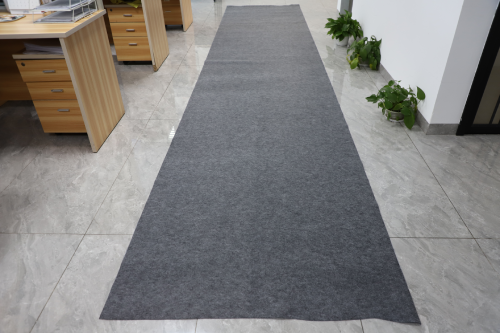
Why Is Needle Punched Felt an Ideal Surface Material?
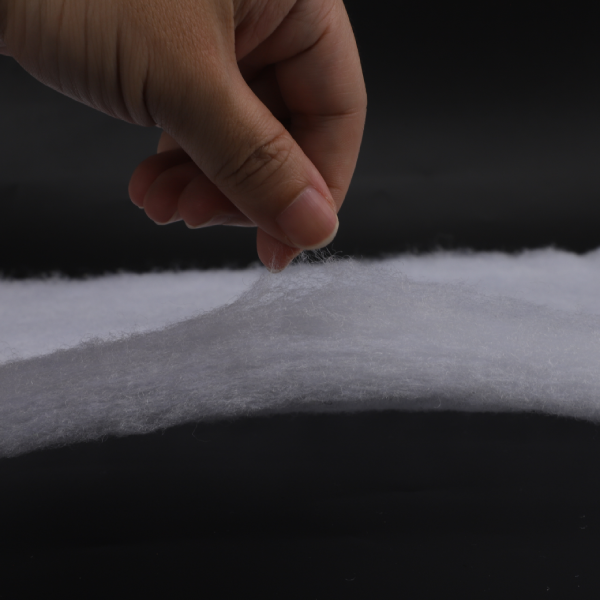
Needle punched felt is manufactured by mechanically entangling fibers into a strong nonwoven structure with controlled thickness, density, and strength.
Compared with ordinary plastic sheets, it offers much greater flexibility. Manufacturers can adjust fiber composition, GSM, thickness, and density to achieve different levels of absorption, cushioning, and abrasion resistance.
Within a grill mat, the felt layer helps reduce the rapid spread of grease and liquids while creating a protective barrier between grilling equipment, charcoal ash, tools, and the floor underneath.
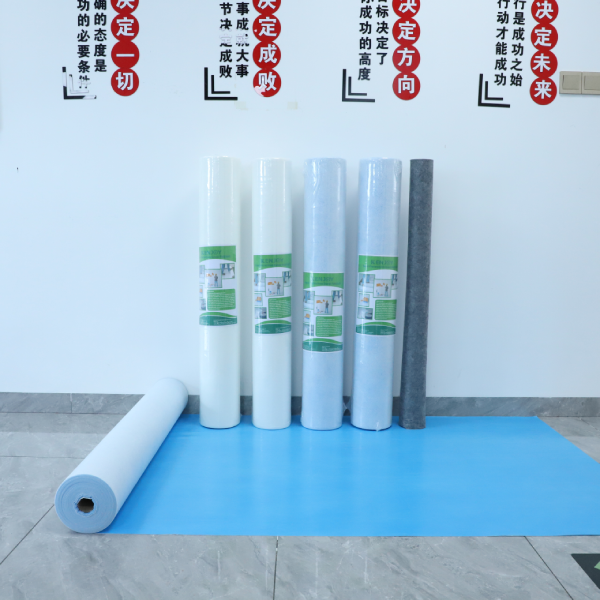
For product developers, this also creates valuable differentiation opportunities. Different material specifications allow lightweight residential mats, medium-duty patio mats, and heavy-duty commercial grill floor protectors to be produced within the same product family.
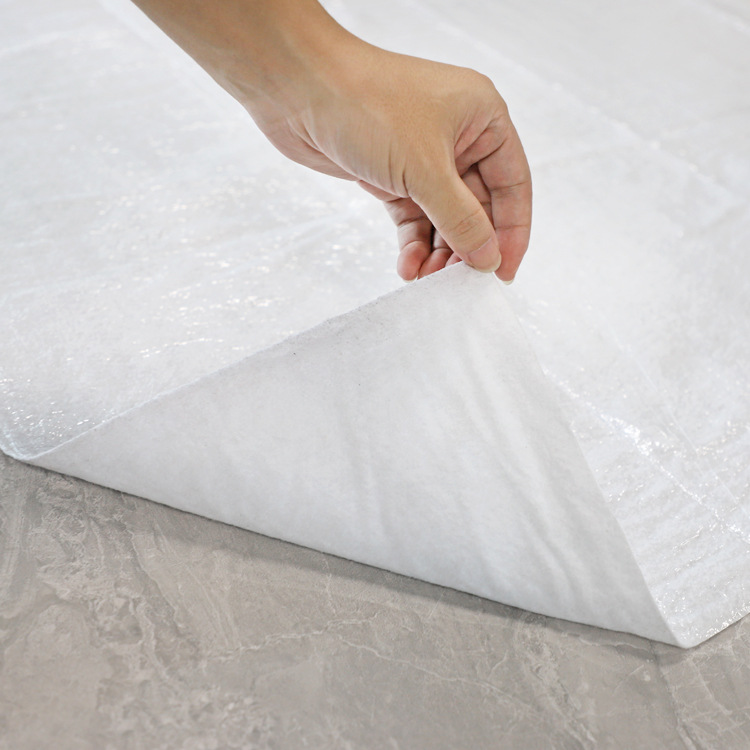
A Needle Punched Felt Grill Mat can also be laminated with waterproof, oil-resistant, or anti-slip backing materials to create multi-layer outdoor protection.
Why Is Choosing the Right Size So Important?
Many consumers measure only the footprint of their grill before purchasing a mat.
This often ignores the actual contamination zone created during cooking.
Grease may drip from the front, sides, or grease outlet, while charcoal ash and food residue spread beyond the equipment itself. The operator’s standing area is also frequently exposed to spills.
If the mat is undersized, common problems include grease stains surrounding the grill, contaminated wooden or concrete flooring, dirty tile grout, and increased cleaning time.
OEM brands often develop several sizes, including compact residential models, medium patio versions, oversized commercial mats, and customized dimensions for different markets.
Is a Thicker Grill Mat Always Better?
Many buyers assume that a thicker grill mat automatically provides better heat protection.
In reality, thickness represents only one part of overall material performance.
Excessively thick products increase weight, packaging volume, shipping costs, and storage difficulty. For homeowners and outdoor users who frequently transport or store their grill mats, excessive weight reduces convenience.
If fiber density, material structure, or backing design is poor, a thick mat may still suffer from inadequate oil absorption, liquid leakage, curling, or instability.
Professional sourcing should therefore evaluate GSM, thickness, density, fiber composition, and composite construction together, rather than comparing thickness alone.
What Specifications Should Buyers Confirm Before Ordering?
For importers and wholesalers, asking only for a unit price rarely provides enough information to evaluate a product.
During quotation and sampling, buyers should confirm:
The intended flooring application.
Fiber composition and material type.
GSM, thickness, and density.
Heat resistance, oil absorption, and abrasion performance.
Backing material and waterproof or anti-slip structure.
Cleaning, storage, and rolling characteristics.
Coverage dimensions around the grill.
Batch consistency in color, GSM, thickness, and dimensions.
OEM logo, label, packaging, and customized size options.
Stable production capacity and long-term supply capability.
These specifications help buyers compare suppliers more accurately while reducing the risk of inconsistent bulk production and customer complaints.
Why Do Commercial Customers Prefer Composite Grill Mats?
Residential customers usually focus on price and convenience, while commercial users prioritize long-term performance.
Restaurants, hotels, BBQ chains, and outdoor dining facilities expose grill mats to constant foot traffic, equipment movement, grease contamination, repeated cleaning, and changing environmental conditions.
A single material rarely solves every problem. Absorbent materials may lack waterproof protection, plastic sheets provide little cushioning, and thin single-layer mats often shift or wear quickly.
A composite structure combining needle punched felt with waterproof, oil-resistant, or anti-slip backing allows each layer to perform a different function. The upper layer manages absorption, cushioning, and wear resistance, while the lower layer improves stability and protects the floor from liquid penetration.
This construction is particularly suitable for commercial applications and gives brands greater flexibility when developing multiple product series.
What Quality Problems Concern Buyers Most?
During real purchasing projects, buyers often worry about issues such as:
Samples performing differently from bulk production.
Inconsistent GSM, thickness, or dimensions between batches.
Curling, cracking, or deformation after repeated use.
Insufficient slip resistance causing movement.
Grease penetrating through the backing.
Difficult cleaning after oil absorption.
Oversized packaging increasing logistics costs.
Limited customization capability.
Unstable delivery schedules affecting seasonal promotions.
These issues directly influence inventory turnover, customer satisfaction, and brand reputation. For this reason, supplier evaluation should include manufacturing capability, material control, quality management, and production consistency—not only price.
Why Develop Patio Grill Mats with a Professional Needle Punched Nonwoven Factory?
For brands and wholesalers, purchasing an existing product may speed up market entry, but it often limits customization and long-term consistency.
A professional needle punched nonwoven felt manufacturer can control the entire process, from fiber selection and blending to web formation, needle punching, lamination, and finishing.
Jinhaocheng has specialized in nonwoven R&D and manufacturing for more than 20 years. With an approximately 26,000 m² production facility and 15 automated needle punching production lines, we manufacture Needle Punched Felt, Needle Punched Nonwoven, Industrial Felt, and various composite nonwoven materials.
For Grill Mat for Patio projects, we offer customized GSM, thickness, density, dimensions, colors, backing structures, and OEM packaging according to different flooring types and market requirements.
Whether your target market focuses on wooden decks, commercial BBQ areas, or outdoor hospitality, suitable material structures can be developed to match the application.
How Can Brands Reduce Returns and Customer Complaints?
Successful product development begins with realistic application testing rather than simple appearance inspection.
Before launch, products should be evaluated on wooden decks, tile patios, concrete, and composite flooring under conditions including prolonged grill placement, grease dripping, equipment movement, foot traffic, repeated cleaning, and heat exposure.
Testing should verify whether the mat slides on smooth surfaces, whether edges curl upward, whether grease penetrates the backing, whether odors remain after cleaning, whether heat causes deformation, and whether different sizes maintain consistent material performance.
Identifying these issues before mass production significantly reduces returns, negative reviews, and after-sales costs.
Conclusion: Choose the Grill Mat According to the Floor Beneath It
Wooden decks, tile patios, concrete, and composite decking can all benefit from grill mats, but each flooring material faces different challenges.
Wood requires protection from heat and grease, tile needs effective oil management, concrete demands resistance to liquid penetration, and composite decking benefits from stable, compatible surface protection.
For importers, wholesalers, and outdoor product brands, the most competitive Grill Mat for Patio is not necessarily the thickest or the cheapest—it is the one designed around the real needs of the end user.
With its adjustable fiber structure, customizable GSM, thickness, and density, needle punched nonwoven felt provides an excellent foundation for developing durable patio grill mats. Combined with waterproof, oil-resistant, or anti-slip backing materials, it becomes suitable for residential patios, commercial grilling areas, and outdoor hospitality applications.
If you are looking for a Grill Mat for Patio supplier, Commercial Grill Floor Protector manufacturer, Needle Punched Felt factory, or an OEM nonwoven manufacturer, Jinhaocheng can develop customized material and product solutions according to your target market, flooring type, and purchasing requirements.