Why Do Commercial Grilling Areas Need Heat Resistant Floor Protection? How to Choose a Commercial Grill Floor Protector
In restaurants, hotels, outdoor dining areas, commercial BBQ restaurants, patio dining spaces, and large-scale catering areas, grilling equipment is often used for long periods and at high frequency. Unlike occasional home grilling, commercial grilling areas may face continuous exposure to high temperatures, grease, food residue, liquid spills, charcoal ash, and equipment movement every day.
When choosing a floor protection product, many operators focus first on price and size while overlooking a more important question: Can an ordinary floor mat really withstand the demands of a commercial grilling environment?
For importers, wholesalers, foodservice product brands, and buyers of commercial grilling equipment accessories, choosing the right Commercial Grill Floor Protector affects not only the protection provided to end users, but also product service life, after-sales issues, repeat orders, and overall product competitiveness.
Therefore, commercial grilling areas need more than a simple “mat.” They need professional floor protection materials designed for high temperatures, grease, wear, and demanding operating conditions.
Why Do Commercial Grilling Areas Need More Floor Protection Than Home Grilling Areas?
Home grilling is usually limited to a relatively short period, and the grill is not normally operated for long hours every day. Commercial grilling environments are very different.
Restaurants and commercial BBQ areas often operate grills continuously. This means that the area around the equipment is exposed to heat for extended periods. During cooking, grease, sauces, water, and food residue may also repeatedly fall onto the floor.
If the floor is made of wood, composite materials, tile, concrete, or another surface that requires maintenance, long-term exposure to these factors can increase staining and cleaning difficulties and may even contribute to surface damage.
For this reason, commercial grilling areas need more than a heat-resistant material. They also need to consider heat resistance, absorption, abrasion resistance, waterproofing, oil resistance, and stable placement.
This is one of the important differences between a Commercial Grill Floor Protector and an ordinary household floor mat.
What Are the Most Common Floor Protection Problems in Commercial Grilling Areas?
Floor problems in commercial grilling areas are usually caused by several factors rather than a single issue.
The first is heat. Commercial grilling equipment may operate for extended periods, exposing the surrounding floor to continuous heat. Therefore, an ordinary decorative mat may not necessarily be suitable for this environment.
The second is grease. Commercial grilling produces much more grease than typical household grilling. Over time, grease accumulation can create difficult-to-clean stains.
The third is liquid and cleaning exposure. Commercial foodservice areas require frequent cleaning, so floor protection materials may repeatedly come into contact with water, cleaning solutions, and other liquids.
In addition, commercial areas experience higher foot traffic and equipment usage. Floor protection materials may need to withstand stepping, friction, equipment movement, and repeated installation and removal.
Therefore, if buyers select a product only according to thickness or price, the actual performance may not match their expectations.
Why Can’t Commercial Grilling Areas Simply Use Ordinary Carpets or Standard Felt?
Ordinary carpets or decorative felt are mainly designed for applications such as interior decoration, sound absorption, or cushioning. They are not necessarily designed for the complex conditions found in commercial grilling areas.
If a material has not been designed according to requirements for heat, grease, moisture, and mechanical wear, it may initially appear suitable but can develop problems such as deformation, contamination, wear, or difficult cleaning over time.
A professional heat resistant floor protector should be selected according to the actual application, including the appropriate fiber composition, GSM, thickness, and composite structure.
This is particularly important for wholesalers.
If a commercial customer experiences obvious product problems shortly after purchasing a floor protector, the result may involve more than one return. It can also affect the distributor’s relationship with the brand and the possibility of long-term cooperation.
What Core Performance Should a Commercial Grill Floor Protector Provide?
A floor protector designed for commercial grilling areas should not focus on only one performance characteristic.
The first consideration is heat resistance. The appropriate fiber system and material structure should be selected according to the actual operating environment rather than simply assuming that a thicker product is automatically more heat resistant.
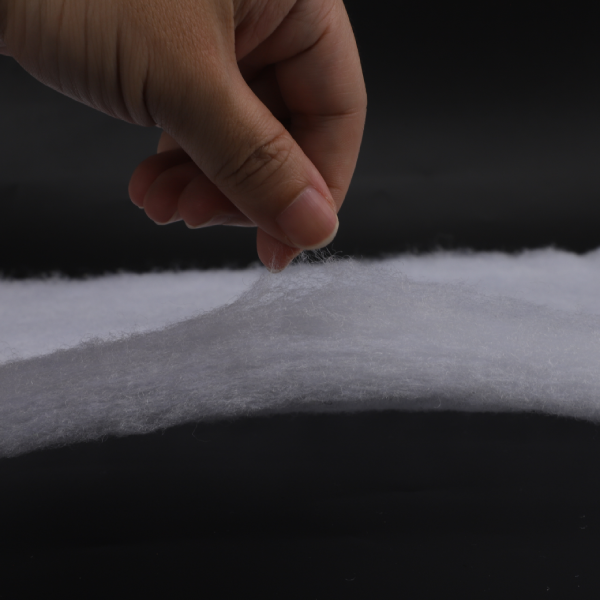
The second is absorption and cushioning performance. Needle punched nonwoven materials have an interlocked fiber structure, and different GSM levels, thicknesses, and densities can be developed for different floor protection requirements.
The third is water and oil resistance. Since grease and liquid exposure are common in commercial grilling environments, the bottom structure should be designed according to the final application.
The fourth is abrasion resistance. Commercial areas experience frequent use, so floor protectors need to withstand foot traffic, equipment movement, and repeated installation.
The fifth is slip resistance and placement stability. If a floor protector moves frequently during use, it cannot provide effective protection. Therefore, the stability between the bottom structure and the floor should also be considered during product development.
For buyers, these properties should be evaluated as a complete system rather than simply asking, “How many degrees can this product withstand?”
Why Is Needle Punched Nonwoven Suitable for Commercial Grill Floor Protectors?
Needle punched nonwoven is manufactured by mechanically entangling fibers through needle punching to create a fiber structure with controlled thickness, density, and strength.
This structure provides considerable processing flexibility. Fiber composition, GSM, thickness, density, width, and dimensions can be adjusted according to different applications.
For commercial grill floor protection, needle punched nonwoven can be used as the surface or primary material and can then be combined with waterproof, oil-resistant, or anti-slip materials according to the final product structure.
This material solution is particularly suitable for customers requiring OEM customization.
For example, a commercial grill mat brand may need different sizes, GSM levels, colors, and packaging options for different markets. Compared with suppliers offering only fixed specifications, a professional custom nonwoven felt manufacturer can adjust the material structure according to the customer’s product positioning.
Why Do GSM and Thickness Matter for Commercial Grill Floor Protectors?
Many buyers ask only one question when requesting a quotation:
“How thick is the product?”
In reality, thickness alone cannot fully represent the performance of needle punched nonwoven materials.
GSM, or grams per square meter, helps buyers understand the amount of material used per unit area, while thickness reflects the three-dimensional structure of the material.
Two needle punched felts with the same thickness may have different actual performance if their fiber composition, density, or manufacturing processes are different.
Therefore, when purchasing a Commercial Grill Floor Protector, it is more appropriate to confirm the following specifications together:
Fiber composition, GSM, thickness, density, dimensions, backing structure, and final application environment.
For bulk purchasing, buyers should also confirm whether these specifications can remain consistent from batch to batch.
What Size Should a Commercial Grill Floor Protector Be?
Commercial grilling equipment is often larger than household grills, so the protection area should not be determined only by the dimensions of the equipment base.
When designing product dimensions, buyers should also consider the area where grease may drip, the operating area for staff, and the surrounding floor areas that may be exposed to contamination or heat.
If the floor protector is too small, the unit price may be lower, but it may not cover the main risk areas during actual use.
If it is too large, it may increase material costs, packaging volume, and transportation costs.
Therefore, the dimensions of a commercial grill floor protector should be determined according to the actual equipment and operating environment.
For OEM customers, different sizes can be developed according to common grill equipment specifications in the target market. Standard and customized sizes can also be developed according to the brand’s product positioning.
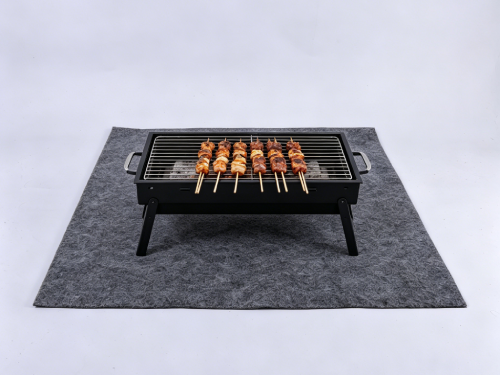
Why Are Composite Floor Protectors More Suitable for Commercial Grilling Areas?
Commercial operating environments are usually more demanding than ordinary household environments.
A single material may solve only one problem, while a composite structure can combine different functions according to the product requirements.
For example, needle punched nonwoven can serve as the primary protective layer. Its fiber composition, GSM, and thickness can be adjusted to meet different cushioning, absorption, and abrasion resistance requirements.
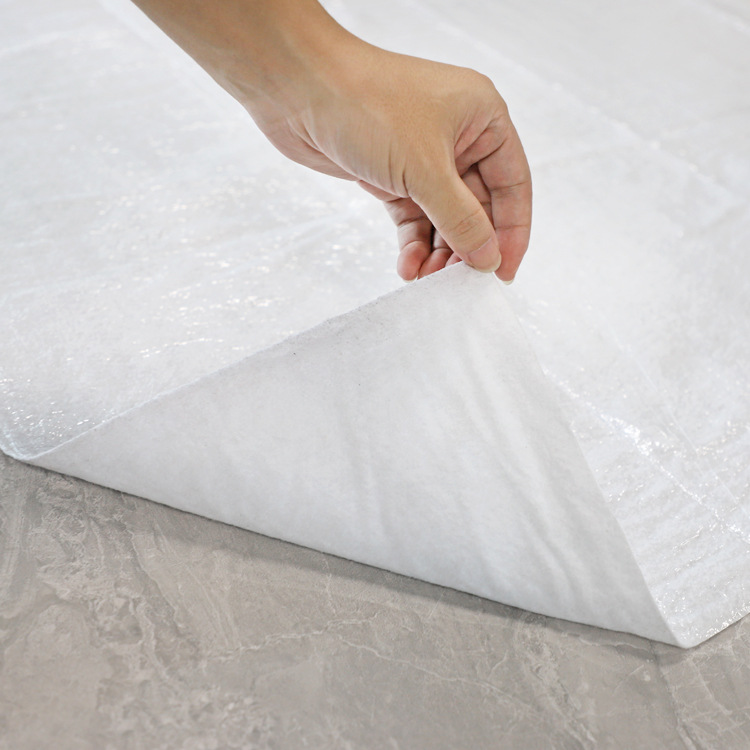
The bottom layer can then use an appropriate waterproof or anti-slip structure according to the application.
Through a suitable material combination, the product can address heat protection, liquid protection, grease management, floor protection, and stable placement at the same time.
For commercial product development, this structure also provides greater flexibility for OEM customization.
Why Should Buyers Not Compare Commercial Grill Floor Protectors by Unit Price Alone?
For wholesalers and importers, price is naturally important, but the actual purchasing cost of a commercial floor protector involves more than the quoted unit price.
If a product has a lower price but a short service life, unstable dimensions, significant batch variation, or frequent end-customer complaints, the actual purchasing cost may be higher.
For brands and wholesalers in particular, product problems can also lead to reshipping, returns, customer service costs, and potential damage to brand reputation.
Therefore, a more reasonable purchasing approach is to compare product performance, material structure, specification consistency, production capacity, quality control, and long-term supply capability.
In other words, buyers should focus on the overall value of the product rather than simply looking for the lowest quotation.
What Specifications Should Wholesalers Confirm When Purchasing Commercial Grill Floor Protectors?
If you are preparing to source Commercial Grill Floor Protectors from China, it is important to clearly define the product requirements during the quotation stage.
First, determine the intended application, such as restaurant grilling areas, hotel outdoor dining areas, BBQ restaurants, commercial patios, or other commercial grilling environments.
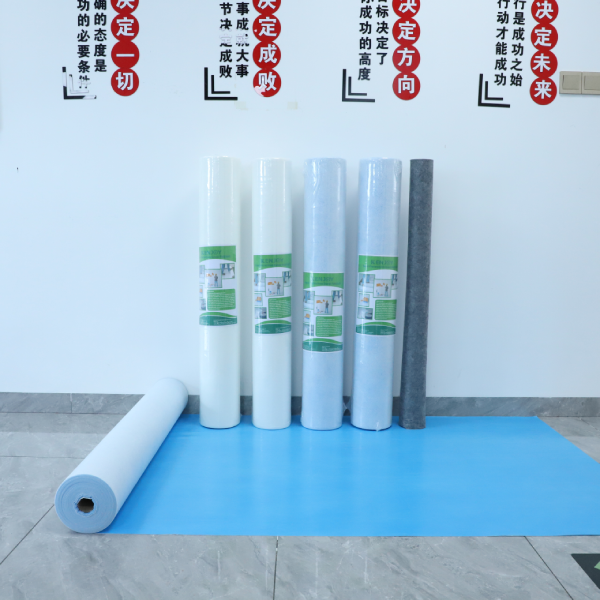
Next, confirm the product size, shape, color, and packaging.
For the material itself, buyers should confirm fiber composition, GSM, thickness, density, backing material, and lamination structure.
If the product will be sold in a specific country or market, the relevant regulatory requirements, customer requirements, and testing or compliance requirements should also be confirmed according to the final product application.
For OEM products, buyers should also confirm the logo, labels, packaging design, and quantity per carton in advance.
The more clearly these requirements are defined, the easier it is for the factory to provide an accurate quotation and develop appropriate samples.
Why Choose a Professional Needle Punched Nonwoven Factory for Commercial Grill Floor Protectors?
For commercial grill floor protectors, the final product performance depends not only on the material itself but also on whether the manufacturer has stable production capabilities.
If a supplier simply purchases finished materials and performs basic processing, there may be differences in materials and specifications between different batches.
A professional needle punched nonwoven felt manufacturer can control the production process more systematically, from fiber selection, opening and blending, and web formation to needle punching and subsequent processing.
Jinhaocheng was established in 2005 and has more than 20 years of experience in nonwoven R&D and manufacturing. The company operates a production base of approximately 26,000 square meters with 15 automated needle punching production lines and an annual production capacity of more than 10,000 tons.
As a needle punched felt manufacturer and nonwoven felt manufacturer China, we can provide needle punched nonwoven materials with different GSM levels, thicknesses, widths, colors, and structures according to customer application requirements.
For commercial grill floor protector projects, OEM and ODM development is also available, including material specifications, product dimensions, composite structures, packaging, and brand customization.
This ability to customize materials from the manufacturing stage is particularly valuable for importers, wholesalers, and brand customers requiring long-term bulk supply.
How Should Commercial Grill Floor Protectors Be Selected for Different Applications?
If the product is mainly used in an indoor commercial grilling area, greater attention should be given to grease, liquids, foot traffic, and daily cleaning.
If it is used in an outdoor dining area, buyers should also consider weather exposure, moisture, floor materials, and the outdoor operating environment.
For hotels, restaurants, or commercial BBQ chains, product performance is only one consideration. Buyers should also pay attention to consistent dimensions, batch stability, packaging efficiency, and long-term supply capability.
If a buyer is developing a private-label product, the product should be planned from the material structure upward, including the needle punched nonwoven material, GSM, thickness, backing, dimensions, color, logo, and packaging.
Therefore, there is no single specification suitable for every commercial grilling environment.
The correct approach is to determine the material structure based on the final application.
Why Is It Worth Using a Professional Heat Resistant Floor Protector in Commercial Grilling Areas?
For commercial grilling areas, floor protection is not simply a decorative issue.
Heat, grease, liquids, abrasion, foot traffic, and frequent cleaning can place additional stress on flooring. Without suitable protection, cleaning, maintenance, and replacement costs may continue to increase.
A professional Commercial Grill Floor Protector can provide more targeted protection for the areas beneath and around commercial grilling equipment through an appropriate material structure.
For buyers, the real objective is not to find the “thickest” or “cheapest” floor protector, but to find a material structure and supplier that match the actual commercial operating environment.
Why Is Jinhaocheng Suitable for Long-Term Commercial Grill Floor Protector Sourcing?
If you are looking for a Commercial Grill Floor Protector supplier, you should evaluate not only product specifications but also whether the supplier has genuine long-term OEM manufacturing capabilities.
Jinhaocheng has specialized in nonwoven material manufacturing for more than 20 years. With a production base of approximately 26,000 square meters and 15 automated needle punching production lines, the company can provide needle punched nonwoven, needle punched felt, composite nonwoven, and various functional nonwoven materials.
Our products can be customized according to customer requirements, including GSM, thickness, width, color, dimensions, and packaging. OEM and ODM cooperation is also supported.
As a custom nonwoven felt manufacturer, needle punched felt manufacturer, and nonwoven manufacturer China, we provide not only standard materials but also material structures developed according to the specific requirements of commercial grill floor protectors.
For importers, wholesalers, brands, and commercial foodservice product suppliers, stable production capacity, specification consistency, and customization capabilities are often more important than a one-time low quotation.
Conclusion: The Key to a Commercial Grill Floor Protector Is Not Simply “Thicker,” but Better Suited to Commercial Use
Commercial grilling areas need to deal with multiple factors, including heat, grease, liquids, abrasion, foot traffic, and long-term use. Therefore, floor protection materials should be designed according to the actual application.
For buyers and wholesalers, when selecting a Commercial Grill Floor Protector, it is important to consider material composition, GSM, thickness, dimensions, composite structure, heat resistance, abrasion resistance, water and oil resistance, and supplier batch consistency.
Needle punched nonwoven provides a flexible foundation for commercial grill floor protectors because of its adaptable material structure and processing capabilities. Working with a professional needle punched felt manufacturer for OEM development also allows products to be adjusted according to different markets and end-use applications.
If you are looking for a commercial grill floor protector supplier, custom nonwoven felt manufacturer, or needle punched nonwoven felt manufacturer, or if you need to develop an OEM commercial grill floor protector for your own brand, Jinhaocheng can provide suitable material and customization solutions based on your application requirements.