Why Are Grill Mat Samples Good but Bulk Orders Different? How to Avoid Quality Variations
When purchasing heat resistant grill mats, many importers, wholesalers, and brand purchasing teams encounter a frustrating problem:
Why is the sample good, but the bulk order is different?
At the sample stage, the grill mat’s thickness, appearance, hand feel, composite structure, and dimensions may all meet expectations. However, after entering mass production, problems such as thickness variation, GSM deviation, unstable dimensions, weak composite bonding, different surface structures, backing material changes, and inconsistent performance between batches may occur.
For small orders, these problems may only affect the user experience.
But for long-term import and wholesale businesses, inconsistent bulk quality can further affect customer complaints, return rates, brand reputation, end-user sales, and repeat orders.
Therefore, when purchasing grill mats, what really needs to be considered is not simply whether “the sample is good,” but:
Can the manufacturer consistently reproduce the approved sample during mass production?
This is also an important criterion for determining whether a grill mat manufacturer China, needle punched felt manufacturer, or nonwoven felt manufacturer China is suitable for long-term cooperation.
Why Can a Good Grill Mat Sample Still Differ from the Bulk Order?
Differences between samples and bulk orders do not necessarily mean that a manufacturer intentionally reduced the quality.
More commonly, sample production and mass production involve different production conditions, raw material batches, equipment parameters, and production control requirements.
For example, a sample may be produced by making specific parameter adjustments according to the customer's requirements, while a bulk order requires continuous production of a large quantity of products. If clear specification control standards are not established during production, the product may gradually deviate from the approved sample.
For needle punched nonwoven grill mats, raw materials, fiber composition, GSM, thickness, needle punching density, lamination process, and cutting accuracy can all affect the final product.
Therefore, good sample quality only proves that:
“The manufacturer can make this sample.”
Stable bulk quality proves that:
The manufacturer truly has the capability to produce the same product consistently.
Why Can Raw Material Changes Affect Bulk Grill Mat Quality?
Raw materials are the first stage affecting batch-to-batch consistency.
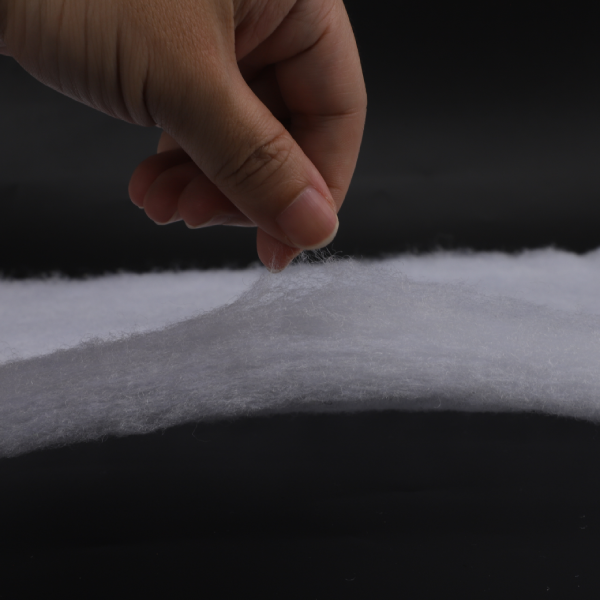
For heat resistant grill mats that use needle punched felt as a primary material, fibers from different batches may vary in fiber length, fineness, strength, and uniformity.
If the raw materials change, the internal structure of the material may also change even when the final product name and specifications remain the same.
For example, changes in raw materials may further affect:
fiber distribution, material density, structural stability after needle punching, thickness, GSM, and surface condition.
For ordinary small orders, these changes may not be easy to identify.
However, for long-term purchasing, where the same specifications are purchased every month or quarter, raw material consistency becomes particularly important.
Therefore, buyers should not only ask suppliers, “What material do you use?” They should also pay attention to:
Can you consistently use stable raw materials to produce the same specifications over the long term?
Why Can GSM Variation Make Grill Mat Samples and Bulk Orders Different?
GSM, or grams per square meter, is an important production parameter for needle punched nonwoven materials.
For grill mats, GSM affects not only product weight but also the overall material structure, thickness, density, and processing performance.
For example, if the approved sample is based on a specific GSM range but the actual GSM deviates significantly during bulk production, the final product’s hand feel, thickness, and structure may also change.
This is why buyers should not inspect only the appearance of the sample.
When approving a sample, buyers should also record GSM, thickness, dimensions, material structure, and backing specifications, and use these data as reference standards for bulk production.
For long-term purchasing, stable GSM control is often more important than the performance of a single sample.
Why Can Grill Mat Thickness Change During Bulk Production?
Many buyers assume that if a manufacturer promises “the same thickness,” the bulk order should be exactly the same as the sample.
In reality, the thickness of needle punched nonwoven materials is related to GSM, fiber structure, needle punching density, compression level, and subsequent processing.
If production parameters change, the final thickness may vary to some extent even when the same raw materials are used.
For a heat resistant grill mat that needs to cover a specific area, thickness variation may further affect overall coverage and product hand feel.
Therefore, during sample approval, buyers should clearly define:
Target thickness, acceptable tolerance, and measurement method.
Do not simply specify “3 mm” or “5 mm.” Instead, confirm the actual acceptable thickness range with the manufacturer.
Why Can Composite Grill Mat Structures Differ Between Samples and Bulk Orders?
Many heat resistant grill mats are no longer made from a single material but use a composite structure.
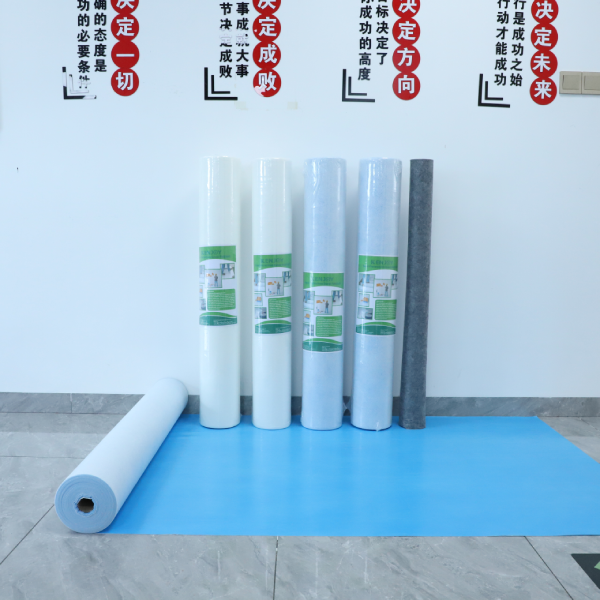
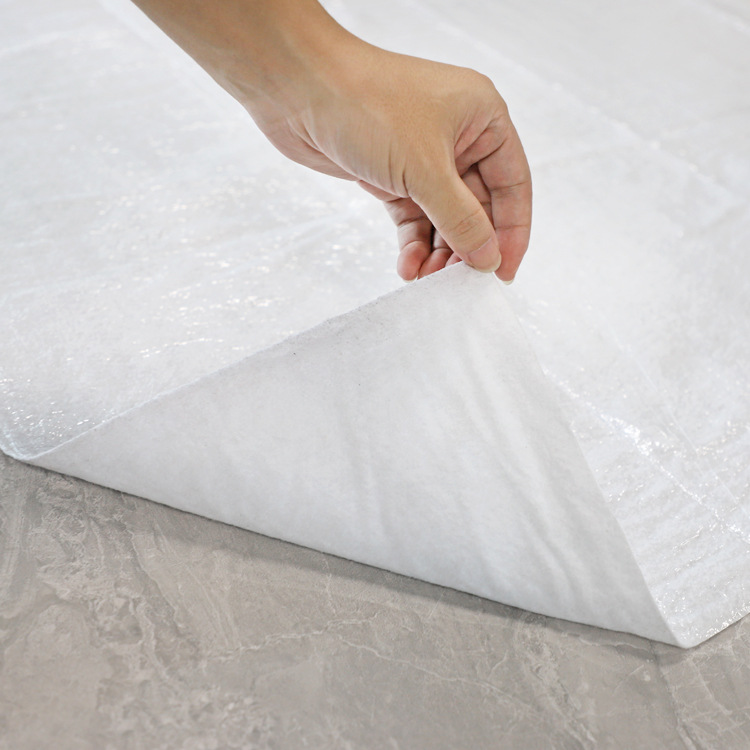
For example, a structure combining needle punched felt + waterproof backing can provide the product with material support, waterproofing, and floor protection functions.
In this situation, differences between samples and bulk orders may result from:
different backing materials, different composite thicknesses, different adhesive or thermal lamination conditions, different lamination pressure, and different production speeds.
If buyers only inspect the surface of the product, it can be difficult to determine whether the internal composite structure is exactly the same.
Therefore, when customizing grill mats, buyers should include the material structure in the confirmed specifications rather than confirming only product images.
For example:
The type of needle punched felt, GSM, thickness, backing material, lamination method, dimensions, and color should all be clearly confirmed during the sample approval stage.
Why Can Bulk Grill Mat Dimensions Differ from the Sample?
For grill mats, dimensions may appear to be one of the simplest specifications, but bulk production can still result in dimensional variation.
This is particularly true for large rolls, continuous-production materials, and products requiring subsequent cutting, where factors such as equipment accuracy, material shrinkage, cutting methods, and processing tolerances may affect the final dimensions.
If the customer's product packaging or sales specifications require strict dimensions, such as fixed-size packaging, retail sets, or specific floor coverage areas, dimensional consistency becomes particularly important.
Therefore, after confirming the product dimensions during the sample stage, bulk production should also be controlled according to the same standard.
For customized products, width, length, roll length, cutting dimensions, and edge condition can all be confirmed in advance.
Why Can Bulk Products Have Different Surface Conditions After the Sample Is Approved?
The surface condition of a grill mat directly affects its appearance and user experience.
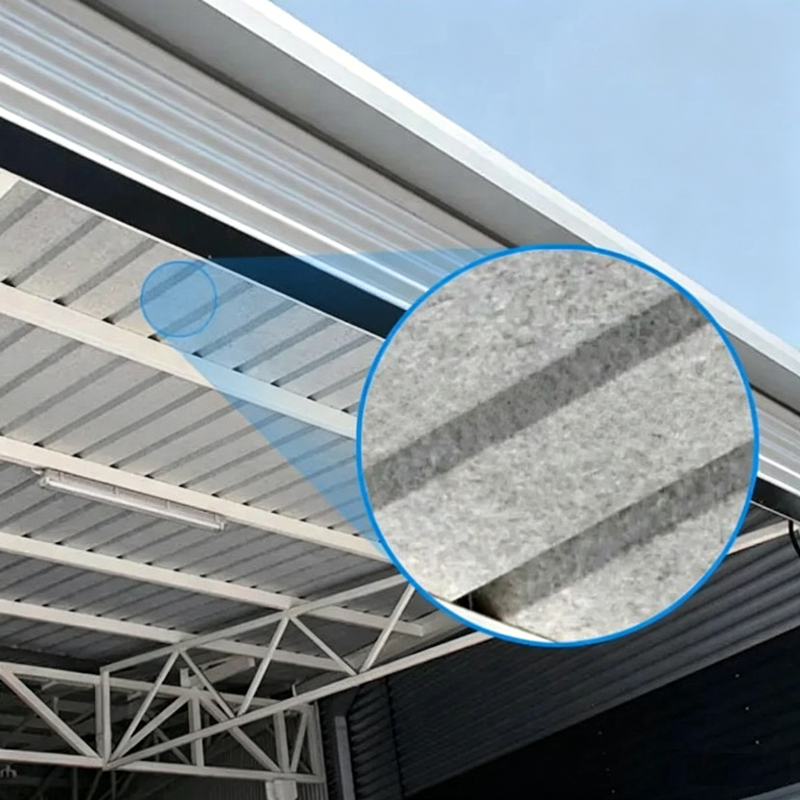
For needle punched nonwoven materials, if fiber distribution, needle punching parameters, or production speed changes, the surface may show different degrees of loose fibers, density variation, uneven surfaces, or localized structural differences.
For buyers, the surface condition observed in the approved sample should become an important reference for bulk production.
This is particularly important for brand customers and retail customers whose products are directly presented to end consumers. Noticeable appearance differences between batches may affect brand image.
Therefore, buyers should pay attention to:
Not only whether the product provides the same functions, but also whether its appearance and surface structure can remain consistent.
Why Can the Heat Resistance of Different Batches from the Same Supplier Also Vary?
Heat resistance cannot be determined simply from the product name.
Different fiber types, material structures, thicknesses, GSM, lamination methods, and flame-retardant treatments can all affect product performance under specific test conditions.
Therefore, if customers have specific requirements for heat resistance or flame retardancy, they should not simply ask the supplier to label the product as “Heat Resistant.”
The specific material specifications and test conditions should also be confirmed.
If a project requires a specific flame-retardant rating or testing standard, formal testing should be conducted according to the applicable standard rather than judging product quality through a simple on-site flame test.
For long-term purchasing, it is more important to confirm:
Whether the material structure used for sample testing is the same as the structure used for subsequent bulk production.
Why Should Bulk Production Standards Be Reconfirmed After Sample Approval?
Many buyers follow this process:
Receive sample → Approve sample → Place bulk order.
However, for customized products, a more reliable approach is to establish a complete Approved Sample + Product Specification.
In other words, the physical sample should be used as a reference together with a clearly defined product specification.
The specification can include:
material, GSM, thickness, dimensions, color, needle punching density, backing material, composite structure, packaging method, and acceptable tolerances.
When bulk production begins, the production department then has clear standards to follow, while buyers can inspect the finished products according to the same standards.
This is more accurate than simply telling the manufacturer to “produce according to the previous sample.”
Why Is a Real Factory More Important Than a Trading Supplier?
If you are purchasing a standard product, the supplier’s production capability is already important.
If you are purchasing an OEM/ODM customized grill mat, the manufacturer’s own production capability becomes even more important.
This is because customized products involve more than sales quotations. They also involve:
raw material control, needle punching production, lamination processing, specification adjustments, cutting, packaging, and batch quality control.
If a supplier mainly relies on external factories for production, different orders may come from different production channels, increasing the risk of inconsistency between samples and bulk orders.
A needle punched felt factory with a stable production system can directly control more stages of the manufacturing process.
For long-term customers, this means a more stable product supply and easier traceability of quality standards.
How Can You Determine Whether a Grill Mat Manufacturer Can Produce Stable Bulk Orders?
Buyers can evaluate this from several aspects.
First, confirm whether the manufacturer has its own production equipment and manufacturing facility.
Second, understand whether the manufacturer can consistently control GSM, thickness, width, density, and material structure.
Third, confirm whether the manufacturer can provide OEM/ODM customization according to customer requirements rather than simply purchasing ready-made products.
At the same time, buyers should determine whether the manufacturer can provide samples for approval and then produce subsequent bulk orders according to the approved sample.
For long-term cooperation, an even more important question is:
If the same specifications are ordered again in the future, can the manufacturer continue producing them according to the same production standards?
This is more important than simply comparing the first quotation.
How Does Jinhaocheng Reduce Differences Between Grill Mat Samples and Bulk Orders?
Jinhaocheng has more than 20 years of nonwoven manufacturing experience, with a production base of approximately 26,000 square meters and 15 automated needle punching production lines, providing large-scale needle punched nonwoven production capacity.
As a professional needle punched felt manufacturer, needle punched nonwoven felt manufacturer, and nonwoven felt manufacturer China, we focus not only on the quality of individual samples but also on consistency between raw materials, production parameters, and finished-product specifications.
According to different applications, we can customize GSM, thickness, width, hardness/softness, roll specifications, and cutting dimensions according to customer requirements.
For customized products, samples can be produced and approved first, followed by bulk production according to the confirmed product specifications.
For grill mat projects, material solutions can be developed according to application requirements, including needle punched felt, waterproof backing, and composite structures.
At the same time, we support OEM and ODM services, helping customers establish clearer product standards from material specification confirmation through bulk production.
For importers, wholesalers, and brand customers, this production-side approach to controlling product specifications can help reduce the risk of quality fluctuations in long-term purchasing.
What Questions Should Buyers Ask Grill Mat Manufacturers Before Ordering?
Before placing a bulk order, buyers can directly confirm the following key questions with the manufacturer.
First, are the GSM, thickness, and dimensional tolerances of the sample and bulk order consistent?
Second, will the needle punched felt, backing material, and composite structure used in the sample also be used throughout the production batch?
Third, how does the manufacturer control product consistency between different production batches?
Fourth, if the product requires heat resistance, flame retardancy, waterproofing, oil resistance, or slip resistance, can the manufacturer provide corresponding test data or test documents according to the requirements?
Fifth, does the manufacturer support OEM, ODM, customized dimensions, customized materials, and customized packaging?
Sixth, if the same specifications are ordered again in the future, can the manufacturer continue production according to the approved sample and product specifications from this order?
These questions can help buyers move from simply “buying a product” to choosing a long-term supplier.
How Can You Avoid Quality Differences Between Grill Mat Samples and Bulk Orders?
The truly effective approach is not simply choosing the supplier with the “best sample.”
Buyers should establish a complete purchasing standard.
First, define the product structure.
Then confirm GSM, thickness, dimensions, color, backing, and lamination method.
Next, conduct sample testing and approval.
After sample approval, use the approved sample together with detailed product specifications as the production standard for the bulk order.
Maintain stable raw materials and production parameters throughout production.
Finally, inspect the finished products according to the approved standards.
This is how sample quality can be truly converted into bulk production quality.
Conclusion: What Really Matters Is Not How Good the Sample Is, but Whether the Bulk Order Can Stay the Same
Why does the “sample look good, but the bulk order is different”?
The core issue is usually not the sample itself, but whether the supplier has a stable production system and the ability to control quality during mass production.
For importers, wholesalers, and brand customers purchasing heat resistant grill mats, needle punched felt, waterproof grill mats, or custom grill mats, supplier selection should not be based only on samples and price.
More importantly, buyers should confirm:
Whether raw materials are stable, whether GSM is stable, whether thickness is stable, whether the composite structure remains consistent, whether production equipment is reliable, and whether the manufacturer can continuously reproduce the approved sample.
This is also an important criterion for determining whether a grill mat manufacturer China, needle punched felt manufacturer China, or nonwoven felt manufacturer China is worth establishing a long-term partnership with.
Jinhaocheng specializes in needle punched nonwoven and customized nonwoven material manufacturing, providing OEM/ODM solutions according to customers’ material structures, GSM, thickness, dimensions, and application requirements.
If you are looking for a Chinese manufacturer capable of consistently producing heat resistant grill mats or customized needle punched nonwoven materials, you can start with sample approval and further verify the manufacturer’s bulk production capability and long-term supply capacity.