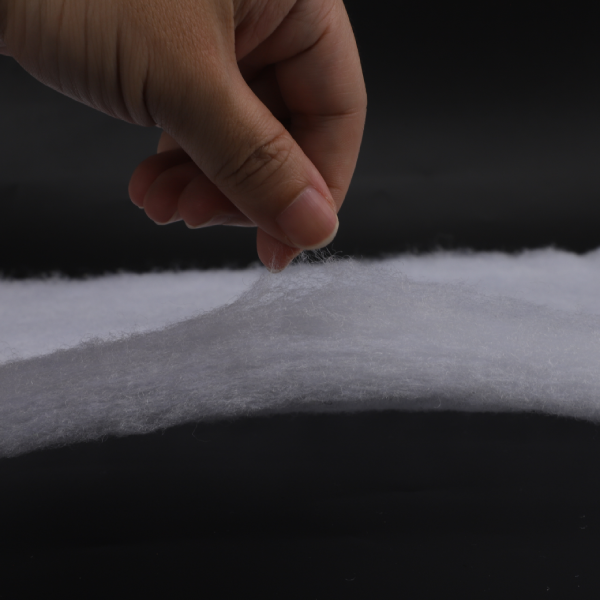
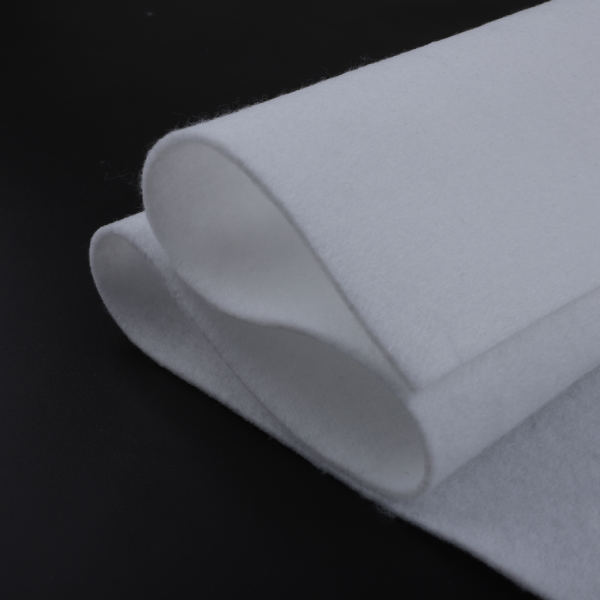
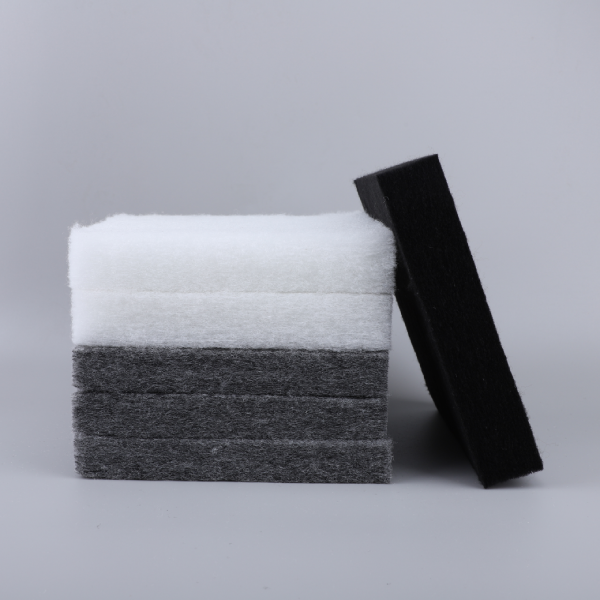
Why Does High-Temperature Equipment Insulation Felt Deform? 5 Key Factors Affecting Long-Term Performance
For industrial equipment manufacturers, engineering companies, equipment maintenance businesses, and importers and distributors that purchase insulation materials regularly, one of the most easily overlooked issues with high-temperature equipment insulation felt is not whether it can provide insulation when first installed, but whether it can maintain its original thickness, dimensions, and structure after prolonged exposure to heat, compression, installation pressure, and equipment operation.
Many insulation felts look intact and meet the required thickness when samples are first received. However, after being installed in actual equipment and exposed to continuous heat, mechanical compression, or long-term service conditions, the material may experience thickness reduction, local compression, edge deformation, dimensional changes, or structural loosening.
For industrial equipment that needs to operate reliably over a long period, these changes may further affect the installation condition and overall performance of the insulation layer.
Therefore, when purchasing high-temperature insulation felt, industrial insulation felt, or high-temperature needle punched felt, buyers should not focus only on the material name or initial thickness. They should also consider the material's dimensional stability, structural stability, and batch-to-batch consistency under actual working conditions.
This is particularly important for OEM projects that require long-term supply.
Why Does High-Temperature Equipment Insulation Felt Deform After Use?
Deformation of insulation felt is usually not caused by a single factor.
The fiber structure, GSM, thickness, density, needle punched structure, and actual working environment can all affect the final dimensional stability of the material.
For example, an insulation felt may have an initial thickness of 10 mm when it leaves the factory, but its actual thickness may gradually change after long-term compression during installation or prolonged exposure to high temperatures.
If the material structure itself is not sufficiently stable, these changes may become more noticeable.
For industrial equipment manufacturers, this means that purchasing should not be based only on the initial thickness measurement of a sample. Buyers should also understand how the material may change under actual installation and service conditions.
This is why a professional needle punched felt manufacturer needs to control GSM, thickness, density, and needle punched structure during production rather than focusing only on the appearance of the finished product.
Factor 1: Greater Thickness Does Not Always Mean Better Long-Term Insulation Stability
When selecting high-temperature insulation materials, many purchasing teams first compare thickness.
For example, when comparing 10 mm, 15 mm, and 20 mm insulation felt, the initial assumption is often that “thicker is better.”
However, for industrial equipment, thickness is only an initial specification.
If the internal structure of the material is relatively loose or the material is easily compressed under installation pressure, even a thicker material may experience significant thickness changes during long-term use.
In contrast, a needle punched insulation felt with a more stable structure and properly controlled density may be more suitable for certain equipment that requires long-term installation, even if it is not the thickest option available.
Therefore, thickness should not be used as the only criterion when purchasing high-temperature equipment insulation felt.
A more practical approach is to consider:
GSM, thickness, density, structural stability, and actual installation conditions.
For industrial equipment that requires fixed-size installation, the relationship between these specifications is particularly important.
Factor 2: Unstable Density Can Cause Insulation Felt to Compress and Deform
Density directly affects the internal fiber structure of needle punched felt.
If the fiber distribution is uneven in different areas, local differences in density may occur.
During installation, areas with lower density may be easier to compress, while areas with higher density may remain relatively stable.
The final result can be thickness variation at different locations within the same piece of insulation felt.
For materials that need to fit closely against equipment surfaces, this variation may lead to inconsistent installation gaps and may even affect subsequent assembly.
Therefore, when purchasing high-temperature insulation materials, buyers should not ask only about the GSM. They should also pay attention to density control and whether the overall material structure is uniform.
This becomes particularly important for large-volume purchasing, where stable production processes are more important than the performance of a single sample.
Factor 3: The Needle Punched Structure Affects the Dimensional Stability of Insulation Felt
The needle punching process does more than simply shape the material.
During needle punching, fibers become mechanically entangled through repeated needle penetration, creating a three-dimensional nonwoven structure.
Needle punching density, penetration depth, and fiber distribution can all affect the final structural stability of the material.
If the needle punched structure is not consistently controlled, differences in structure may occur in different directions.
For high-temperature insulation felt that needs to be cut, stamped, bent, or installed into complex equipment structures, these differences may gradually become apparent during further processing and actual use.
Therefore, when selecting a needle punched nonwoven felt manufacturer, industrial customers should look beyond the number of production machines and consider whether the manufacturer can maintain stable needle punched structures and consistent product specifications over long-term production.
A stable manufacturing process is the foundation of consistent material dimensions.
Factor 4: Long-Term High Temperatures Can Magnify Existing Structural Differences
A high-temperature environment does not necessarily cause every insulation felt to fail immediately.
What really needs to be considered is whether the material can maintain a structure that remains suitable for the intended working conditions over the long term.
For example, two materials may have similar thickness and GSM when they leave the factory, but one may experience greater dimensional changes after prolonged exposure to high temperatures.
This shows why buyers should not evaluate materials only according to their initial factory data.
For industrial equipment designed for long-term operation, it is more important to consider:
Dimensional stability, structural stability, and the condition of the material after long-term use under the target working environment.
It is also important to note that the actual performance of high-temperature equipment insulation materials depends on factors such as fiber type, operating temperature, exposure duration, installation method, and equipment structure.
Therefore, a material should not be considered suitable for every high-temperature application simply because it is described as “high-temperature resistant.”
Factor 5: Differences in GSM and Thickness Between Batches Can Affect Equipment Production
For industrial equipment manufacturers, one common problem is:
The sample performs well, but differences appear during mass production.
For example, the first batch may have stable thickness, while the second batch shows thickness variations and the third batch has different GSM.
These differences may not be obvious in some one-time applications, but they can become much more important when the material is used in the standardized assembly of industrial equipment.
If the insulation felt needs to be:
Cut, stamped, bent, laminated, sewn, or assembled into equipment,
then dimensional and thickness consistency become increasingly important.
If material specifications are unstable, customers may need to repeatedly adjust production equipment or processing parameters, increasing material waste and labor costs.
Therefore, for long-term purchasing projects, batch-to-batch consistency is often more important than the performance of a single sample.
Why Should High-Temperature Equipment Not Be Purchased Based Only on the “Maximum Temperature Rating”?
“What's the maximum temperature?” is a very common question when purchasing high-temperature materials.
However, for actual industrial equipment, this number alone cannot fully describe whether a material is suitable for the application.
The actual performance of the same material may vary under different working environments, installation methods, and exposure durations.
For example, is the equipment operating continuously at high temperature or only heating intermittently?
Is the material directly exposed to the heat source, or is it installed on the outer layer of the equipment?
Is the insulation felt freely positioned, or is it subjected to long-term mechanical compression?
Is the equipment exposed to vibration, friction, or repeated thermal cycling?
These conditions can all affect the final material requirements.
Therefore, instead of asking only for one maximum temperature figure, buyers should provide the high-temperature insulation felt manufacturer with the complete working environment so that the manufacturer can help confirm a suitable material specification based on the actual conditions.
This approach is more practical for industrial projects than simply comparing which material has the highest temperature rating.
Why Do Different High-Temperature Equipment Applications Require Different Insulation Felt Structures?
Different equipment has different installation methods and working conditions, so insulation materials should not necessarily use exactly the same specifications.
For boilers, heating equipment, and heat-treatment equipment that operate continuously, the material may need to maintain stable thickness and structure over long periods.
For industrial pipelines or equipment housings, the material may place greater emphasis on flexibility, conformability, and dimensional stability.
For machinery interiors, insulation requirements may need to be considered together with vibration, limited installation space, and subsequent processing.
For power equipment and other industrial equipment, different material structures may need to be developed according to actual temperature, available installation space, and insulation requirements.
Therefore, high-temperature equipment protection felt is not a fixed standard product with one universal specification.
During actual purchasing, GSM, thickness, density, width, and processing requirements should be determined according to the equipment structure and installation method.
What Specifications Should Be Confirmed for OEM High-Temperature Insulation Felt?
If a project requires customized high-temperature insulation felt, the main specifications should be clearly defined during the quotation stage rather than determining the price first and discussing the material later.
The first specification to confirm is the material type and fiber composition.
Next, confirm GSM and thickness, which directly affect the material weight and overall structure.
Then confirm density and dimensional stability requirements.
If the product requires further processing, the following specifications should also be confirmed:
Width
Roll length
Cutting dimensions
Stamped shapes
Laminated structure
Packaging method
For projects requiring long-term purchasing, buyers should also confirm how specifications will be controlled between approved samples and mass production.
This can help reduce production adjustments caused by changes in material specifications.
Why Is Batch-to-Batch Consistency More Important for Industrial Equipment Manufacturers?
For ordinary consumers, slight differences between two pieces of insulation material may not be easy to notice.
For industrial equipment manufacturers, however, every batch of material needs to enter a standardized production process.
If GSM, thickness, width, or density changes significantly, it may affect cutting dimensions, assembly gaps, and material consumption.
Therefore, a reliable long-term nonwoven felt manufacturer needs to do more than produce a qualified sample. The manufacturer also needs stable mass-production capabilities.
For importers, distributors, and brand customers, stable supply means that every replenishment order can remain as close as possible to the specifications that have already been approved.
This is also an important factor when evaluating whether a needle punched felt factory China is suitable for long-term cooperation.
How Does Jinhaocheng Support Customized High-Temperature Equipment Insulation Felt Production?
HUIZHOU JINHAOCHENG NONWOVENS CO., LTD has long focused on the development and manufacturing of needle punched nonwoven materials, with an approximately 26,000-square-meter production base and 15 automated needle punching production lines.
As a professional needle punched nonwoven manufacturer, we can customize GSM, thickness, density, width, roll length, and subsequent processing according to different industrial application requirements.
For industrial customers requiring long-term supply, material structures and specifications can be discussed according to the actual equipment application, followed by sample confirmation before entering mass production.
For high-temperature equipment insulation materials, we focus on material specification consistency, needle punched structure control, and mass-production stability rather than simply providing a “maximum temperature rating.”
For importers, distributors, industrial material suppliers, and OEM customers, this process from material specification confirmation to mass production can reduce intermediate purchasing steps and improve specification consistency for future replenishment orders.
How Can You Determine Whether Your High-Temperature Equipment Insulation Felt Specifications Are Suitable?
Before placing a bulk order, buyers can evaluate whether the material is suitable for the actual equipment from several aspects.
First, confirm the actual operating temperature and exposure duration rather than providing only a maximum temperature.
Second, confirm the installation position of the insulation felt and whether it will be subjected to long-term compression.
Third, confirm whether GSM, thickness, and density are suitable for the available equipment space.
Fourth, confirm whether the material needs to be cut, stamped, bent, or processed in another way.
Fifth, confirm the specification control requirements between the approved sample and mass production.
Finally, if the product requires long-term supply, confirm whether the manufacturer has stable production capabilities and OEM/ODM customization capabilities.
If these questions are clarified before purchasing, the risks of material deformation, dimensional inconsistency, and batch variation can generally be controlled more effectively.
Conclusion: Long-Term Stability Is What Really Matters for High-Temperature Equipment Insulation Felt
For high-temperature equipment, insulation material is not simply a matter of “the thicker, the better” or “the higher the maximum temperature, the better.”
What really affects long-term performance is the relationship between GSM, thickness, density, needle punched structure, dimensional stability, and batch-to-batch consistency.
For industrial equipment manufacturers, importers, distributors, and OEM customers in particular, a sample that performs well does not necessarily mean that long-term mass production will remain equally stable.
Therefore, when purchasing high-temperature equipment insulation felt, industrial insulation felt, or high-temperature needle punched felt, buyers should evaluate the actual working environment and long-term production requirements while confirming material structure, specification control, and batch consistency.
If you are looking for a needle punched nonwoven manufacturer, needle punched felt manufacturer, or nonwoven felt manufacturer China that can provide customized specifications and stable long-term supply, the appropriate material solution can be further confirmed according to your equipment application, GSM, thickness, density, and dimensional requirements.