Why Do Pipe Insulation Systems Use Flame Retardant Nonwoven Fabric? A Complete Guide to Fire Protection, Thermal Insulation & Pipe Protection
In HVAC systems, hot water pipelines, industrial piping, steam lines, chilled water systems, and equipment insulation projects, the pipe insulation layer affects not only energy efficiency but also equipment safety, condensation control, and long-term service life.
Modern insulation systems are no longer built with traditional insulation materials alone. More manufacturers now use flame retardant nonwoven fabric as a protective layer, wrapping layer, or composite component to combine flame resistance, thermal insulation, flexibility, and excellent processing performance.
For HVAC equipment manufacturers, industrial insulation suppliers, engineering contractors, OEM brands, and international distributors, the real question is not whether flame retardant nonwoven fabric is available, but which material structure is the most suitable for the pipe insulation system.
Why Is Flame Retardant Nonwoven Fabric Increasingly Used in Pipe Insulation Layers?
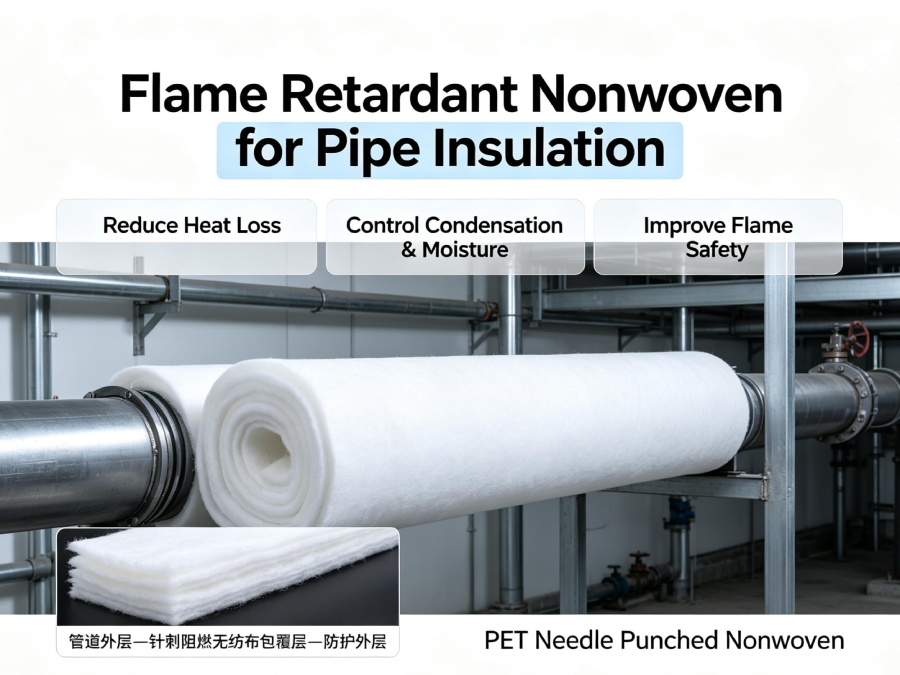
Modern piping systems usually need to solve three major challenges simultaneously.
The first is reducing heat loss and improving overall energy efficiency.
The second is preventing condensation and minimizing corrosion caused by moisture.
The third is improving fire safety in commercial buildings, industrial facilities, and HVAC systems.
While conventional insulation materials provide thermal resistance, many insulation systems also require an outer layer with flame resistance, mechanical protection, flexibility, and durability. This is why needle punched flame retardant nonwoven fabric has become an important functional material within modern pipe insulation structures.
Rather than replacing insulation materials, it functions as a protective and reinforcing layer within the complete insulation system.
What Does Flame Retardant Nonwoven Fabric Actually Do in Pipe Insulation?
Many buyers assume it is simply a fabric wrapped around insulation.
In reality, it may serve several functions within different composite structures.
Typical applications include:
Flame resistant protective layer
Thermal insulation wrapping layer
Mechanical protection layer
Composite insulation layer
Equipment protection covering
Noise reduction support layer
In HVAC, chilled water, and industrial piping systems, nonwoven materials are often selected because they improve both installation performance and overall insulation durability.
Therefore, buyers should evaluate where the material is positioned within the insulation system, rather than asking only whether it is flame retardant.
Why Is Needle Punched Structure Better for Pipe Wrapping?
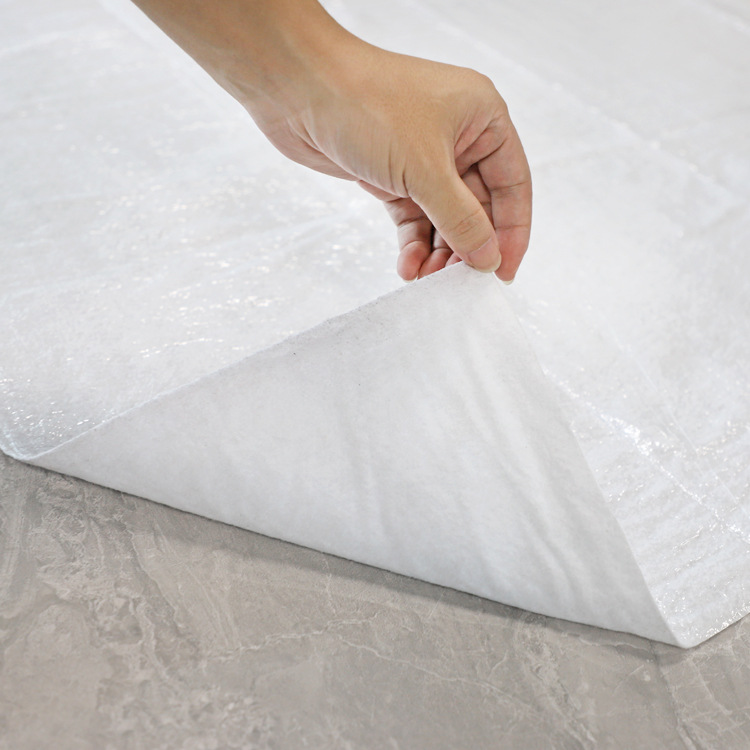
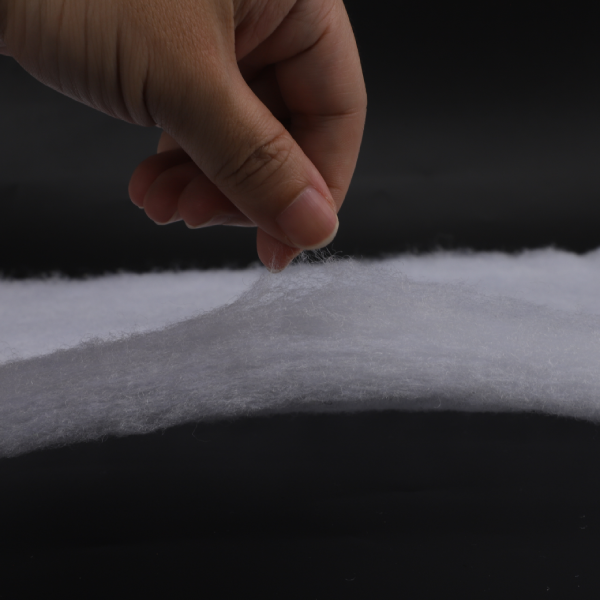
The biggest advantage of needle punched technology is its three-dimensional fiber structure created through mechanical entanglement.
Compared with some conventional nonwoven materials, needle punched flame retardant felt provides better structural stability and greater processing flexibility.
For pipe insulation, this allows the material to conform more easily to:
Straight pipes
Pipe elbows
T-joints
Irregular equipment surfaces
Different pipe diameters
The structure can also be customized by adjusting GSM, thickness, density, and softness, making it suitable for OEM insulation products.
For manufacturers producing continuous wrapping materials, needle punched rolls are also easier to slit, laminate, die-cut, and convert into finished products.
Why Is Flame Retardant Performance Important for HVAC and Industrial Pipes?
Many commercial and industrial projects require insulation materials with flame-resistant properties.
This is particularly important in:
Commercial buildings
Hospitals
Factories
Data centers
Public facilities
HVAC systems
In these environments, insulation systems are expected to provide both thermal performance and improved fire safety. Flame retardant nonwoven fabric can become part of the insulation structure while supporting the overall flame-resistant performance of the finished product.
It is important to note that flame resistance should always be evaluated according to the specific material structure, thickness, and applicable testing standard, rather than the product name alone.
Why Does Flexibility Affect Installation Efficiency?
Many buyers focus on heat resistance but overlook installation performance.
Pipe systems contain numerous bends, curves, and complex joints.
If the material is too rigid, installers may encounter problems such as:
Difficulty wrapping elbows
Poor joint appearance
Lower installation efficiency
Edge lifting during application
Longer installation time
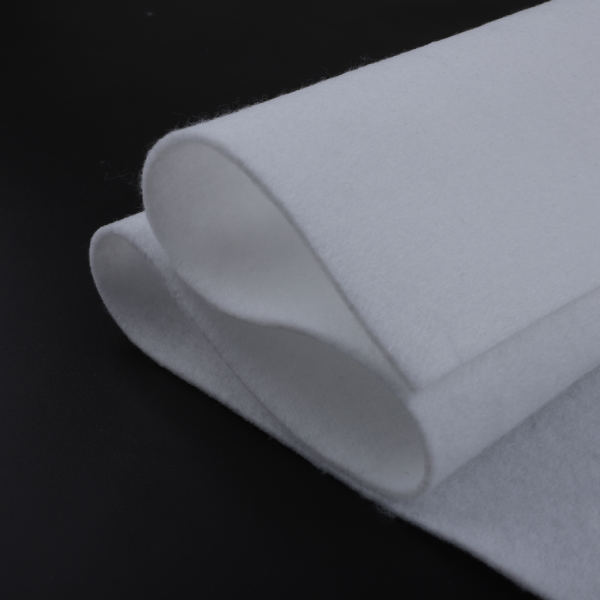
A well-designed needle punched fire resistant felt should balance flexibility with structural stability, allowing it to conform to pipes while maintaining its integrity throughout installation.
For HVAC contractors, this directly improves installation efficiency.
How Should Flame Retardant Nonwoven Fabric Be Selected for Different Pipe Systems?
Different piping systems prioritize different performance characteristics.
Pipe System | Primary Performance Focus |
HVAC ducts | Flame resistance, flexibility, thermal insulation |
Hot water pipes | Heat retention, thermal resistance, protection |
Chilled water systems | Condensation control, dimensional stability |
Steam pipelines | Heat resistance, structural stability |
Industrial equipment | Flame resistance, abrasion resistance, long-term durability |
For this reason, one material specification is rarely suitable for every project.
Buyers should select the appropriate GSM, thickness, density, and fiber composition according to the actual operating environment.
Which Material Specifications Should Buyers Confirm Before Ordering?
For long-term OEM insulation projects, the following specifications should always be confirmed:
Fiber composition
GSM
Thickness
Density
Width
Roll length
Flame resistance requirements
Heat resistance requirements
Converting and processing method
Batch consistency
Because many insulation products are supplied as continuous wrapping rolls, roll width and length are equally important.
Stable batch consistency also helps reduce installation and manufacturing variation.
Why Are Customized Needle Punched Flame Retardant Felts Better for OEM Projects?
Different countries, HVAC systems, and industrial equipment require different insulation specifications.
OEM projects often require customization of:
Thickness
GSM
Color
Width
Roll length
Fiber blend
Flame retardant performance
Instead of purchasing fixed specifications, many manufacturers prefer working with a custom fire resistant felt manufacturer capable of developing materials according to the final application.
This approach reduces secondary processing while creating more consistent product standards.
How Does Jinhaocheng Support Customized Pipe Insulation Materials?
HUIZHOU JINHAOCHENG NONWOVENS CO., LTD has more than 20 years of experience in needle punched nonwoven manufacturing. Our production facility covers approximately 26,000 m² and operates 15 automated needle punching production lines, providing stable production capacity for functional nonwoven materials.
For HVAC, industrial insulation, hot water systems, chilled water pipelines, and equipment insulation products, we can customize:
Flame Retardant Needle Punched Felt
Fire Resistant Nonwoven Fabric
Needle Punched Fire Resistant Felt
We support customized:
GSM
Thickness
Density
Width
Roll specifications
Fiber composition
We also provide OEM, ODM, and sample development services for customers developing customized pipe insulation products.
Conclusion: An Effective Pipe Insulation System Requires More Than Thermal Insulation
Modern pipe insulation systems focus not only on reducing heat loss, but also on improving flame resistance, equipment protection, installation efficiency, and long-term durability.
For HVAC systems, industrial equipment, hot and chilled water pipelines, and building insulation projects, flame retardant needle punched nonwoven fabric serves as an important wrapping and protective layer within the complete insulation structure.
Rather than supplying only a standard felt, the right manufacturing partner should be able to develop customized material structures according to different pipe diameters, operating temperatures, insulation systems, and OEM product requirements.
A reliable needle punched felt manufacturer can provide stable quality, customized specifications, and long-term production consistency for global insulation and fire protection applications.