How to Choose Industrial Heat Resistant Felt? Select the Right Needle Punched Felt by Operating Temperature and Equipment Application
For industrial equipment manufacturers, engineering companies, equipment maintenance businesses, and importers who regularly purchase industrial materials, one of the biggest challenges when sourcing Heat Resistant Felt is not finding a supplier, but knowing how to select the right material.
Many purchasing teams simply tell a supplier during their first inquiry:
“We need heat resistant felt.”
But for a real industrial application, this requirement is usually not specific enough.
Different types of equipment operate at different temperatures, heating durations, heat-source locations, installation conditions, and mechanical environments. Even when two materials are both called Heat Resistant Felt, their fiber systems, thickness, density, structure, and long-term performance can be significantly different.
Therefore, the real question for an industrial project is not “Which is better, standard felt or heat resistant felt?” but:
What temperature does your equipment need to withstand? How long must the material operate under that condition? Where will the material be installed? Will it mainly provide thermal insulation, thermal protection, or structural support?
For buyers, understanding these factors is more important than simply comparing the “maximum temperature” stated by different suppliers.
What Is Industrial Heat Resistant Felt?
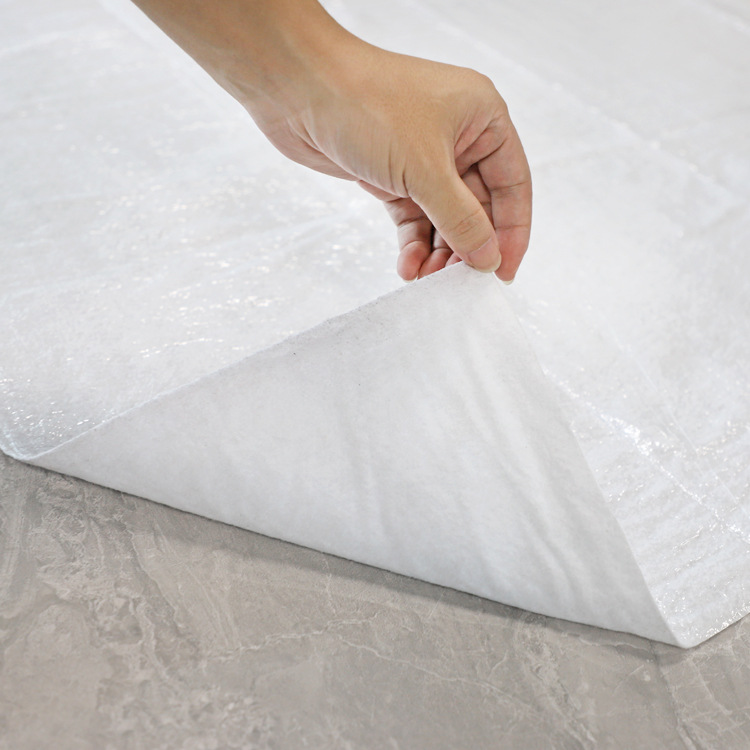
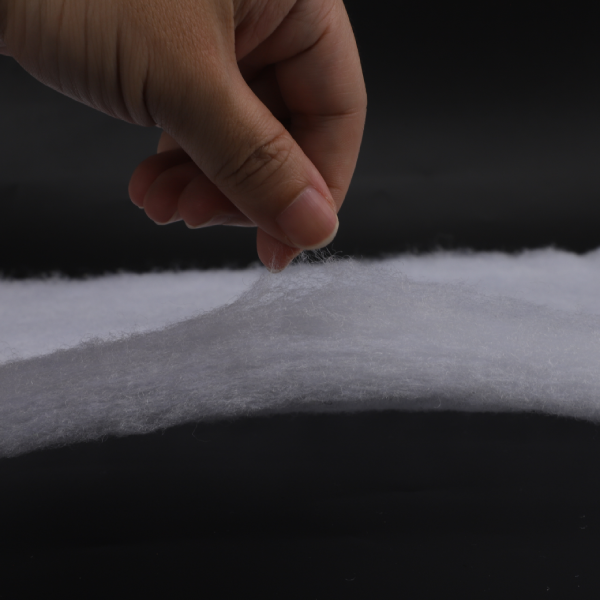
Industrial Heat Resistant Felt is a type of functional felt material developed for high-temperature industrial environments. Different fiber systems and needle punched structures can be selected to help the material maintain relatively stable structure and performance under specific temperature conditions.
Compared with standard industrial felt, the main difference is not necessarily the appearance, but the design objective of the material.
Standard Needle Punched Felt can be used for general industrial functions such as cushioning, sound absorption, filtration, filling, wear resistance, and basic industrial processing. Industrial heat resistant felt, however, places greater emphasis on structural stability, dimensional stability, thermal insulation, and long-term performance under high-temperature conditions.
Therefore, when a project involves industrial equipment, areas around heat sources, high-temperature pipes, or thermal management structures, standard felt should not automatically be assumed to meet the actual operating conditions.
Why Should You Not Choose Heat Resistant Felt Based Only on Its “Maximum Temperature”?
This is a very common mistake in industrial material purchasing.
When a supplier says that a material “can withstand high temperatures,” it does not automatically mean that the material is suitable for your equipment.
This is because the actual thermal environment of a material normally involves several different temperature concepts.
Continuous Operating Temperature refers to the temperature a material can withstand during normal long-term operation.
Peak Temperature refers to the highest temperature that may occur for a short period during equipment operation.
In addition, you need to consider whether the material will directly contact the heat source or simply be installed near it, and whether the material is exposed to continuous heat or intermittent temperature increases.
For example, one material may withstand a relatively high temperature for a short period. However, if the project requires the material to operate continuously for hours or longer, its actual performance may be very different.
Therefore, for industrial buyers, the right question to ask a Heat Resistant Felt Manufacturer is not just one temperature number, but:
Continuous Operating Temperature + Peak Temperature + Exposure Time + Application Environment
Only when these factors are considered together does the temperature rating become meaningful.
How Should Industrial Heat Resistant Felt Be Selected by Temperature Level?
Different industrial projects have different requirements for heat-resistant materials. A more practical purchasing approach is to determine the required temperature level first, and then select the appropriate fiber system and material structure.
Industrial Temperature Requirement | Common Material Direction | Typical Considerations |
Moderate-temperature industrial environments | Special polyester and functional fiber systems | Flexibility, thickness, cost, processing performance |
Higher-temperature environments | Oxidized PAN and other high-temperature fiber systems | Thermal stability and structural retention |
Higher-temperature applications | Fiberglass and other high-temperature material systems | High-temperature stability, insulation requirements, installation method |
Specialized high-temperature industrial environments | Carbon fiber and other high-temperature fiber systems | Operating temperature, environmental conditions, material purity and structure |
It is important to understand that there is no single temperature value that applies to every fiber system or every finished product.
Even when the same type of fiber is used, changing the GSM, thickness, density, needle punched structure, or final processing method can affect the product's performance.
Therefore, when sourcing industrial heat resistant felt, it is better to provide the actual operating conditions and let the supplier recommend the appropriate material system rather than directly comparing prices based on one fixed “maximum temperature” number.
Why Do Different Industrial Equipment Types Require Different Heat Resistant Felt?
Heat resistant felt is not limited to one type of equipment.
Industrial boilers, heat treatment equipment, high-temperature pipes, valves, mechanical equipment, and thermal management systems have very different structures, so the materials used cannot always be selected according to the same standard.
For high-temperature pipes and valves, the material may need a certain level of flexibility because equipment can include elbows, flanges, connections, and other irregular areas. If the material is too rigid, gaps may appear during installation and affect the overall insulation structure.
For heat treatment equipment and industrial furnaces, continuous exposure to high temperatures is often more significant. Therefore, long-term thermal stability and the ability to maintain structural integrity during actual operation become important considerations.
For external equipment insulation layers, thickness, GSM, density, and installation method also need to be matched. If the material is too thin, it may not provide the expected thermal protection. If it is too thick, it may increase installation space requirements and processing costs.
Therefore, a true industrial felt manufacturer should not simply provide one standard specification. The material should be selected according to the equipment structure and actual operating conditions.
Do GSM and Thickness Affect the Actual Application Performance of Heat Resistant Felt?
Yes, but it cannot be simply understood as “the higher the GSM, the better the heat resistance.”
For Needle Punched Felt, GSM and thickness mainly affect the material's weight, volume, density, structure, and final processing characteristics.
For insulation applications, thickness is often an important parameter, but it needs to be evaluated together with the fiber system and structural design.
For example, two materials with the same thickness may behave differently in high-temperature environments if their fiber types, density, and needle punched structures are different.
Therefore, when sending an inquiry, buyers should ideally provide:
Material + GSM + Thickness + Width + Continuous Temperature + Application
With complete information, the supplier can evaluate the material more accurately instead of quoting only according to “how many millimeters thick” the customer wants.
What Industrial Applications Are Heat Resistant Felt Best Suited For?
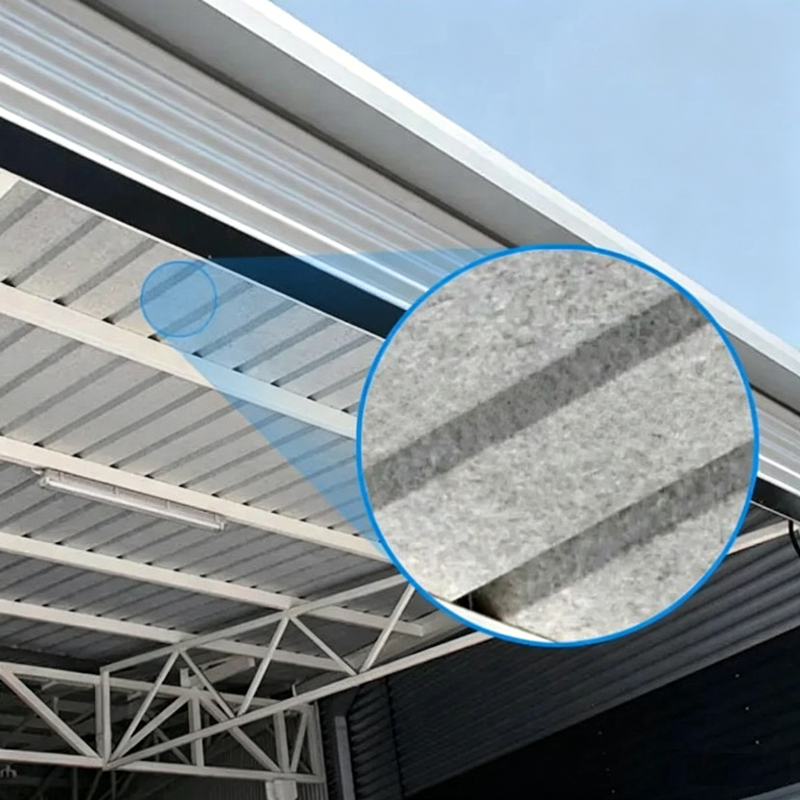
The application range of Heat Resistant Felt depends on the specific material system. Common industrial directions include equipment insulation, heat treatment equipment, high-temperature pipe protection, mechanical thermal protection, and other thermal management structures.
In equipment insulation applications, the material mainly helps reduce heat transfer and protect surrounding components.
In pipe and valve applications, the material needs to adapt to equipment structures while maintaining sufficient stability and ease of processing.
In thermal management systems, the material may be combined with other functional materials to form different insulation structures according to the product design.
For some OEM industrial products, heat resistant felt may also require additional slitting, die cutting, lamination, or other downstream processing.
Therefore, when purchasing industrial heat resistant felt, buyers should consider not only the material itself, but also how the final product will be installed and processed.
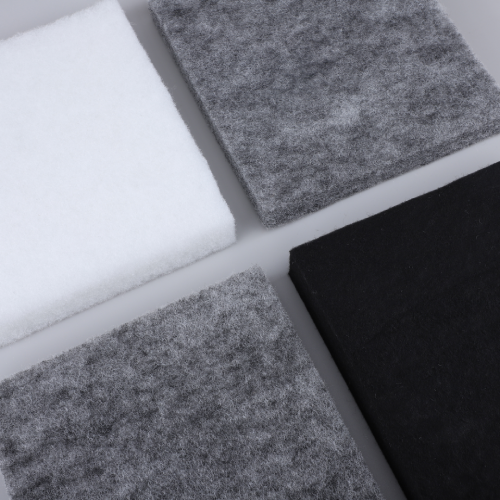
What Is the Biggest Difference Between Industrial Heat Resistant Felt and Standard Needle Punched Felt in Purchasing?
Standard Needle Punched Felt is generally selected based on common industrial functions.
Buyers often focus on softness, thickness, GSM, color, dimensions, sound absorption, cushioning, filtration, wear resistance, and processing performance.
Industrial heat resistant felt requires one additional core dimension:
Temperature Performance
In other words, purchasing heat resistant felt is not only about “what the material is,” but also about “what environment the material will operate in.”
This is why the same needle punched nonwoven can be developed for completely different industrial requirements.
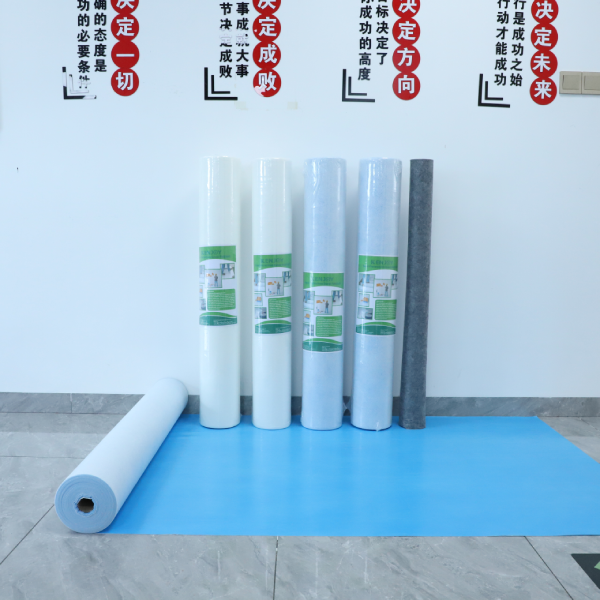
When a customer simply tells a supplier, “I need felt,” the supplier may only be able to recommend a standard product.
When the customer provides the operating temperature, equipment type, exposure duration, thickness, and final application, the manufacturer has the information needed to develop custom needle punched felt.
Why Is Customized Industrial Heat Resistant Felt More Suitable for OEM Projects?
Industrial equipment is rarely designed entirely around standard materials.
Many OEM projects have different installation areas, thickness restrictions, equipment dimensions, and processing requirements. Therefore, standard roll materials may not always be directly suitable.
During actual product development, buyers may need to customize:
GSM
Thickness
Width
Roll Length
Fiber Composition
Density
Die-Cut Shape
Customized Dimensions
For projects with more complex structures, additional lamination or die-cut processing may also be required.
Therefore, choosing an OEM nonwoven manufacturer and ODM nonwoven manufacturer can allow the material to be adjusted according to the final product requirements from the initial sampling stage, instead of purchasing a standard material first and then finding ways to modify it.
What Information Should You Provide to a Heat Resistant Felt Supplier?
Many inquiries require repeated communication not because the supplier is unwilling to quote, but because the information provided at the beginning is insufficient.
If you are sourcing high temperature felt for an equipment project, providing complete project parameters from the beginning usually makes it easier to receive an accurate material recommendation.
For example:
What is the equipment and its final application?
What is the continuous operating temperature?
What is the maximum peak temperature?
How far is the material from the heat source?
Will the material directly contact the heat source?
What thickness and GSM are required?
Will the final product be supplied as rolls or die-cut parts?
Is there an existing sample or drawing?
For long-term projects, buyers should also pay attention to consistency between samples and mass production, including GSM, thickness, dimensions, and material structure.
Why Is Choosing a Professional Needle Punched Felt Manufacturer Important?
For industrial heat-resistant materials, final performance depends not only on the raw materials but also on the manufacturing process.
During Needle Punched Nonwoven production, the fiber system, fiber ratio, carding process, needle punching structure, GSM, and thickness control can all affect the finished product.
For projects requiring long-term supply, maintaining consistency between different production batches is especially important.
Therefore, when searching for a needle punched felt manufacturer, buyers should not only ask about price. They should also understand whether the supplier has its own production lines, whether it can control material specifications, whether it supports different fiber systems, and whether it provides OEM and ODM customization.
For industrial projects, stable mass-production capability can be just as important as successful initial sample testing.
How Does Jinhaocheng Provide Customized Industrial Heat Resistant Felt?
HUIZHOU JINHAOCHENG NONWOVENS CO., LTD. specializes in manufacturing needle punched nonwoven materials and related nonwoven products, with more than 20 years of nonwoven manufacturing experience.
As a professional needle punched nonwoven felt manufacturer, Jinhaocheng can customize materials according to different industrial applications, including material systems, GSM, thickness, width, and structure.
For industrial customers, we can develop:
Heat Resistant Felt
Industrial Insulation Felt
High Temperature Felt
Needle Punched Felt
Custom Needle Punched Felt
OEM & ODM Nonwoven Materials
For long-term industrial projects, material specifications can be adjusted according to equipment requirements and final product applications rather than simply using one standard specification.
For importers, engineering companies, industrial product manufacturers, and wholesale buyers, this type of supply model is more suitable for projects that require continuous supply and consistent specifications.
When Purchasing Industrial Heat Resistant Felt, Do Not Ask “Which One Is the Best?” First—Confirm Your Operating Temperature
Selecting industrial heat resistant felt is not simply a comparison of material grades.
Different projects involve different temperatures, operating times, equipment structures, and installation methods, so the appropriate material can also be different.
The real purchasing logic for Heat Resistant Felt should be:
Application → Continuous Temperature → Peak Temperature → Fiber System → GSM & Thickness → Processing Method
Rather than:
Maximum Temperature → Price → Order
When you first define the actual operating conditions and then determine the fiber system and product specifications, the purchasing result is more likely to match the final application requirements.
For industrial equipment, pipes, heat treatment systems, and other high-temperature applications, choosing the right industrial heat resistant felt is essentially about selecting a material solution that matches the equipment's working conditions.
If you are looking for a professional heat resistant felt manufacturer, needle punched felt manufacturer, or need to develop custom needle punched felt, Jinhaocheng can provide customized material solutions based on your operating temperature, thickness, GSM, and final application.