How Is UL94 Flame Retardant Needle Punched Felt Manufactured? A Complete Production Process from Material System to Testing
For importers, industrial material buyers, product developers, and OEM customers sourcing Flame Retardant Needle Punched Felt, the main concern is often not simply whether the finished product can pass a particular test.
They also want to know:
How is this flame retardant needle punched felt actually manufactured?
Why can suppliers using similar product names achieve different flame-retardant performance?
Why can a standard Needle Punched Felt be developed into a functional nonwoven material with flame-retardant requirements by changing the material system and production approach?
The answer is usually not one single production step.
The development of UL94-related flame retardant needle punched felt starts with the material system and then goes through fiber preparation, web formation, needle punching, process control, and final testing to create a product that meets the project requirements.
It is important to note that UL 94 is a test standard used to evaluate the burning behavior of certain polymeric materials under controlled conditions. It should not simply be treated as a general concept equivalent to “high-temperature resistance” or “fire protection for a specific duration.” Therefore, during material development, the applicable test method needs to be determined together with the final product structure and actual testing requirements.
This article explains the development logic of UL94 flame retardant needle punched felt from the manufacturer's perspective, covering the material system, production process, flame-retardant requirements, process control, testing, and finished product.
Why Does the Material System Come Before Needle Punching in Flame Retardant Felt Production?
Standard Needle Punched Felt can be produced using a variety of fiber systems.
However, once the product has a Flame Retardant performance requirement, material development cannot simply start with standard fibers.
The manufacturer first needs to determine:
Fiber Type
Fiber Composition
Fiber Blend
Target Flame Performance
and the final application environment.
Different fibers have different combustion behaviors, thermal stability, and processing characteristics. Therefore, flame retardant needle punched felt is not a product with one fixed formulation.
Depending on the project requirements, flame-retardant polyester, oxidized PAN, carbon fiber, and other functional fibers or blended systems may be selected for development.
This means that the foundation of Flame Retardant Felt performance begins with the material system rather than simply adding a “flame retardant” label at the end.
For OEM projects, the customer needs to provide the final application, required performance, and processing conditions so that the manufacturer can determine the appropriate fiber direction.
Why Is Fiber Blending Important in Flame Retardant Needle Punched Felt Development?
For some customized products, more than one type of fiber may be used.
Different fibers can form a specific Fiber Blend according to the product requirements.
At this stage, the manufacturer needs to consider the processing characteristics of different fibers during opening, blending, carding, and needle punching, while also considering the final structure and flame-retardant requirements.
Therefore, fiber blending is not simply a matter of putting several raw materials together according to weight ratios.
The material composition needs to match:
Flame Performance
Temperature Environment
Flexibility
Thickness
and the final processing requirements.
For buyers, this is also why simply asking for “fireproof felt” is usually not specific enough.
When the target performance and final application are clearly defined, the manufacturer can design the product starting from the material system.
What Needs to Be Controlled First When Flame Retardant Needle Punched Felt Enters Production?
Once the material system has been determined, the raw materials enter the nonwoven production process.
Although flame retardant needle punched felt still goes through basic processes such as opening, carding, web formation, and needle punching, its production requires tighter specification control around the final flame-retardant material structure than standard needle punched felt.
The raw material condition needs to remain stable first.
If fibers from different batches show significant differences in material composition, length, or other key characteristics, this may affect subsequent processing and final product consistency.
Therefore, before production begins, the manufacturer needs to confirm that the raw materials are consistent with the approved product requirements.
How Do Fiber Opening and Blending Affect the Structure of Flame Retardant Materials?
After the raw materials are confirmed, the fibers enter the Opening and Blending stage.
The purpose of this process is not only to loosen compressed fibers, but also to create a relatively uniform distribution of different fibers.
For flame-retardant fiber systems, uniform material distribution is especially important.
If some areas have noticeably different fiber compositions, the internal structure of the final material may also vary.
Therefore, this stage needs to pay attention to:
Fiber Dispersion
Blend Uniformity
Raw Material Consistency
These factors provide the foundation for subsequent web formation and needle punching.
Why Can Carding and Web Formation Not Simply Copy Standard Needle Punched Felt Parameters?
After opening and blending, the fibers enter the carding and web formation stages.
During this process, the fibers are formed into a relatively uniform Fiber Web.
For flame retardant needle punched felt, web formation is not only related to appearance.
The distribution of fibers throughout the web affects the subsequent needle punched structure and the consistency of different areas of the finished product.
Therefore, the manufacturer needs to control production conditions according to the target GSM, Thickness, Density, and Fiber Structure.
The difference from standard Needle Punched Felt is that standard felt may focus mainly on forming a basic structure that meets the specification.
Functional flame retardant needle punched felt also needs to ensure that a stable structure compatible with the flame-retardant material system is formed.
How Does Needle Punching Form the Three-Dimensional Structure of Flame Retardant Felt?
Needle Punching is a key step in forming the structure of needle punched felt.
During this process, barbed needles repeatedly penetrate the fiber web, mechanically entangling fibers in different directions and forming a stable three-dimensional nonwoven structure.
For flame retardant needle punched felt, the needle punching process needs to match the previously determined material system.
Production needs to consider:
Needle Density
Penetration Depth
Punching Passes
Production Speed
as well as the uniformity of the fiber web itself.
These parameters are not designed simply to make the structure “as dense as possible.”
The actual objective is to maintain a stable internal structure while meeting the required thickness, density, strength, and flexibility.
Therefore, needle punching is not the only factor determining flame-retardant performance. It is an important production stage that helps the selected material system form a stable finished structure.
Why Must Flame Retardant Requirements Be Defined Before Production?
A common issue is that a customer first asks the manufacturer to produce the material and only later specifies a particular flame-retardant testing result.
This development approach can increase the cost and difficulty of making changes.
Flame Retardant Performance is not simply a label that can be added after production is completed.
It can affect the material system, product structure, and testing sample.
If a project requires a specific test, the following should be confirmed before development:
Required Test
Target Classification
Material Structure
Sample Thickness
Final Application
The manufacturer can then develop the product around the actual requirements.
It is especially important to understand that UL 94 evaluates material flammability characteristics under controlled conditions and has a defined scope and test environment. Therefore, a UL 94 result should not be interpreted as comprehensive fire performance under every real-world application condition.
Why Is Process Control Important for Stable Flame Retardant Needle Punched Felt Production?
Even when the material formulation has been determined, unstable production conditions can still lead to batch variations in the finished product.
For long-term purchasing projects, buyers usually do not only need one sample that passes a test.
They need:
Approved Sample
that can be consistently reproduced as:
Bulk Production
Therefore, the manufacturer needs continuous control over raw materials, fiber blending, web formation, needle punching, and subsequent processing.
Significant changes at any critical stage may affect the final product structure and specification consistency.
This is also why the manufacturer's mass-production capability is just as important as its one-time sample development capability for an OEM Needle Punched Felt project.
How Should GSM, Thickness, and Density Be Incorporated into Flame Retardant Material Process Control?
For needle punched nonwoven products, GSM, Thickness, and Density are all important product specifications.
Flame retardant needle punched felt also needs an appropriate combination of specifications according to the final application.
For example, a customer may require specific GSM, thickness, and dimensions while also requiring a certain flame performance.
The manufacturer then needs to ensure that both the product structure and material system satisfy these requirements.
Therefore, it should not be interpreted simply as:
Higher GSM = Better Flame Retardancy
or:
Thicker Felt = Better Fire Protection
Product performance needs to be confirmed based on the material system, structure, and actual testing conditions.
For OEM customers, a better approach is to provide complete target specifications and allow the manufacturer to develop the product from the perspective of the overall structure.
What Role Does Finishing Play in Flame Retardant Needle Punched Felt Manufacturing?
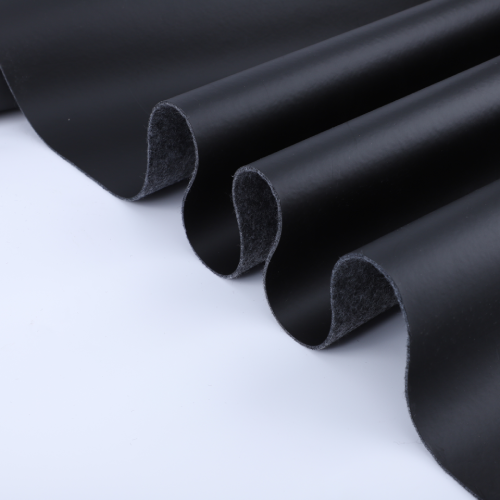
After needle punching is completed, some materials may require additional finishing according to the final product requirements.
The specific process depends on the product structure and application.
It may include:
Heat Treatment
Calendering
Lamination
Coating
or other customized processing.
However, not every Flame Retardant Needle Punched Felt requires the same finishing process.
Therefore, the manufacturer needs to determine the appropriate processing method based on the final product requirements rather than applying one standard finishing process to every product.
For materials requiring lamination, the downstream structure also needs to be considered together with the material system and needle punched structure established earlier.
At What Stage Should UL94-Related Testing Be Performed?
After the product has been developed according to the target material system and production specifications, the required testing should be carried out according to the project requirements.
The purpose of testing is to confirm whether the product meets the defined performance requirements.
For projects involving UL 94, test samples need to be prepared according to the applicable requirements and evaluated using the corresponding method.
UL documentation indicates that UL 94 testing is used to evaluate the flammability behavior of certain polymeric materials under controlled laboratory conditions involving small flames or radiant heat sources. It does not directly evaluate hour-scale fire resistance, flame spread, smoke characterization, or heat release rate.
Therefore, for buyers, the more important question is:
What Test Is Required?
rather than simply asking:
“Is it UL94?”
This also helps avoid confusing different types of fire-related tests.
Why Does a Tested Material Still Need to Be Monitored for Bulk Production Consistency?
For OEM customers, one sample passing a test does not automatically mean that every subsequent batch will be exactly the same.
During bulk production, raw material conditions, production parameters, and final specifications all need to remain stable.
Therefore, in addition to confirming test results, buyers should also confirm:
Material Specification
GSM
Thickness
Dimensions
and the consistency of the finished product between batches.
For long-term orders, the ability to consistently reproduce the Approved Sample is a critical manufacturing capability.
This is different from standard Needle Punched Felt because functional flame-retardant materials need to meet both basic product specifications and specific performance requirements.
What Information Should Be Confirmed for the Finished Flame Retardant Needle Punched Felt?
Once the material has completed production and passed the required inspections, the buyer should receive a clear set of product information.
This should include:
Fiber System
GSM
Thickness
Density
Dimensions
Required Flame Performance
Test Information
Production Specification
For OEM products, the following can also be confirmed:
Roll Size
Cutting Dimensions
Packaging
and other customer requirements.
These details help buyers establish stable product specifications and make repeat purchasing easier.
Why Is a Professional Needle Punched Felt Manufacturer Important for Flame Retardant Material Development?
Flame retardant needle punched felt is not simply one standard product.
The material system, structural design, production process, and testing requirements need to work together.
Therefore, when looking for a needle punched felt manufacturer, buyers should not only consider one sample or one quotation.
It is more important to understand whether the manufacturer can customize products starting from the material development stage and maintain stable specifications during subsequent production.
This is especially important for OEM projects.
What customers really need is a continuous manufacturing capability covering:
Material Development → Production → Testing → Bulk Manufacturing
How Does Jinhaocheng Manufacture Customized Flame Retardant Needle Punched Nonwoven Materials?
HUIZHOU JINHAOCHENG NONWOVENS CO., LTD. specializes in the manufacturing of needle punched nonwoven materials and related nonwoven products, with more than 20 years of nonwoven manufacturing experience.
As a professional needle punched nonwoven felt manufacturer, Jinhaocheng can develop customized needle punched nonwoven materials according to different product requirements.
The company has a production base of approximately 26,000 m² and 15 automated needle punching production lines, supporting the development and bulk production of different material systems, GSM levels, thicknesses, widths, and product structures.
For flame-retardant products, materials can be customized according to:
Fiber Composition
Flame Retardant Requirements
GSM
Thickness
Density
Dimensions
and other project specifications.
For OEM/ODM customers, the product can be developed and confirmed from the sample stage before entering bulk production.
How Is UL94 Flame Retardant Needle Punched Felt Developed from Material System to Finished Product?
A complete development process for flame retardant needle punched felt can be understood as:
Material System
↓
Fiber Preparation
↓
Opening & Blending
↓
Carding & Web Formation
↓
Needle Punching
↓
Finishing
↓
Process Control
↓
Testing
↓
Final Inspection
↓
Finished Product
The key is not simply completing each step individually, but keeping every stage aligned with the requirements of the final product.
For buyers, this means that a professional Flame Retardant Needle Punched Felt Manufacturer needs to understand not only how to produce needle punched felt, but also the relationship between the material system, flame-retardant requirements, product structure, and testing.
Conclusion: UL94 Flame Retardant Needle Punched Felt Is Developed from the Material System, Not “Made Flame Retardant” at the Final Step
The manufacturing of UL94 Flame Retardant Needle Punched Felt is not about adding a flame-retardant label after standard needle punched felt has already been produced.
It should begin with the:
Material System
and then proceed through:
Fiber Preparation → Web Formation → Needle Punching → Process Control → Testing
to create a product that meets the project requirements.
For buyers, the important question is whether the manufacturer can connect the material system, production structure, process control, and testing requirements into one consistent development process.
At the same time, the scope of UL 94 needs to be understood accurately. It is mainly used to evaluate material flammability under defined conditions and should not simply be interpreted as comprehensive fire certification for every application environment.
If you are looking for a professional flame retardant felt manufacturer, needle punched felt manufacturer, or custom needle punched felt supplier, Jinhaocheng can provide customized nonwoven material development and bulk production support according to your final application, material requirements, GSM, thickness, and testing requirements.