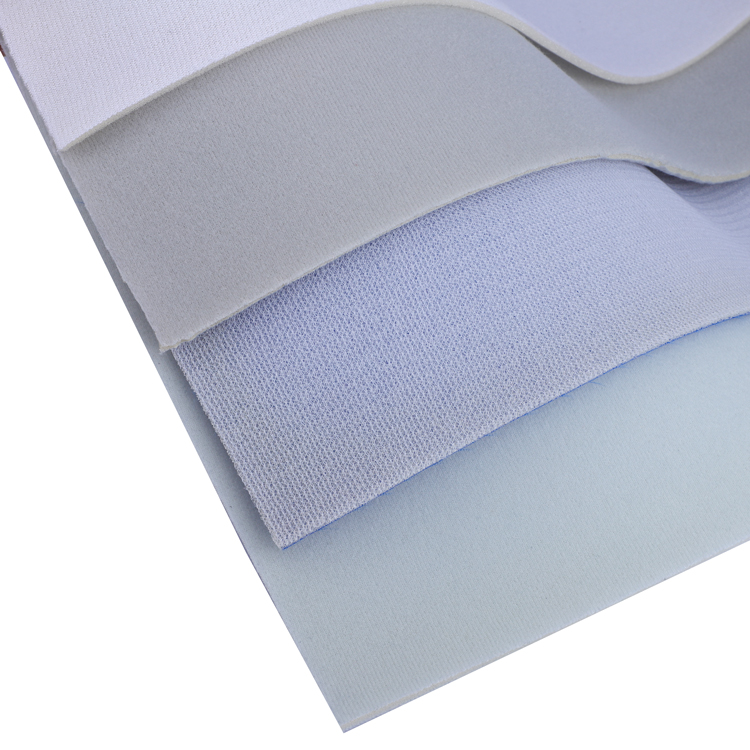
Single-Sided vs. Double-Sided Foam Laminated Fabric: How to Choose the Right Composite Structure?
When developing foam laminated fabric, product designers and buyers often need to answer a basic question first: Does the finished product need fabric on one side of the foam, fabric on both sides, or an additional functional layer?
This decision affects more than the number of material layers. It can also influence the finished product's surface appearance, contact surface, cushioning structure, processing methods, and final assembly requirements.
For example, a foam laminated material used in footwear or furniture may need fabric on one side for appearance, while the other side is used for internal bonding. Products such as bra cups or other padded components may require the foam to be covered with fabric on both sides.
Some products may also require an additional functional film layer to meet specific barrier or other functional requirements.
Therefore, choosing a foam fabric composite structure should not be based only on the number of layers or the price. Buyers should first understand the role of each layer and determine which surfaces need to remain exposed, covered, or prepared for further processing.
Why Should You Look Beyond the Number of Layers in Foam Laminated Fabric?
Foam laminated fabric is generally made by combining foam with fabric or other functional materials. Different projects can use different layer arrangements depending on the design and requirements of the finished product.
From a structural perspective, common options include:
Structure | Basic Layer Arrangement | Main Structural Characteristics |
Single-sided lamination | Foam + Fabric | Fabric is bonded to one side of the foam, while the other foam surface remains exposed |
Double-sided lamination | Fabric + Foam + Fabric | Foam is positioned between two fabric layers |
Film-added lamination | Foam + Fabric + Film | An additional functional film is incorporated into the foam and fabric structure |
It is important to understand that single-sided and double-sided lamination are not quality grades. Double-sided foam laminated fabric is not necessarily stronger or more durable, nor is it automatically suitable for every application.
The right choice depends on the required surface structure and the function of each material layer in the finished product.
For example, if a product only needs a fabric surface on one side and the other side will be bonded to another component, a single-sided structure may be sufficient. If both sides need fabric surfaces, a double-sided structure may be more appropriate.
If the product requires an additional barrier or another specific function, adding a film layer may also be worth evaluating.
During product development, buyers should define the required structure first and then discuss the material combination with the supplier, rather than simply requesting more layers.
Single-Sided Foam Laminated Fabric: Foam + Fabric
A single-sided foam laminated fabric structure generally consists of one layer of foam and one layer of fabric. The fabric is bonded to one side of the foam, while the other side remains exposed.
This structure is suitable for product designs that require a fabric appearance or contact surface on only one side.
For example, some products need fabric as the outer layer to meet appearance, touch, or sewing requirements, while the other foam surface is used for internal support, bonding, or combination with other materials. In these cases, adding another fabric layer may not be necessary.
From a product development perspective, buyers should pay attention to several points when selecting a single-sided structure.
First, which side of the finished product needs the fabric layer?
Buyers should identify the exposed side and the side intended for internal bonding. If the fabric is used as the visible surface, specify the required color, appearance, and hand feel. If the foam surface will contact other components, explain how the material will be used.
Second, does the other side of the foam need to remain exposed?
If the other side needs to be bonded to another material, undergo further processing, or form part of the internal product structure, the buyer should clarify whether the foam surface should remain uncovered.
An exposed foam surface is not automatically unsuitable. Its suitability depends on the product design and application environment.
Third, is the single-sided structure suitable for further processing?
If the material will be cut, die-cut, sewn, or molded, buyers should explain the intended processing methods in advance. Fabric and foam may behave differently during processing, so actual samples should be used to confirm whether the material is suitable for the next production steps.
The main advantage of a single-sided structure is its relatively simple layer arrangement. It is worth considering when only one side of the product needs a fabric surface. However, its suitability still depends on the intended use of the exposed foam surface, the material combination, and the processing requirements.
Double-Sided Foam Laminated Fabric: Fabric + Foam + Fabric
A double-sided foam laminated fabric structure generally places foam between two fabric layers, forming a three-layer composite: Fabric + Foam + Fabric.
Unlike single-sided lamination, this structure provides fabric surfaces on both sides. It is suitable for products that require fabric coverage on both sides of the finished material.
For example, some bra cups, padded components, footwear materials, and other composite products may require the two sides to serve different appearance, contact, or structural purposes. In these cases, a fabric-foam-fabric construction may be considered.
However, double-sided lamination is not simply a matter of adding another fabric layer to a single-sided structure. The additional layer changes the overall composite construction, so the specifications and functions of each layer need to be reviewed again.
The two fabric layers do not have to be identical.
Depending on the product design, the two sides can use different fabrics, colors, textures, or specifications. For example, one side may focus more on appearance, while the other may need to meet specific surface requirements for contact with another component.
Buyers should clarify whether the same fabric will be used on both sides. If different fabrics are required, provide the material type, color, and surface requirements for each side separately.
What role does the foam play in the middle layer?
Foam generally serves as the cushioning layer in this composite structure. Its actual performance depends on the foam material, thickness, density, and overall construction. A three-layer structure alone does not guarantee a specific cushioning performance.
If the product requires a particular thickness, softness, or compression performance, buyers should define the target requirements and evaluate them through samples.
Further processing must consider both fabric surfaces.
If the material needs to be cut, sewn, heat-pressed, or molded, buyers should confirm whether both fabric layers and the foam are suitable for the intended process.
For example, some products require sewing after cutting. In this case, the material should not be evaluated only by its flat appearance. Sample validation should consider the actual product shape and processing method.
For products that require fabric surfaces on both sides, Fabric + Foam + Fabric is a structure worth considering. The final material combination, however, must still be confirmed according to the finished product requirements.
Film-Added Foam Lamination: Foam + Fabric + Film
In addition to combining fabric and foam, some products may require an extra functional film layer to create a composite structure containing foam, fabric, and film.
For example, Foam + Fabric + Film can be considered as one possible structural arrangement. However, the layer order is not fixed for every product. The film may be positioned differently depending on the product design, material compatibility, and intended application.
Compared with a basic fabric-and-foam composite, adding a film layer introduces additional factors that need to be considered.
First, clarify why the film layer is needed.
A film may be used for specific liquid-barrier, surface-protection, or other functional requirements. However, different film materials have different properties.
A product should not automatically be described as waterproof simply because a film layer has been added.
If waterproof performance is required, buyers should specify the film material, intended application environment, bonding between layers, and the testing requirements for the finished product.
Second, confirm the position of the film layer.
Placing the film outside the foam, outside the fabric, or in another position may change the finished product's surface characteristics, contact conditions, and further processing requirements.
For example, if the film is positioned on the outer surface, buyers should consider whether it will come into direct contact with other materials. If the film is placed inside the composite, the complete layer arrangement must be checked against the product design.
Finally, evaluate the performance of the complete composite.
The fact that an individual film material has a particular property does not mean the finished composite will automatically retain the same performance.
The fabric, foam, film, and bonding method can all affect the final result. If the product requires waterproofing, moisture-vapor transmission, flex resistance, or another specific performance, the complete composite sample should be evaluated.
Therefore, a film-added structure is more suitable for product development projects with clearly defined additional functional requirements. A film layer should not be added simply to increase the number of layers.
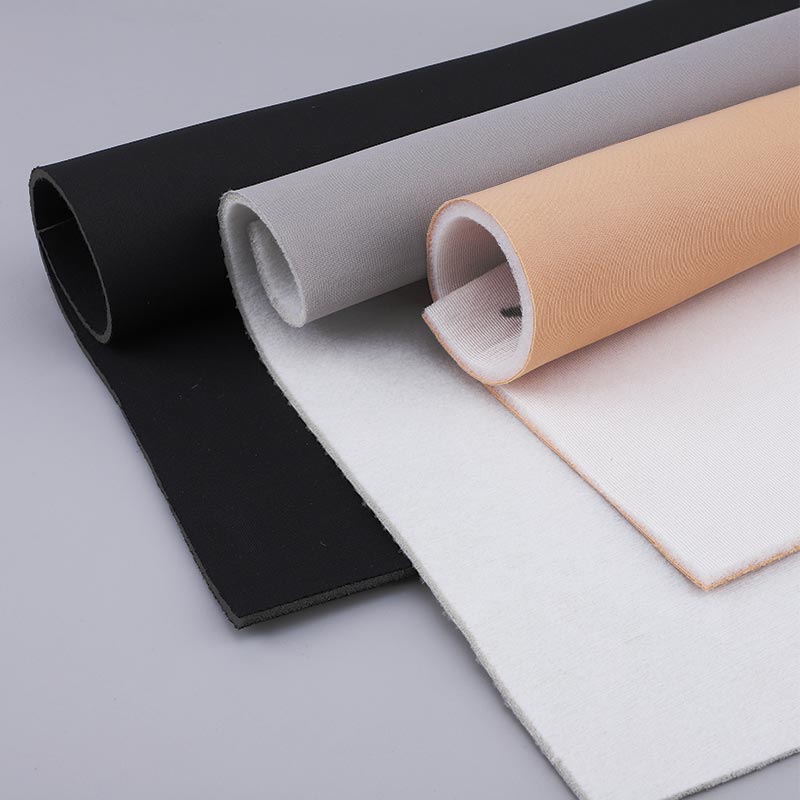
How Do Different Foam Laminated Fabric Structures Affect the Finished Product?
In actual purchasing decisions, buyers should not compare only single-sided, double-sided, or three-layer constructions. They should also consider how each structure may affect the finished product.
Comparison | Single-Sided Lamination | Double-Sided Lamination | Film-Added Lamination |
Surface coverage | Fabric on one side, exposed foam on the other | Fabric surfaces on both sides | Depends on film position and material arrangement |
Appearance design | Suitable when only one side needs a fabric appearance | Suitable when both sides need fabric surfaces | Can introduce a specific film surface or functional design |
Cushioning performance | Depends on the foam and overall construction | Also depends on the foam and overall construction | Depends on the foam, film, and complete combination |
Further processing | The fabric side and foam side need to be evaluated for processing compatibility | Both fabric surfaces and the foam need to be considered | The effect of the film layer on processing also needs to be evaluated |
Structural complexity | Relatively simple | More complex because of the additional fabric layer | Depends on the film material and layer arrangement |
Surface appearance and contact conditions
A single-sided structure has fabric on one side, while a double-sided structure provides fabric surfaces on both sides. If the two sides of a finished product require different appearances or contact characteristics, a double-sided structure offers more options for material combinations.
A film-added structure requires additional consideration of whether the film is exposed and whether it will come into direct contact with other components or users.
Cushioning and thickness requirements
Foam is an important component in these structures, but the number of layers alone does not determine cushioning performance.
Buyers should define the required foam thickness, density, and target compression performance according to the product application. They should also distinguish between the thickness of the foam layer and the total thickness of the finished composite.
If a product requires specific cushioning or support performance, this should be verified through samples and appropriate testing rather than assumed from the structure name.
Cutting, sewing, and further processing
For products that require die-cutting, cutting, or sewing, the layer arrangement affects the material interfaces that need to be handled during processing.
A single-sided structure requires consideration of the fabric and foam surfaces. A double-sided structure requires evaluation of whether both fabric layers are suitable for cutting and sewing. A film-added structure also requires checking whether the film may be damaged, delaminated, or otherwise affected during processing.
These issues cannot be determined from material names alone. They should be evaluated using samples under the actual processing conditions.
How Should You Choose Foam Lamination Structures for Automotive, Furniture, Footwear, and Protective Products?
Different applications have different requirements for foam laminated materials. Buyers should identify where the material will be used in the finished product before selecting a structure.
Application | Structures Worth Considering | Key Points to Confirm |
Automotive interiors | Single-sided or double-sided lamination | Exposed surfaces, internal assembly, cutting, and molding requirements |
Furniture padding | Single-sided or double-sided lamination | Appearance surfaces, contact surfaces, cushioning requirements, and subsequent covering methods |
Footwear | Single-sided or double-sided lamination | Inner and outer surface requirements, flexibility, cutting, and sewing methods |
Bra cups and similar padded products | Fabric + Foam + Fabric | Fabric on both sides, foam thickness, surface feel, and finished shape |
Specific protective products | Fabric, foam, and film combinations based on application requirements | Surface protection, cushioning, liquid-barrier requirements, and actual testing |
It is important to understand that the table provides structural options for product development. It does not mean that one structure is automatically suitable for every product within the same application category.
For example, automotive interior materials may require different constructions depending on their installation position, appearance, and processing methods. Furniture padding also needs to be evaluated according to its exposed surfaces and internal structure. Footwear materials require different specifications depending on whether they are used in the upper, insole, or another component.
For bra cups and similar padded products, a fabric-foam-fabric construction can be considered as a development option. The three-layer foam mesh laminated fabric product displayed on the company website is an example of this type of product development direction.
In related product development, HuiZhou JinHaoCheng Nonwovens Co., Ltd. displays mesh foam three-layer laminated materials, as well as other products combining polyester materials, foam, and fabric. The specific fabric, foam, and layer arrangement still need to be confirmed according to the customer's finished product design and sample requirements.
If you are developing customized foam laminated materials, you can refer to the three-layer foam mesh laminated fabric product page to understand the type of three-layer mesh and foam composite product displayed. The exact material combination for each project should be confirmed against its actual development specifications rather than copied directly from another product.
How Should Buyers Confirm the Foam Laminated Fabric Structure Before Sampling?
Before placing an order, the most important step is not simply choosing a product name. Buyers and suppliers need to have the same understanding of the material layer arrangement.
If they interpret single-sided, double-sided, or three-layer construction differently, they may receive different samples and quotations even when using the same product name.
Therefore, the following details should be confirmed before sampling.
Confirm the arrangement of every material layer.
Do not specify only Single-Sided Foam Laminated Fabric or Double-Sided Foam Laminated Fabric.
A clearer approach is to write out the material structure directly, for example:
Foam + Fabric
Fabric + Foam + Fabric
Foam + Fabric + Film
If the film or another material needs to be placed in a specific position, provide the complete layer sequence.
Confirm the material requirements for each layer.
For fabric, specify the material type, color, surface appearance, and other necessary requirements.
For foam, confirm the material type, thickness, density, and other project specifications.
For film, specify the film material, thickness, and intended function. Simply writing Film or Waterproof Film without explaining the actual requirements may lead to misunderstandings.
If a particular layer has not yet been selected, it can be marked as subject to supplier evaluation rather than assuming that the supplier will use a specific material.
Confirm the finished dimensions and processing methods.
Provide the total thickness, width, length, or sheet dimensions of the finished composite.
If the material will undergo cutting, die-cutting, sewing, heat pressing, or other processing, inform the supplier in advance.
For products with complex shapes or multiple processing steps, provide product pictures, drawings, or existing samples so the supplier can understand how the material will be used in the finished product.
Confirm what the sample needs to verify.
Sample evaluation should not focus only on whether the surface looks smooth. Buyers should check the complete material structure according to the product application.
Sample Evaluation Item | What to Check |
Layer arrangement | Whether the material sequence matches the confirmed structure |
Surface appearance | Whether the color, texture, and surface condition meet the requirements |
Total thickness | Whether the finished composite meets the specified thickness |
Material feel | Whether the softness and contact characteristics suit the product design |
Interlayer bonding | Whether the bonding meets actual processing and application requirements |
Further processing | Whether cutting, die-cutting, sewing, or molding is suitable |
Functional testing | Whether waterproofing, cushioning, or other tests are required for the application |
If the product has specific performance standards, the testing method, test conditions, and acceptance criteria should be agreed upon in advance. Performance should not be guaranteed based only on the material structure or product name without proper verification.
Keep records of approved samples and specifications.
After sample approval, record the material used in each layer, the layer sequence, total thickness, dimensions, and key performance requirements.
If the fabric, foam, or film needs to be changed in a future order, its effect on the complete composite structure should be reassessed. New samples may be required for confirmation.
For long-term purchasing projects, keeping approved samples and final specification documents helps reduce misunderstandings between different production batches.
Ultimately, choosing a foam laminated fabric structure should start with the finished product. First identify which side needs a fabric surface, what role the foam needs to play, and whether an additional functional layer is required. Then confirm the material arrangement and detailed specifications.
If complete technical documents are not yet available, buyers can start by providing product pictures, a structural drawing, or an existing sample and discussing possible material combinations with the supplier. This approach is more useful than simply requesting an additional fabric or film layer, and it helps develop a composite material that better matches the actual product requirements.