
Will Laminated Nonwoven Fabric Run on Your Converting Line? Key Specifications to Confirm Before Ordering
For manufacturers using laminated nonwoven fabric to produce finished products, receiving the rolls does not necessarily mean the material is ready for production. A roll may meet the specified width, basis weight, and thickness on paper, yet still cause problems when installed on the converting line. These may include installation difficulties, feeding deviation, wrinkles, uneven edges, or changes in the laminated structure after die cutting, heat pressing, or bending.
The underlying issue is that buyers often focus on the material specifications, while their production lines require roll materials that can run consistently under specific processing conditions.
When sourcing laminated nonwoven fabric, it is therefore not enough to provide only the material name, basis weight, and target thickness. A more effective approach is to understand the equipment's feeding requirements first, then translate the equipment parameters, converting processes, and finished-product requirements into material specifications that the supplier can evaluate.
This article explains how overseas manufacturers can assess the compatibility of laminated nonwoven rolls with downstream converting lines and what to verify through trial runs before placing a bulk order.
Why Doesn't a Material That Meets the Specifications Automatically Suit Your Converting Line?
Material specifications and equipment compatibility are two different considerations.
Material specifications typically include the base material, laminated layers, basis weight, thickness, width, and roll length. These parameters help buyers determine whether a material meets their product design requirements. However, they cannot independently confirm that the material will run smoothly through a specific production line.
For example, two rolls of laminated nonwoven fabric with the same nominal width may have different thickness variations, winding conditions, or edge profiles. Even if both meet the specified dimensions during static inspection, they may behave differently during continuous unwinding or slitting.
In addition, laminated materials consist of multiple layers rather than a single material. The bonding condition between the nonwoven base, film, foam, textile, or other layers may affect how the material performs during bending, cutting, heat pressing, and subsequent assembly.
Buyers should therefore evaluate three aspects separately.
First, can the roll be installed on the equipment? This involves checking whether the roll width, outer diameter, core dimensions, and weight fall within the equipment's limits.
Second, can the material run properly during production? This involves evaluating unwinding, feeding, tension, edge condition, and material flatness against the equipment requirements.
Third, can the material meet the finished-product requirements after processing? This includes checking dimensions, shape, laminated-layer integrity, edge condition, and assembly performance.
Only after these three aspects have been evaluated can buyers make a more informed decision about whether a particular laminated nonwoven roll is suitable for their converting process.
Start with Equipment Parameters to Confirm Whether the Roll Can Be Installed and Fed Correctly
Before requesting a quotation, buyers should review the equipment manual, technical drawings, or specifications of an existing approved material. The key is not to look for a universal roll size, but to identify the roll dimensions and weight that the actual equipment can handle.
Roll Width and the Equipment's Effective Processing Width
The roll width should match the equipment's effective feeding width and actual processing path.
If the roll is wider than the equipment allows, it may not fit properly or enter the designated processing area. If the roll is significantly narrower than the required working width, it may affect material utilization, processing position, or finished-product dimensions.
It is important to note that the equipment's stated width is not necessarily the maximum usable material width. Guide rollers, positioning devices, clamping structures, and processing areas may all affect the actual available width.
Buyers should therefore confirm the maximum permitted feeding width, actual working width, and whether additional allowance is needed for edge positioning or trimming.
For production lines that require a fixed material width, it is better to provide an equipment drawing or a sample of an existing approved roll rather than giving the supplier only an approximate width.
Roll Diameter and Core Inner Diameter
The roll's outer diameter and core inner diameter determine whether it can be mounted on the equipment's unwinding shaft or support structure.
The core inner diameter must match the equipment shaft or clamping mechanism. The roll's outer diameter must also fit within the available space at the unwinding station. If the outer diameter exceeds the equipment's limit, the roll may not be installable even if its width and length meet the requirements.
Buyers should distinguish between the core inner diameter, core outer diameter, and finished roll outer diameter. These are three different measurements.
If the permitted roll diameter or core dimensions are unclear, buyers should confirm them with the equipment manufacturer. For an existing production line, providing the dimensions, photos, or a physical sample of an approved roll can help the material supplier understand the actual requirements.
Roll Weight and Equipment Load Capacity
Roll weight affects not only transportation and handling but also equipment installation, unwinding, and operational safety.
Buyers should confirm whether the equipment has a maximum roll-weight limit and consider the loading method, unwinding-shaft capacity, and on-site handling conditions.
If rolls are loaded manually, the weight should be suitable for the operators and handling procedures. If mechanical loading is used, buyers should confirm whether the roll packaging and handling method are compatible with the available equipment.
Roll weight cannot be determined by roll length alone. Basis weight, thickness, laminated structure, core weight, and actual winding conditions may all affect the final weight.
For this reason, it is better to provide the equipment's maximum permitted roll weight when requesting a quotation rather than asking the supplier to determine the roll specification from an unverified target length.
How Do Roll Width, Thickness, and Weight Affect Continuous Feeding?
Being able to install a roll on the equipment is only the first step. For continuous production lines, the material must also feed and unwind consistently.
Material Thickness and Thickness Uniformity
The total thickness of laminated nonwoven fabric can affect how the material passes through equipment gaps, guide rollers, and processing areas.
If the material thickness does not match the equipment's feeding clearance, the machine settings may need to be reviewed. For equipment that uses roller gaps, compression, or fixed clearances, thickness variations may also affect the pressure applied to the material and the final processing result.
Buyers should confirm the total thickness of the complete laminated material, rather than providing the thickness of only one individual layer.
For projects with strict thickness requirements, the measurement location, measurement method, and permitted variation should also be defined. Different laminated structures may have different compressibility, so measurement conditions should remain consistent.
It is important to understand that uniform thickness does not automatically mean the material will run properly on every machine. Equipment clearance, feeding method, and processing conditions still need to be evaluated together.
Roll Weight and Continuous Production Planning
Roll weight affects the usable material length per roll, roll-change frequency, and handling arrangements.
If a converting factory wants to reduce the number of roll changes during production, it may consider increasing the length of each roll. However, a longer roll may also increase the outer diameter and total weight. The equipment's maximum roll diameter and load capacity must therefore be checked at the same time.
For continuous production projects, buyers should balance roll length, roll weight, equipment capacity, and on-site handling conditions rather than simply choosing the longest possible roll.
Material Surface and Feeding Direction
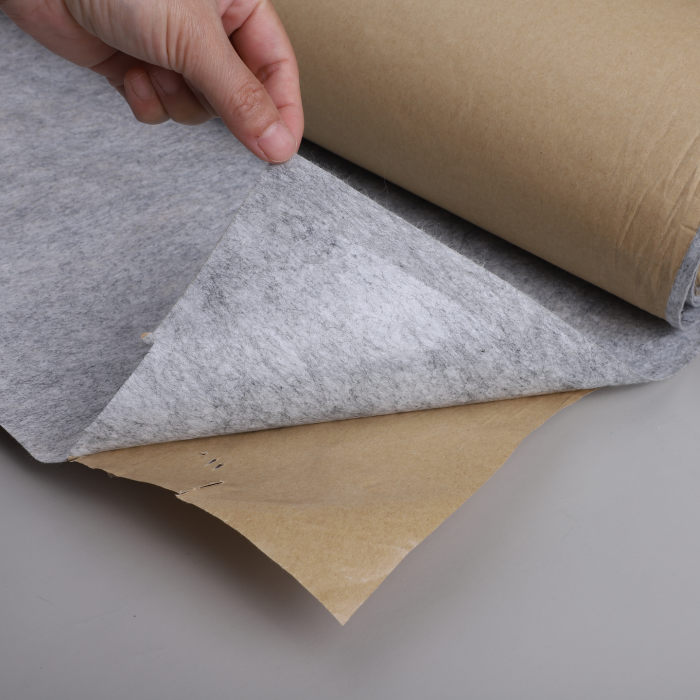
Laminated nonwoven fabric may have different front and back surfaces, such as a nonwoven surface on one side and a film, foam, or other functional layer on the other.
If the equipment has specific requirements for the material's front and back sides, feeding direction, or contact surface, buyers should clarify these conditions before the trial run.
For projects involving printing, bonding, heat pressing, or other surface treatments, buyers should also confirm which side needs to face the processing area and whether the material must be unwound in a specified direction.
Why Are Tension, Winding Tightness, and Edge Condition Important?
Meeting the roll dimensions does not necessarily mean that the material will remain stable during continuous unwinding. Winding conditions and feeding requirements should also be checked during the sample stage.
Unwinding Tension and Feeding Stability
Different machines use different unwinding methods and tension-control systems. Some equipment is more sensitive to tension fluctuations, and material that is too loose or too tight may affect feeding stability.
Insufficient tension may cause slack, web movement, or unstable feeding positions. Excessive tension may increase the risk of stretching, deformation, or stress on the laminated layers.
For composite materials, buyers should also consider the bonding condition between the layers. Whether the pulling force during unwinding affects the integrity of the laminated structure should be evaluated according to the specific material construction and equipment conditions.
Therefore, buyers should not assume that a particular tension setting is suitable simply because of the material name. They should provide the unwinding method, tension requirements, and operating experience with their existing material for the supplier to evaluate.
Winding Tightness
Both overly loose and overly tight winding can create problems during storage, handling, and unwinding.
If a roll is wound too loosely, it may become unstable during handling, affecting the roll edges and subsequent installation. If it is wound too tightly, the material may be compressed. This is particularly worth checking for laminated structures containing foam or other compressible layers, as the material condition may change during storage.
Buyers should confirm the winding condition required upon delivery and observe whether the material unwinds smoothly during sample inspection.
Specific winding-tightness requirements should be determined according to the material structure, roll diameter, roll length, and unwinding method. One universal value should not be applied to every type of laminated nonwoven fabric.
Edge Alignment and Web Tracking
Uneven roll edges, local width variations, or irregular winding may affect how the material runs through the equipment's guiding system.
For projects requiring precise slitting, die cutting, or positioning, buyers should check whether the roll edges meet the equipment's alignment requirements and whether the material tends to move sideways during unwinding.
If the finished product has specific edge or positioning requirements, the key width specifications and permitted deviations should be stated in the purchasing requirements and checked during sample evaluation.
Edge alignment cannot be judged by the appearance of the roll alone. For continuous converting operations, it is more important to observe whether the material maintains the required position and width after passing through the equipment's guiding and feeding systems.
What Requirements Differ for Slitting, Die Cutting, Heat Pressing, and Bending?
The compatibility of laminated nonwoven fabric also depends on the downstream converting process. Different operations place different demands on the material structure.
Slitting: Check Cutting Edges and Width Stability
Slitting usually involves dividing a master roll into narrower rolls or strips of specified widths.
Buyers should check whether the material is prone to fraying, rough edges, delamination, or local deformation during slitting. For composite materials made from nonwoven fabric and film, it is also important to observe whether the different layers remain properly bonded along the cut edges.
If the finished product has strict slitting-width requirements, buyers should confirm the master-roll width, slitting-blade configuration, target finished width, and permitted deviation.
Slitting performance cannot be determined by thickness or basis weight alone. Actual results may also depend on the material structure, blade type, equipment condition, and processing settings.
Die Cutting: Check Shape Accuracy and Edge Performance
Die cutting is commonly used to produce components with fixed shapes or complex outlines.
For laminated nonwoven materials, buyers should check whether the die-cut pieces maintain the designed dimensions and whether the edges show noticeable delamination, fiber pulling, fraying, or material dragging.
If the product contains soft foam, film, or multiple base layers, it is also important to check whether the different layers shift relative to one another or produce uneven edges during cutting.
For complex shapes, sample evaluation should use the customer's actual cutting die and material structure. Testing with ordinary scissors or straight-line cutting cannot fully represent actual die-cutting performance.
Heat Pressing: Check Temperature, Pressure, and the Processed Structure
If laminated nonwoven fabric needs to undergo heat pressing or thermoforming, buyers should provide information about the equipment process, temperature range, pressure conditions, and processing time.
Heat pressing may change the material thickness, surface condition, and interlayer structure. Different base materials, films, and bonding systems may respond differently to temperature and pressure. Therefore, suitability for a particular heat-pressing process cannot be determined from the material name alone.
For products with specific dimensional or structural requirements, the material should be checked after the trial run for thickness, dimensions, surface condition, and bonding between layers.
If buyers have clear requirements for dimensional changes or interlayer bonding after heat pressing, the evaluation method and acceptance criteria should be agreed upon in advance.
Bending and Sewing: Check Flexibility and Layer Integrity
Some laminated materials need to be bent, wrapped, sewn, or assembled into specific shapes.
These applications require not only suitable flexibility but also attention to cracking, wrinkling, delamination, or local deformation at the bending areas.
If the material needs to be sewn, buyers should also confirm the stitch position, seam allowance, material thickness, and compatibility with the sewing equipment. For multilayer laminated structures, it is important to check whether the layers shift relative to each other after sewing.
For products involving repeated bending or assembly, evaluation should follow the actual finished-product structure rather than relying only on inspections of flat material.
How Can a Trial Run on the Customer's Equipment Confirm Compatibility?
For projects with specific equipment requirements, a supplier's specification sheet and material sample can support an initial evaluation. However, actual equipment compatibility needs to be verified using the target machine and real processing conditions.
The trial run can be divided into three stages.
Stage 1: Equipment Installation and Static Inspection
Before formal operation, first confirm whether the sample roll can be installed correctly.
Check the roll width, core inner diameter, roll outer diameter, roll weight, installation space, and unwinding direction.
Also inspect the material surface, roll edges, and laminated structure for visible damage, wrinkles, or other conditions that may affect the trial.
The purpose of this stage is to identify basic dimensional and installation problems before running the material.
Stage 2: Check Feeding Performance Under Controlled Conditions
After the sample is installed correctly, conduct a feeding check according to the equipment manufacturer's recommended operating procedures.
Observe whether the material passes smoothly through the guide rollers and feeding area. Check for noticeable web deviation, wrinkles, slack, jamming, or interrupted feeding.
If the equipment requires tension adjustment, record the actual machine settings and operating conditions. Do not simply record that the material fed normally. Keep the material specifications, equipment model, and relevant operating conditions for future reference.
If a problem occurs, first determine whether it is related to roll dimensions, material structure, winding condition, equipment settings, or the machine itself rather than immediately concluding that the material is defective.
Stage 3: Check Finished Products After Actual Converting Operations
After confirming the feeding performance, use the customer's actual slitting, die-cutting, heat-pressing, bending, or sewing process for evaluation.
The inspection items should match the final product requirements. For example, slitting projects should focus on cutting edges and width; die-cutting projects should focus on outlines, dimensions, and edge integrity; heat-pressing projects should focus on post-process thickness, dimensions, and interlayer condition; sewing projects should check seams, stitch areas, and assembly results.
If the customer has defined finished-product acceptance criteria, these should be agreed upon before the trial run rather than discussed only after the testing is complete.
How Should Trial Results Be Recorded?
Buyers should maintain a simple material trial record that includes at least the following information:
Equipment name, model, and version; material sample identification; laminated structure and material specifications; roll width, diameter, core size, and weight; equipment feeding method; converting operations used during the trial; any observed feeding abnormalities; dimensional and structural inspection results after processing; final trial approval status; and any items requiring adjustment.
If the trial is successful, keep an approved sample or sample photos and include the confirmed key parameters in the purchasing specifications.
It is important to note that a sample passing a trial on one machine does not automatically mean that it will suit every equipment model or processing condition. If the equipment, tooling, processing temperature, tension settings, or product design changes, the relevant requirements should be evaluated again.
Which Parameters Should Be Included in the Bulk Order Specifications After a Successful Trial?
After the sample passes the trial, buyers should translate the results into clear specifications that can be followed and inspected during bulk production.
If only the material name and basis weight are recorded, inconsistencies in specification interpretation may still occur during repeat orders.
It is useful to divide the purchasing requirements into four categories.
The first category is material structure, including the base material, laminated-layer materials, number of layers, layer arrangement, and lamination method. For projects with special requirements, a structure drawing, technical description, or approved sample should be used as a reference.
The second category is roll specifications, including width, roll length, core inner diameter, roll outer diameter, single-roll weight, total thickness, and critical dimensional tolerances. The parameters required for each project should be determined according to the equipment limitations.
The third category is roll condition, including unwinding direction, front and back surfaces, winding requirements, edge condition, splice requirements, and packaging method. If the equipment has no special requirement for certain items, there is no need to add irrelevant restrictions simply for the sake of completeness.
The fourth category is trial and acceptance requirements, including the approved sample identification, compatible equipment model, verified converting operations, key inspection items, and acceptance criteria agreed upon by both parties.
For long-term purchasing projects, version control should also be established. If the material structure, equipment model, or processing conditions change, buyers should confirm whether the previously approved specifications remain applicable.
This allows buyers and suppliers to work with the same confirmed requirements for production and inspection rather than explaining the intended material performance again for every order.
What Information Should You Provide When Requesting a Quote from a Laminated Nonwoven Supplier?
If buyers want suppliers to evaluate compatibility with their downstream production lines more accurately, the following information should be included in the inquiry.
Product application: Explain what the finished product is and what function the laminated nonwoven fabric performs in the product.
Converting process: Describe the operations the material will undergo after delivery, such as slitting, die cutting, heat pressing, bending, sewing, or other processes.
Equipment information: Provide the equipment manufacturer, model, version, and any available limits for feeding width, maximum roll diameter, core dimensions, and single-roll weight.
Material requirements: Provide the known specifications, including base material, laminated layers, number of layers, target basis weight, total thickness, width, and roll length.
Running requirements: If the equipment has requirements for unwinding tension, feeding direction, material flatness, or edge positioning, explain them clearly.
Finished-product requirements: Provide product drawings, dimensions, die-cutting shapes, structural requirements after heat pressing, or assembly requirements.
Reference materials: If an approved material is already in use, provide an existing material sample, roll label, specification sheet, or photos of processed finished products.
Trial arrangement: Explain which converting operations need to be verified, the required sample quantity, the trial equipment, and the intended acceptance method.
It is not necessary to have every technical detail ready during the first inquiry. If some equipment parameters are unclear, buyers can initially provide the equipment model, photos, relevant pages from the manual, or an existing approved roll. The supplier can then understand the project background and help identify the missing specifications.
For customized laminated nonwoven fabric rolls, clearly explaining the downstream converting process is generally more useful for evaluating project feasibility than providing only a material name.
Conclusion: Confirm Equipment Requirements Before Finalizing Laminated Nonwoven Roll Specifications
The suitability of laminated nonwoven fabric for a downstream converting line cannot be determined by basis weight, thickness, or roll width alone.
Buyers should first confirm the equipment's permitted roll dimensions, core size, outer diameter, and weight. They should then evaluate tension, winding condition, and edge performance during continuous feeding. For projects involving slitting, die cutting, heat pressing, bending, or sewing, the material should also be checked for dimensions, cutting edges, and laminated-layer condition after processing.
The most reliable purchasing approach is to provide the equipment parameters and converting requirements first, verify the key conditions through a sample trial, and then include the approved material structure, roll specifications, and acceptance criteria in the bulk-order documentation.
HuiZhou JinHaoCheng Nonwovens Co., Ltd. provides project-specific options for base materials, laminated materials, lamination methods, thickness, width, and roll length on its laminated nonwoven product page. For projects with downstream converting requirements, buyers can provide equipment information, product drawings, or samples of existing materials so that the material structure and specifications can be discussed according to the project. Actual compatibility, equipment limitations, and sample-trial arrangements still need to be confirmed individually and should not be guaranteed based on a product catalogue or general specifications alone.




