Oxidized PAN vs Polyester vs Wool Fire Resistant Felt: How to Choose the Right Material
When purchasing fire resistant felt, one of the biggest challenges for buyers is not simply finding a fire-resistant material, but determining which material is right for the application.
Common materials used for fire resistant felt include Oxidized PAN Felt (Pre-Oxidized PAN Felt), Flame Retardant Polyester Felt, and Fire Resistant Wool Felt. All three can be used in fire protection, flame retardancy, or thermal protection products, but they differ significantly in raw material structure, flame resistance, heat resistance, flexibility, mechanical properties, cost, and application scenarios.
For importers, wholesalers, industrial material buyers, and product manufacturers requiring OEM solutions, choosing a material based only on the word “fire resistant” can easily lead to problems such as material mismatch, unnecessarily high costs, insufficient temperature resistance, or inconsistent bulk-order performance.
Therefore, before purchasing needle punched fire resistant felt, buyers should first determine what the final product actually needs to achieve.
Does it need to prevent flame propagation? Will it be directly exposed to flame? Does it need to withstand high temperatures for extended periods? Does it need thermal insulation? Or does the product need to balance flame resistance, flexibility, processing performance, and cost?
This article compares Oxidized PAN Felt, Flame Retardant Polyester Felt, and Fire Resistant Wool Felt from a practical purchasing perspective, helping buyers identify the most suitable fire resistant felt for their applications.
Why Should You Look Beyond “Fire Resistant” When Buying Felt?
Many buyers begin an inquiry by simply telling a supplier:
“I need fireproof felt.”
Or:
“I need flame retardant felt.”
However, this information is usually not enough for a professional needle punched felt manufacturer to recommend the right material.
That is because flame retardancy, fire resistance, heat resistance, and thermal insulation represent different performance requirements.
For example, a material may have good flame retardancy and help slow flame propagation, but that does not necessarily mean it is suitable for continuous high-temperature environments.
Another material may have good thermal insulation performance and reduce heat transfer, but if it will be directly exposed to flame, welding sparks, or high-temperature molten materials, its behavior under combustion, shrinkage, melting, and dripping conditions must also be considered.
Therefore, when selecting fire resistant felt, buyers should not only ask:
“What material is it?”
They should also ask:
“What environment will the product be used in?”
“Will it be directly exposed to flame?”
“What operating temperature does it need to withstand?”
“Is the temperature exposure temporary or continuous?”
“Does the application require self-extinguishing performance?”
“Does it need to resist melting, shrinkage, or dripping?”
These questions determine which fiber system is most appropriate.
What Is Oxidized PAN Felt? What Makes It Different?
Oxidized PAN Felt, also known as Pre-Oxidized PAN Felt, OPAN Felt, or Pre-Oxidized PAN Fiber Felt, is based on PAN (Polyacrylonitrile) fibers that undergo an oxidation stabilization process to modify the fiber structure and provide high thermal stability and inherent flame-resistant properties.
Unlike some conventional fibers that rely mainly on additional flame-retardant treatments, the flame-resistant characteristics of oxidized PAN are primarily related to the stabilized fiber structure. This makes it suitable for applications requiring flame exposure, high-temperature stability, and thermal protection.
Some oxidized PAN fibers have high LOI (Limiting Oxygen Index) values and demonstrate good resistance to melting and dripping. However, actual performance depends on the fiber grade, felt density, structure, and testing conditions, so buyers should always verify the specific technical data provided by the manufacturer.
For products requiring high-temperature protection, flame isolation, welding protection, thermal barriers, or industrial thermal insulation, oxidized PAN can be an important material to evaluate.
Its major advantages include:
High inherent flame resistance
Good thermal stability
Suitable for high-temperature and flame-related applications
Performance that is primarily derived from the stabilized fiber structure rather than ordinary surface flame-retardant treatment
Suitable for blending or combining with other high-performance fibers
Therefore, if your product will face direct flame, high-temperature radiation, or continuous heat exposure, Oxidized PAN Felt is worth serious consideration.
What Is Flame Retardant Polyester Felt? When Is It Suitable?
Flame Retardant Polyester Felt is developed from polyester fibers by using flame-retardant fibers, flame-retardant modification, functional additives, or other manufacturing processes to achieve the required flame-retardant performance.
Ordinary polyester should not simply be considered a flame-retardant material.
Therefore, buyers need to understand an important distinction:
Standard PET needle punched felt ≠ Flame Retardant PET Needle Punched Felt.
If the final product has specific flame-retardant requirements, buyers should confirm that the supplier uses appropriate flame retardant polyester fiber or another suitable flame-retardant material system rather than assuming that all polyester felt is flame resistant.
One important advantage of Flame Retardant Polyester Felt is its processing flexibility and cost-performance balance.
For many industrial products that do not require continuous direct flame exposure but still need improved flame-retardant performance, flame-retardant PET can provide a practical and economical solution.
Typical applications may include:
Automotive interior materials
Equipment insulation and protection materials
Building and decorative materials
Acoustic and sound insulation materials
Industrial protective materials
Packaging and protective structures
Composite functional materials
For high-volume applications, Flame Retardant Polyester Felt also benefits from established nonwoven processing technology. Manufacturers can adjust GSM, thickness, density, width, color, and structure according to the final product requirements.
Therefore, if your project places greater emphasis on cost, processing performance, dimensional customization, and large-volume supply, while the application does not require extreme high-temperature protection, Flame Retardant Polyester Felt can be an important option to evaluate.
What Is Fire Resistant Wool Felt? What Are Its Advantages?
Wool is a natural fiber with inherent flame-resistant characteristics.
Compared with many conventional organic fibers, wool has natural resistance to ignition and flame. When exposed to flame, it can form a char layer and does not behave like typical thermoplastic synthetic fibers that may melt and drip.
Research has shown that untreated wool has inherent flame-resistant properties. However, buyers should remember that natural flame resistance does not automatically mean that a finished wool felt product meets a specific regulatory flame-retardant grade. Final performance depends on factors such as wool content, felt structure, finishing treatment, and the applicable testing standard.
Fire Resistant Wool Felt can be particularly suitable for applications that value:
Natural fiber properties
Softness
Comfortable touch
Acoustic performance
Natural flame resistance
For furniture, interior decoration, acoustic materials, and other products that require natural-fiber characteristics, wool felt can provide a distinctive material option.
However, if the product must withstand extremely high temperatures, direct flame, or severe thermal shock, buyers should not assume that wool can automatically replace high-performance materials such as Oxidized PAN.
What Is the Difference Between Oxidized PAN, Flame Retardant Polyester, and Wool Felt?
From a purchasing perspective, these three materials can be viewed as three different product-development directions.
Oxidized PAN Felt is more focused on high-temperature protection, flame exposure, and thermal stability.
Flame Retardant Polyester Felt is more focused on cost, processing flexibility, large-volume production, and overall performance balance.
Fire Resistant Wool Felt is more focused on natural fiber characteristics, softness, comfort, and inherent flame resistance.
The most important point is that there is no absolute “best” material.
The right approach is:
Choose the material according to the application, rather than choosing the application according to the material.
If the product needs to withstand direct flame and high temperatures, Oxidized PAN should be evaluated carefully.
If the project requires flame-retardant performance while placing greater emphasis on cost, processing, and large-volume production, Flame Retardant Polyester may be more suitable.
If the product emphasizes natural fibers, softness, and indoor applications, Fire Resistant Wool Felt can be considered.
Why Is Oxidized PAN Felt More Suitable for High-Temperature and Flame Protection?
For high-temperature protection products, it is not enough to ask whether a material is simply “flame retardant.” What matters is how the material behaves when exposed to flame and thermal shock.
Some high-performance oxidized PAN fibers have high LOI values and demonstrate good thermal stability under flame exposure. Technical information also identifies resistance to melting and dripping as an important characteristic of oxidized PAN fibers, making them suitable for direct flame protection and thermal barrier applications.
This can be particularly important for:
Welding fire resistant felt
Welding protection pads
Fire blanket materials
High-temperature insulation felt
Industrial thermal protection materials
Automotive fire and heat protection materials
Equipment thermal barriers
High-temperature area protection materials
However, buyers should understand that different oxidized PAN fiber grades and different needle punched structures do not necessarily have identical performance.
Therefore, buyers should not select a material solely according to a “maximum temperature” number found online.
A more reliable approach is to ask a fire resistant felt manufacturer to confirm the specific fiber type, GSM, thickness, density, testing method, and continuous-use temperature.
What Is the Main Advantage of Flame Retardant Polyester Felt?
If the key advantage of Oxidized PAN is high-temperature and flame protection, one of the main advantages of Flame Retardant PET is its balance between overall performance and cost.
Polyester fibers have an established nonwoven processing base, allowing manufacturers to produce felt with different thicknesses, densities, and basis weights through needle punching.
For many industrial customers, this means that the same basic material system can be developed with:
Different GSM specifications
Different thicknesses and densities
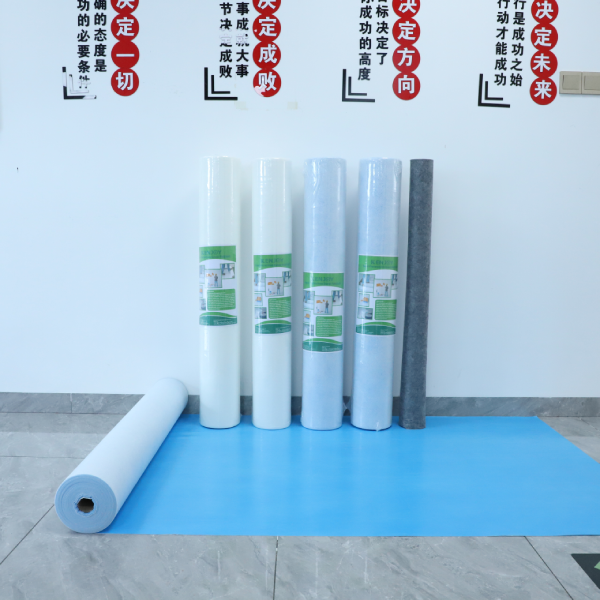
Roll-form production
Custom cutting
Lamination and composite processing
Different colors and packaging according to product requirements
This flexibility is especially important for importers and wholesalers.
Many overseas customers are not simply purchasing one standard roll of felt. They may require:
Custom width
Custom thickness
Custom GSM
Custom density
Custom roll length
Or even OEM packaging.
Therefore, for high-volume product development, Flame Retardant Polyester Felt is not simply a “lower-performance alternative.” It can be a practical solution for optimizing cost and performance according to the actual application.
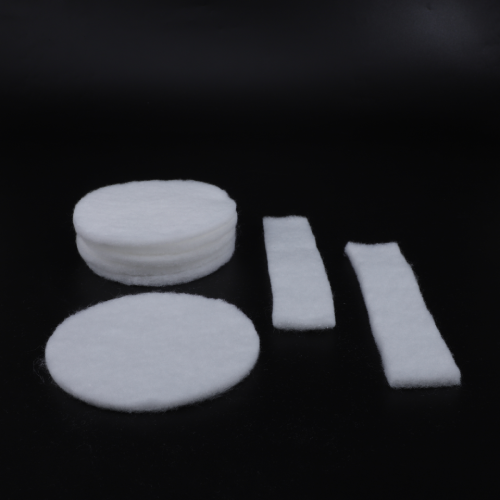
When Is Fire Resistant Wool Felt Worth Considering?
If the final product is mainly used for indoor environments, furniture, decoration, acoustic applications, or other products where natural materials are important, Fire Resistant Wool Felt can be worth evaluating.
Wool naturally offers flame-resistant characteristics while also providing softness and a distinctive fiber feel.
For products emphasizing natural materials, comfort, and a natural-material positioning, wool can provide a product direction different from synthetic fibers.
However, industrial buyers should pay particular attention to one important point:
Do not automatically equate “naturally flame resistant” with “compliant with a specific flame-retardant standard.”
If the finished product needs to pass a specific flame-retardant test, buyers should clearly specify the target standard and request relevant test data from the supplier rather than simply confirming that the raw material is wool.
One of the Most Common Purchasing Mistakes: Comparing Only Price per Kilogram
In actual purchasing, many suppliers quote directly on a price-per-kilogram basis.
This comparison method is not sufficient for many standard needle punched felts, and it can be even more misleading for fire resistant felt.
Even if two flame-retardant felts have the same 500 GSM specification, their:
Fiber composition
Flame-retardant grade
Thickness
Density
Needle punching density
Surface structure
Heat resistance
Dimensional stability
may all be different.
More importantly, Oxidized PAN, Flame Retardant Polyester, and Wool are fundamentally different fiber systems.
Therefore, buyers should compare:
Cost per unit of performance, rather than simply cost per kilogram.
For example, if the product must directly face flame, a lower-cost PET felt with unsuitable performance may eventually require product redesign or even result in bulk-order losses.
On the other hand, if the actual application does not require extreme high-temperature performance, choosing a much more expensive high-performance fiber may unnecessarily increase material costs.
How Can You Determine Which Fire Resistant Felt Your Product Needs?
Before purchasing, buyers can first answer the following questions.
First, will the product be directly exposed to flame?
If yes, focus on the material's behavior under direct flame rather than only asking how many degrees of temperature it can withstand.
Second, what operating temperature does the product need to withstand?
Distinguish between short-term temperature exposure and continuous operating temperature.
Third, does the application require self-extinguishing performance?
If there is a specific self-extinguishing requirement, ask the supplier to confirm the actual testing conditions and test results.
Fourth, does the product require low melting, low shrinkage, or non-dripping performance?
For welding protection, automotive fire protection, and high-temperature industrial applications, this can be more important than a general flame-retardant grade alone.
Fifth, is there a specific testing standard?
For example, determine at an early stage whether the project needs to comply with UL, ASTM, EN, FMVSS, or another industry-specific standard.
Sixth, what are the cost requirements?
For high-volume products, material cost directly affects the profitability of the finished product.
Seventh, does the product require customization?
If you require customized GSM, thickness, width, color, density, roll length, cutting dimensions, or composite structures, it is better to work directly with an experienced needle punched felt manufacturer with OEM/ODM capabilities.
Can Oxidized PAN, Flame Retardant Polyester, and Wool Be Blended?
They can be combined according to product requirements, but this does not mean that simply blending the three materials will automatically produce better performance.
The main value of fiber blending is to balance different properties through material combinations.
For example:
Oxidized PAN can provide higher flame and thermal stability.
Flame Retardant Polyester can improve processing flexibility and cost control.
Wool can add natural fiber characteristics and softness.
The final material performance is also affected by fiber ratio, fiber length, GSM, thickness, density, needle punching process, and subsequent composite processing.
Therefore, for OEM projects, a more professional approach is not simply to ask a supplier:
“Give me the most fireproof felt.”
Instead, tell the manufacturer about the actual application environment and target performance.
A professional custom nonwoven manufacturer can then work backward from the application requirements to develop a more suitable material structure.
Which Industries Need the Right Fire Resistant Felt?
Different industrial applications have very different requirements for fire resistant felt.
Automotive Industry
Automotive interiors, areas around engines, thermal management systems, and fire protection products may need to balance flame resistance, thermal stability, weight, and dimensional stability.
Welding Industry
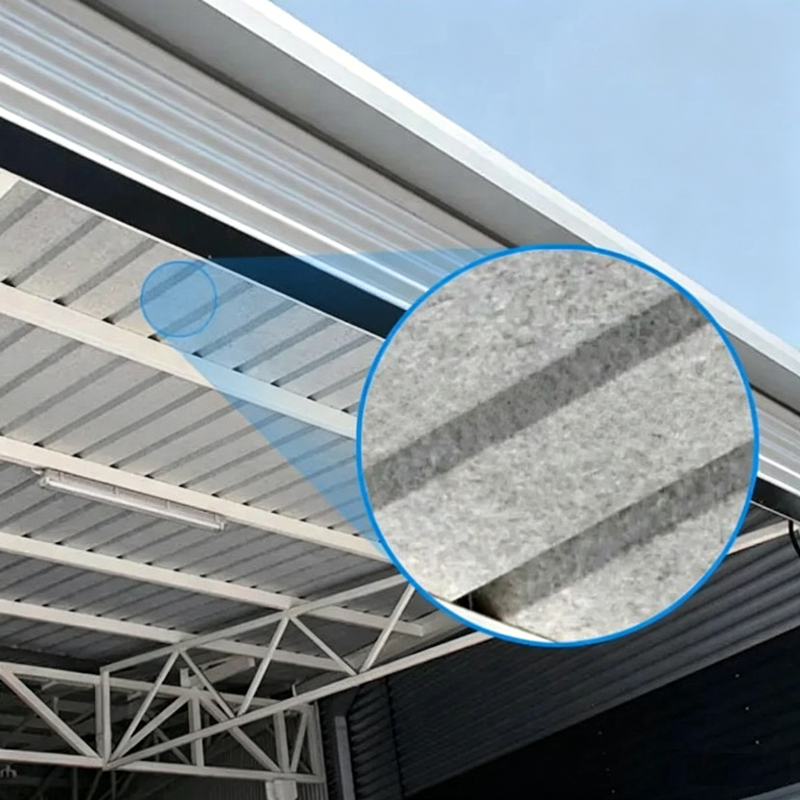
Welding blankets, welding protection pads, and floor protection around welding areas need to consider sparks, molten metal, and localized high-temperature exposure.
Industrial Equipment
Equipment insulation, fire separation, and thermal barrier materials should be selected according to actual operating temperature and continuous-use requirements.
Fire and Safety Protection
Fire blankets, emergency fire protection materials, and thermal protection products generally require careful evaluation of material performance under flame exposure.
Building and Interior Applications
For wall, acoustic, decorative, and functional materials, buyers may need to balance flame resistance, sound absorption, thickness, weight, and regulatory requirements.
Therefore, buyers should not simply ask:
“Which fire resistant felt is the best?”
A more accurate question is:
“Which fire resistant felt is best for my application?”
Why Is Choosing a Professional Needle Punched Felt Manufacturer More Important Than Simply Comparing Price?
For long-term purchasing, the fiber name alone does not determine the final product quality.
Even after a buyer has selected Oxidized PAN Felt or Flame Retardant Polyester Felt, bulk production can still vary if the supplier cannot maintain stable manufacturing processes.
The final performance of needle punched felt is influenced by raw materials, fiber blending, opening, carding, web formation, needle punching density, GSM, thickness, density, and subsequent processing.
Therefore, when selecting a needle punched felt manufacturer, buyers should pay close attention to whether the supplier has stable production equipment and consistent quality-control capabilities.
For long-term bulk purchasing, sample performance and bulk production consistency are equally important.
A sample that performs well does not automatically mean that every future production batch will have exactly the same performance.
This is why an experienced nonwoven felt manufacturer China can be valuable for importers, wholesalers, and product brands.
Why Choose Jinhaocheng for Customized Fire Resistant Felt Development?
Jinhaocheng specializes in needle punched nonwoven and customized nonwoven material manufacturing, with more than 20 years of experience in nonwoven material R&D and production.
The company's production base covers approximately 26,000 square meters and is equipped with 15 automated needle punching production lines, with annual production capacity exceeding 10,000 tons. This provides stable large-volume production capabilities for different industrial applications.
As a professional needle punched felt manufacturer and nonwoven felt manufacturer China, Jinhaocheng can adjust material specifications according to the final application, including:
Fiber Type
GSM
Thickness
Density
Width
Roll Length
Color
Cutting Size
as well as relevant functional requirements.
The company also provides customized production capabilities from raw materials to finished products and has additional processing capabilities such as laser cutting, die cutting, and lamination to support different OEM and ODM development requirements.
For customers developing custom fire resistant felt, OEM fireproof felt, or flame retardant nonwoven, working directly with a manufacturer makes it easier to discuss the material structure and adjust specifications according to the final product.
For importers, wholesalers, brands, and industrial manufacturers requiring long-term supply, stable production capacity and bulk-order consistency can often be more important than achieving the lowest initial purchasing price.
How Should You Choose Between Oxidized PAN, Flame Retardant Polyester, and Wool Felt?
If your product focuses on high temperature, direct flame exposure, and thermal protection, you can prioritize evaluating Oxidized PAN Felt.
If your product requires flame-retardant performance, processing flexibility, specification customization, and cost balance, you can focus on Flame Retardant Polyester Felt.
If your product emphasizes natural fibers, softness, indoor applications, and inherent flame-resistant characteristics, you can consider Fire Resistant Wool Felt.
If your product requires several performance characteristics at the same time, you can further evaluate fiber blending, composite structures, or custom needle punched felt.
The most important point is not to select the material first and then try to find an application for it.
Instead, follow this purchasing logic:
Application → Fire Exposure → Temperature → Required Flame Performance → Material → Specification
This provides a more reliable approach to selecting fire resistant felt.
Conclusion: There Is No “Best” Fire Resistant Felt, Only the Right Material for the Application
Oxidized PAN Felt, Flame Retardant Polyester Felt, and Fire Resistant Wool Felt can all be used in flame-resistant and fire-protection products, but they do not solve exactly the same problems.
Oxidized PAN is more suitable for applications requiring higher levels of high-temperature performance, flame protection, and thermal stability.
Flame Retardant Polyester is more suitable for products that need a balance between performance, processing flexibility, and cost.
Fire Resistant Wool Felt is more suitable for applications emphasizing natural fiber characteristics, softness, and indoor use.
For importers, wholesalers, industrial buyers, and product manufacturers, the right choice is not necessarily the most expensive or the most “fireproof” material on the market.
The goal is to find the Fire Resistant Felt that matches the requirements of the final product.
If you are looking for a reliable fire resistant felt manufacturer, needle punched felt manufacturer, flame retardant nonwoven manufacturer, or nonwoven manufacturer China, Jinhaocheng can develop customized needle punched fire resistant felt according to your application, GSM, thickness, density, width, and functional requirements.
Through sample confirmation, specification development, and controlled bulk production, customers can establish a more stable supply chain for fire-resistant nonwoven materials.