How to Protect Hardwood Floors During Renovation: 6 Professional Methods for Contractors and Buyers
In residential renovations, commercial remodeling, hotel refurbishment, and office renovation projects, knowing how to protect hardwood floors during renovation is an important issue that contractors need to address before work begins.
Hardwood flooring is often already installed and finished while other work, such as walls, ceilings, cabinets, painting, electrical work, and other construction activities, is still underway. Workers may carry tools, materials, and equipment across the site every day. Dust, grit, and construction debris can also be brought in on footwear. A dropped tool, moving ladder, or paint spill can cause scratches, dents, stains, or surface damage to an otherwise finished hardwood floor.
For renovation contractors, floor protection is not only about keeping the jobsite clean. It is also directly related to repair costs, customer complaints, project profitability, and final project quality.
For importers, wholesalers, distributors, and building material suppliers, choosing the right floor protection roll, protective fleece, or painter felt is equally important because the material must meet the actual requirements of the renovation market.
The question for buyers is not simply whether floors need protection, but:
What material is actually suitable for hardwood floor protection?
Should light renovation projects and heavy construction projects use different protection materials?
How can contractors prevent the protection material from moving, leaking, or leaving adhesive residue?
How can buyers balance waterproofing, absorbency, slip resistance, abrasion resistance, and cost?
This article examines six professional methods for protecting hardwood floors during renovation from both the contractor’s and buyer’s perspective, helping contractors, importers, and wholesalers choose more suitable floor protection products for long-term use.
Why Are Hardwood Floors Especially Vulnerable During Renovation?
The risks to hardwood floors do not come only from large equipment.
Renovation sites generate large amounts of fine dust, grit, wood particles, and construction debris. When these particles are carried onto the floor on workers’ shoes, repeated walking and friction can act like sandpaper against the floor surface.
In addition, renovation work may involve dropped tools, moving ladders, dragging materials, paint spills, water, and other liquid contamination.
For high-end hardwood floors, noticeable scratches or coating damage may require refinishing, repair, or even additional surface treatment.
This means that a seemingly ordinary renovation project can create significant additional repair costs if proper floor protection is not planned in advance.
Therefore, professional contractors should not wait until construction has already started to think about floor protection. A complete Floor Protection Plan should be prepared before work begins.
Method 1: Use Breathable Protective Materials as the Basic Protection Layer for Hardwood Floors
For hardwood floors, thicker protection is not always better.
Wood can be affected by environmental humidity and moisture. Therefore, when covering a hardwood floor, contractors need to consider whether the protection material is appropriate for the condition of the floor and the construction environment.
In actual renovation projects, contractors may use paper protection, breathable felt materials, or other suitable protective coverings as a basic protection layer, and then add an additional impact-resistant layer depending on the intensity of the work.
For buyers, this means they should not only ask:
“How thick is the floor protection?”
They should also ask:
“Is the material suitable for hardwood floor protection?”
Material structure, breathability, surface characteristics, and the actual working environment can all affect the final protection performance.
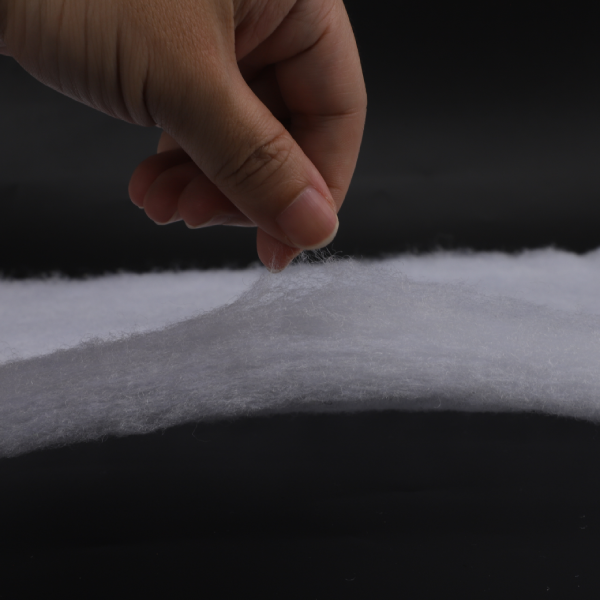
For long-term suppliers of renovation materials, selecting the right Protective Fleece can provide a more flexible protection solution for different types of construction projects.
Method 2: Use Absorbent Painter Felt to Protect Against Paint, Dust, and Construction Debris
During painting, wall work, and interior renovation, floors face more than just scratching risks.
Paint, water, joint compound, and other construction liquids may accidentally drip onto the floor.
In these situations, simply using a very thin covering may not provide sufficient protection.
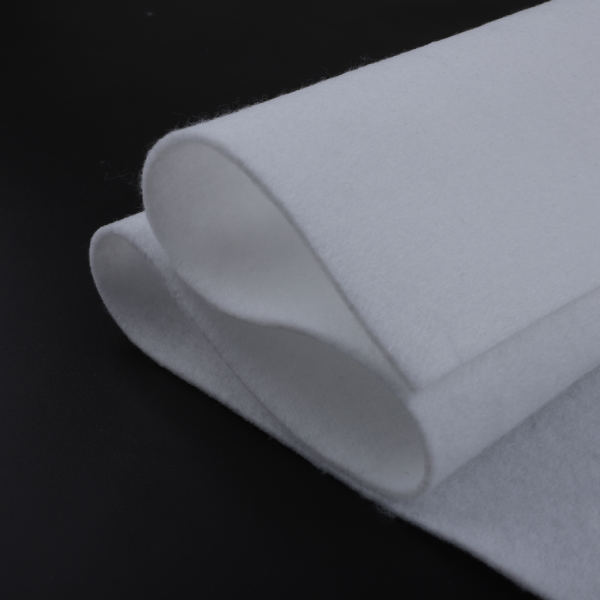
Painter Felt, or absorbent protective felt, can help absorb and retain certain liquids through its fiber structure while creating a physical barrier between the floor and the construction environment.
For painters, renovation contractors, and construction material distributors, this type of product is particularly suitable for applications where several requirements need to be considered at the same time:
Absorption + Surface Protection + Dust Protection + Daily Foot Traffic
For buyers, it is also important to confirm the product’s GSM, thickness, width, roll length, and surface structure, because these specifications can affect absorption capacity, coverage area, and installation efficiency.
Method 3: Use PE-Backed Protective Materials to Reduce the Risk of Liquid Penetration
If there is a significant risk of water, paint, or other liquid spills at the jobsite, an absorbent layer alone may not be enough.
In this situation, contractors can consider protective felt with PE Backing.
A PE backing can create an additional barrier beneath the absorbent nonwoven layer. When liquid falls onto the protection material, the upper layer can help absorb and hold the liquid, while the PE layer helps reduce the risk of further downward penetration.
This is one reason why many renovation contractors and buyers consider PE-backed cover fleece as an alternative to traditional drop cloths.
For importers and wholesalers purchasing in volume, selecting PE-backed protective fleece should not be based only on whether the product is described as “waterproof.” Buyers should also confirm:
PE Film Thickness, Lamination Strength, Fleece GSM, Overall Thickness, Roll Width, and Intended Application.
Different construction environments have different requirements.
Method 4: Use Slip-Resistant Floor Protection in High-Traffic Areas
One of the most overlooked areas during renovation is often not the actual work zone, but the routes workers repeatedly travel through.
These may include entrances, hallways, kitchens, stairways, transitions between rooms, and material transportation routes.
These areas can experience heavy foot traffic and equipment movement every day. If the protection material shifts, curls at the edges, or becomes slippery, it may fail to provide continuous floor protection and may also create a potential tripping hazard.
Therefore, for high-traffic areas, contractors should pay particular attention to:
Anti-Slip Performance, Dimensional Stability, Abrasion Resistance, and Edge Stability.
For construction material suppliers purchasing in volume, Anti-Slip Protective Fleece is an important product direction with clear demand in renovation applications.
Especially in residential renovation, commercial remodeling, and multi-room construction projects, floor protection should not only protect the flooring but also provide a more stable walking surface for workers.
Method 5: Add a Second Impact-Protection Layer in Heavy-Duty Construction Areas
Not every renovation project involves only light foot traffic.
If workers need to move cabinets, appliances, construction materials, toolboxes, or other heavy objects, a single layer of protective fleece may not provide enough impact protection.
In these situations, a more practical approach is to create a layered floor protection system according to the construction risks.
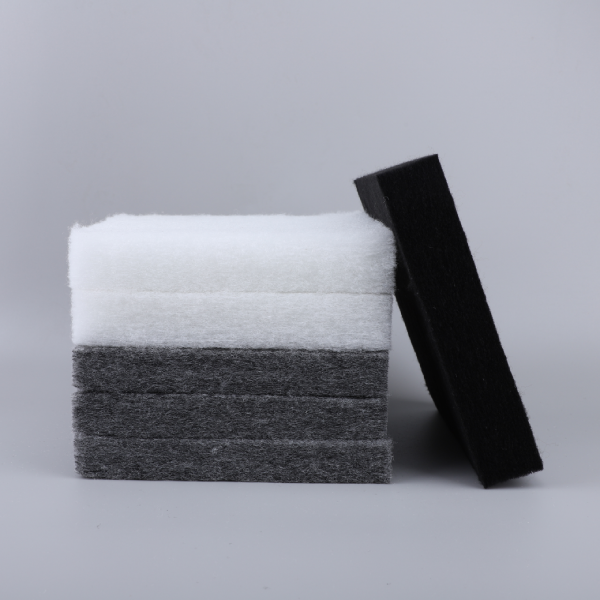
The base layer can provide separation between the hardwood floor and the construction environment, while an upper layer can be added according to the actual conditions using rigid boards or other high-impact protection materials.
This approach is particularly suitable for:
Heavy Foot Traffic, Material Movement, Ladder Use, Equipment Movement, and High-Impact Work Areas.
It is important to understand that different flooring types and construction stages require different protection solutions. Thicker protection is not automatically safer.
For buyers, it is more important to understand the actual application level and select the appropriate Floor Protection Roll according to the customer’s construction environment.
Method 6: Use Cuttable, Roll-Format Floor Protection to Improve Installation Efficiency
For professional contractors, floor protection needs to do more than provide good protection. It should also be easy to transport, quick to install, and convenient to store.
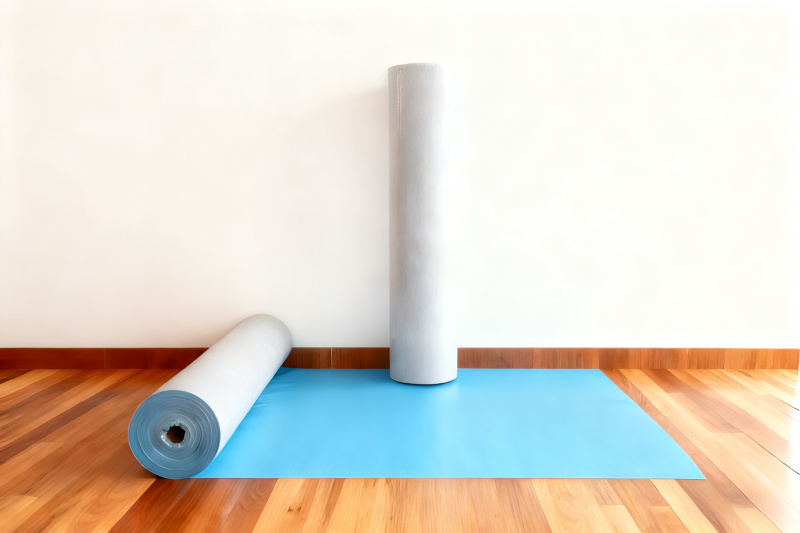
This is one reason why roll-format Floor Protection Roll products are highly practical in renovation and construction markets.
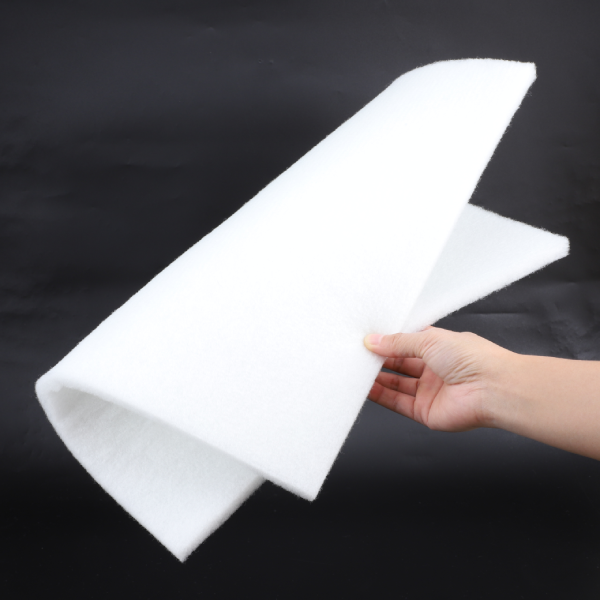
Compared with rigid panels that need to be carried piece by piece, roll-format protection can be quickly unrolled across the work area and cut according to rooms, hallways, and worker access routes.
When the product also provides suitable GSM, thickness, width, slip resistance, and absorbent or waterproof properties, it can adapt more flexibly to different construction projects.
For importers and wholesalers, roll-format products can also be customized in width, roll length, packaging, and labeling to better match local market requirements.
Therefore, when purchasing Floor Protection Roll, buyers should not compare only the price per roll. They should also calculate:
Cost per Square Meter + Coverage Efficiency + Installation Time + Material Waste + Transportation Cost
This provides a more meaningful view of the actual procurement cost.
Why Is Ordinary Plastic Film Not Always the Best Solution for Hardwood Floor Protection?
Plastic film is widely used in renovation because it is waterproof, lightweight, and relatively inexpensive.
However, when protecting hardwood floors, buyers should not evaluate the material based only on waterproof performance.
Plastic film may not provide sufficient absorbency or cushioning. In some construction environments, it may also move, become slippery, or require additional fixing.
In addition, when protecting hardwood flooring or floors with recently completed surface treatments, the suitability of the covering material should be evaluated according to the requirements of the flooring manufacturer or coating supplier.
Therefore, professional floor protection is not simply:
“Waterproof = Best Protection”
Instead, buyers should consider the construction environment and evaluate:
Impact Protection + Abrasion Resistance + Liquid Protection + Slip Resistance + Ease of Installation
This is also why Protective Fleece, Painter Felt, and composite floor protection materials are increasingly considered in professional renovation applications.
How Should Renovation Contractors Choose Different Types of Floor Protection?
If the project mainly involves light painting work, the priority may be preventing paint splashes, dust, and everyday foot traffic.
For a standard residential renovation, contractors may need to consider absorbency, scratch protection, slip resistance, and regular foot traffic at the same time.
For commercial renovations, hotel refurbishment, or long-term construction projects, buyers should also consider abrasion resistance, roll stability, coverage efficiency, and long-term cost.
If there is a high risk of liquid spills, contractors can consider PE-backed protective fleece.
If the work area has heavy foot traffic, anti-slip and abrasion resistance become more important.
If heavy equipment and materials will be moved across the floor, a stronger upper protection layer may be required.
Therefore, professional procurement should not simply ask:
“Which Floor Protection Is Best?”
Instead, the better question is:
“Which Floor Protection Is Best for This Job?”
What Specifications Should Buyers Confirm When Purchasing Floor Protection Roll?
For importers, wholesalers, and distributors, it is recommended to confirm the core product specifications during the quotation stage.
The first specification is GSM.
GSM affects material weight, coverage cost, and overall structure.
The second is Thickness.
Thickness should normally be evaluated together with GSM, fiber structure, and the final application rather than being considered independently.
Next are Width and Roll Length.
Different countries and construction markets may have different common specifications. The right width can reduce the number of seams and improve installation efficiency.
For absorbent products, buyers should also confirm Absorbency.
For PE-backed products, buyers should confirm Waterproof Performance and Lamination Strength.
For high-traffic areas, buyers should confirm Anti-Slip Performance and Abrasion Resistance.
For OEM purchasing, buyers can also customize:
Color, Logo, Packaging, Label, Roll Size, and Product Specifications.
Why Should Wholesalers and Importers Choose a Stable Floor Protection Manufacturer?
Renovation-market purchasing is not usually a one-time requirement.
A wholesaler may need to continuously supply different contractors, painting companies, renovation companies, and building material distributors.
If the supplier’s GSM, thickness, color, width, or lamination strength varies significantly from batch to batch, downstream customers may notice obvious differences during use.
This can affect the end-user experience and increase after-sales and return costs for the wholesaler.
Therefore, when selecting a floor protection manufacturer, buyers should look beyond the quotation and also evaluate:
Raw Material Stability, Production Capacity, Batch Consistency, Customization Capability, and Quality Control.
For long-term purchasing, a manufacturer that can maintain stable production is often more valuable than a supplier offering the lowest one-time quotation.
Why Is Needle Punched Nonwoven Suitable for Developing Floor Protection Products?
Needle punched nonwoven can be adjusted through fiber selection, GSM, thickness, punching density, and subsequent composite processes.
This means that the same basic material can be developed into different levels of floor protection according to different construction conditions.
For example, the material structure can be adjusted to meet different requirements for:
Absorption, Cushioning, Abrasion Resistance, Surface Protection, and Composite Waterproof Protection.
By further laminating the material with PE film, adhesive layers, or anti-slip structures, manufacturers can also develop different products such as Self-Adhesive Protective Fleece, PE-Backed Cover Fleece, and Floor Protection Roll.
For OEM customers, this flexibility in material design can help them develop products that better match the requirements of their local renovation markets.
Why Choose Jinhaocheng as Your Floor Protection Roll Supplier?
Jinhaocheng was established in 2005 and has more than 20 years of experience in nonwoven material research and manufacturing.
The company operates an approximately 26,000-square-meter production base with 15 automated needle punching production lines and annual production capacity of more than 10,000 tons, providing stable bulk production support for importers, wholesalers, distributors, and brand customers.
For floor protection products, different specifications can be customized according to customer requirements, including:
GSM, Thickness, Width, Roll Length, Color, Backing Material, Surface Treatment, Packaging, and Logo.
This means buyers do not have to rely entirely on fixed standard specifications. They can develop their own products according to their target market and downstream customer requirements.
Jinhaocheng also provides OEM/ODM services and can develop products according to customer samples, product requirements, and application scenarios.
The company’s product range includes Floor Protection Roll, Painter Felt, Protective Fleece, and Self-Adhesive Protective Fleece for different renovation and construction applications.
For renovation-material importers and wholesalers, stable production capacity, customization capability, and long-term batch consistency are important foundations for building a reliable supply relationship.
What Are the 6 Most Common Floor Protection Mistakes Made by Renovation Contractors?
Even after purchasing floor protection materials, incorrect installation or use can still result in floor damage.
The first mistake is protecting only the work area.
Workers travel from entrances through hallways and into the work area, so the actual protection zone should include the complete worker access route rather than only the room under construction.
The second mistake is not cleaning the floor before installing the protection material.
Dust, grit, and debris trapped underneath the protective covering can continue rubbing against the floor surface as people walk over it.
The third mistake is using protection material that moves without properly securing it.
Especially in high-traffic areas, shifting protection can expose the hardwood floor.
The fourth mistake is focusing only on waterproofing while ignoring other performance requirements.
Waterproofing does not automatically mean scratch resistance, slip resistance, or impact protection.
The fifth mistake is not checking the protection layer during long-term construction.
Protective materials can become torn, worn, displaced, or contaminated by liquids. They should be inspected and replaced according to the actual construction conditions.
The sixth mistake is choosing only the cheapest protection material.
If a low-cost material cannot meet the project requirements, subsequent repair, rework, and customer complaint costs may be much higher than the original material cost.
How Should Buyers Choose the Right Floor Protection for Different Renovation Projects?
A professional selection process should start with the construction environment.
For a light painting project, buyers can focus on absorbency, dust protection, and basic surface protection.
For a standard residential renovation, the protection solution should consider absorbency, scratch resistance, slip resistance, and regular foot traffic.
For commercial renovation or long-term construction, buyers should pay more attention to abrasion resistance, material stability, and long-term cost.
For high-liquid-risk construction, PE-backed protective fleece can be considered.
For high-traffic areas, anti-slip performance and abrasion resistance should receive greater attention.
For heavy-duty construction areas, a combination of protective fleece and rigid protection boards may be appropriate.
Therefore, the correct procurement logic should be:
Job Type → Floor Type → Main Risks → Required Performance → Protection Material → Product Specification
Rather than simply selecting the cheapest roll of floor protection available on the market.
Why Can High-Quality Floor Protection Help Contractors Reduce Overall Project Costs?
At first glance, purchasing higher-performance floor protection may increase the initial project cost.
However, professional contractors should calculate the total project cost rather than looking only at the initial material price.
If the floor is scratched during construction, contractors may need to pay for cleaning, repair, refinishing, or additional surface treatment.
If the customer believes that the construction team failed to protect the property properly, additional complaints or compensation issues may also arise.
Proper floor protection can help reduce these unexpected costs.
Therefore, professional contractors should not only ask:
“How much does the floor protection cost?”
They should also ask:
“How much can this protection help me save?”
This is one reason why stable, reliable, and application-specific floor protection roll products have strong commercial value in the professional renovation market.
How Should Buyers Request a Quotation from a Floor Protection Manufacturer?
If you are an importer, wholesaler, distributor, or renovation-material brand, avoid sending a quotation request that only says:
“Please send me your best price for floor protection.”
A more effective inquiry should include:
Floor Type
Application
GSM
Thickness
Width
Roll Length
Color
Waterproof Requirement
Anti-Slip Requirement
Absorbency Requirement
Packaging
Estimated Quantity
If you do not yet have complete specifications, you can also provide product photos, an existing sample, the target market, the final application, or information about competing products.
A professional floor protection roll manufacturer can use this information to help determine the appropriate product structure and specifications.
This also makes the resulting quotation more accurate.
Conclusion: Protect Hardwood Floors During Renovation — It Is More Than Simply Covering the Floor
For renovation contractors, knowing how to protect hardwood floors during renovation does not simply mean putting a layer of material over the floor.
Professional floor protection should be selected according to:
Floor Type + Job Type + Traffic Level + Liquid Risk + Impact Risk
Light renovation projects can focus on absorbency and basic protection. High-traffic areas require attention to slip resistance and abrasion resistance. Where liquid risks are present, PE-backed protective fleece can be considered. Heavy-duty construction may require stronger impact protection.
For importers, wholesalers, and distributors, supplier selection should go further and consider:
Product Quality, Customization, Production Capacity, Batch Consistency, and OEM Capability.
If you are looking for a floor protection roll manufacturer, protective fleece supplier, painter felt manufacturer, or needle punched nonwoven felt manufacturer, do not compare suppliers only by the price per roll. Instead, select the product structure according to your target market and actual construction requirements.
For long-term purchasing, a valuable floor protection supplier is not simply a company that can provide one roll of material. It should be able to provide stable, customizable Floor Protection Solutions suitable for renovation and construction applications over the long term.