
Sofa Upholstery Foam Laminates: Material Structures for Seats, Backs and Armrests
In sofa manufacturing, seats, backrests, armrests, and headrests are all part of the upholstered structure. However, they do not necessarily have the same shape, contact conditions, internal material combinations, or processing requirements.
Therefore, when sourcing sofa foam fabric, buyers should not simply provide the product description "for sofa use" and expect the supplier to recommend one uniform foam thickness and fabric structure for every component.
Some components require greater attention to surface feel and softness. Others place more emphasis on flexibility, wrapping, and sewing compatibility. Some areas also require consideration of how the laminated material connects with other internal structures.
Foam laminated fabric for sofa upholstery is generally made by bonding a foam layer with fabric or another suitable substrate. The foam layer can provide cushioning, thickness, and a soft feel, while the fabric layer provides surface texture, appearance, and a material base for further processing.
For sofa manufacturers and furniture material buyers, the key questions are: Which sofa component will use the foam laminated fabric? What role will it play in the complete sofa structure? How should the fabric, foam, and laminated layers be combined?
This article explains how to select foam laminated material structures for different sofa components and what buyers should confirm before sampling and bulk orders.
Why Do Different Sofa Components Need Different Foam Laminated Structures?
A sofa usually consists of several components with different functions, including seats, backrests, armrests, headrests, upholstered side panels, and internal frame covering areas.
Although these components may use similar fabrics and foam materials, this does not mean they require exactly the same laminated structure.
For example, the seat has frequent contact with the user. Buyers may therefore pay more attention to the softness of the contact surface, material thickness, and overall seating feel. The backrest needs to accommodate the user's leaning position and its curved shape. Armrests and headrests may need to fit different shapes, bending requirements, and sewing methods.
Foam laminated fabric is generally made by combining a foam layer with fabric or another suitable substrate. The foam layer can provide a certain degree of cushioning, thickness, and softness, while the fabric layer provides surface texture, appearance, and a material base for further processing.
However, foam laminated fabric is not a complete sofa cushion core. It cannot automatically replace the support foam, springs, or other load-bearing structures inside a sofa.
Before purchasing, buyers should first identify the material's exact position in the sofa and then determine whether it is suitable for the intended function.
What Is the Difference Between Foam Laminated Fabric, Standalone Foam, and Outer Upholstery Fabric?
When sourcing sofa upholstery materials, foam, decorative fabric, and foam laminated fabric are sometimes confused. However, they are not the same material.
Standalone foam is an individual material used in sofa construction. Depending on its type, specifications, and position in the sofa, it may serve different functions, such as filling, cushioning, or support.
Outer upholstery fabric is mainly used on the visible surface of a sofa. Buyers usually focus on its color, texture, hand feel, appearance, and sewing requirements. It does not necessarily contain a foam layer.
Foam backed upholstery fabric, on the other hand, is made by laminating foam with fabric or another substrate. Depending on the product design, it may have a single-sided, double-sided, or other multilayer structure.
For example:
Material Type | Basic Structure | Main Purchasing Considerations for Sofa Projects |
Standalone foam | Foam material on its own | Foam type, thickness, firmness, and its role in the overall structure |
Outer upholstery fabric | Woven, knitted, or other surface fabric | Color, texture, hand feel, appearance, and sewing requirements |
Single-sided foam laminated fabric | Fabric + foam | Surface requirements, foam layer, and connection method on the other side |
Double-sided foam laminated fabric | Fabric + foam + fabric | Fabric requirements on both sides, overall thickness, and further processing |
Other multilayer laminated materials | Fabric, foam, and other functional layers | Function of each layer, material combination, and actual processing requirements |
Buyers should note that foam laminated fabric may be an intermediate material for a specific sofa component rather than the final visible upholstery fabric. Whether it needs to be combined with other materials depends on the actual sofa construction.
When requesting a quotation, it is helpful to provide sofa component photos, structural drawings, or existing material samples. This helps prevent suppliers from confusing standalone foam, outer upholstery fabric, and laminated materials.
How Should Foam Laminated Fabric Be Matched to Seats, Backrests, Armrests, and Headrests?
Different sofa components have different shapes and functions. Buyers should select the foam laminated structure according to the material's installation position and processing requirements.
Seats
The seat is one of the areas that has frequent contact with the user. When selecting sofa cushion fabric, buyers should first confirm whether the foam laminated fabric will be used for the outer cushion covering, an internal auxiliary layer, or another laminated component.
If the material is intended for an outer covering or auxiliary layer, buyers should focus on surface feel, overall thickness, softness, cutting, and sewing compatibility.
If the project requires foam to provide the main support function, the support foam and complete cushion construction must be confirmed separately. Foam laminated fabric should not be treated as a complete cushion core.
Backrests
Backrests usually need to accommodate different leaning angles and product shapes. When selecting laminated materials for backrest applications, buyers should consider surface appearance, material softness, flexibility for curved shapes, and compatibility with sewing and upholstery processes.
If a backrest has pronounced curves or areas with different thickness requirements, a flat material sample may not fully represent the actual processing result. A sample that closely matches the final backrest shape is recommended for evaluation.
Armrests
Armrests may include flat surfaces, rounded surfaces, corners, and irregularly shaped areas that require upholstery covering.
For foam bonded fabric for furniture used in armrests, buyers should confirm whether the material can accommodate the actual wrapping shape and whether its cutting, folding, sewing, and fixing methods are compatible with the production process.
If the armrest requires significant bending or corner treatment, particular attention should be paid to the overall flexibility of the laminated material. Its suitability should not be judged only by how it feels when laid flat.
Headrests
Headrests vary considerably in size and shape. Some have relatively simple structures, while others require more complex covering and sewing.
Buyers should confirm whether the material will be used as a laminated surface, an internal auxiliary filling structure, or another part of the headrest. For designs involving curved surfaces, the material should be checked after bending, cutting, and sewing to ensure that it meets the expected appearance and assembly requirements.
Upholstered Frame Panels
The upholstered areas on sofa sides, backs, and around the frame may use foam laminated materials as local covering or auxiliary cushioning layers.
Material selection for these areas should consider the coverage area, appearance requirements, connection to adjacent structures, and cutting and fixing methods.
If a particular area only requires needle punched felt for separation, protection, or auxiliary padding, there is no need to force the use of foam laminated fabric. Different materials should be selected according to their actual functions.
For areas that only require a felt layer, buyers can refer to our guide to needle punched felt for sofa padding to understand the different material applications.
Sofa Component | Main Considerations | What Buyers Should Confirm |
Seat | Contact feel, softness, thickness, and overall structure | Whether the material is used for outer covering or an auxiliary layer, and whether separate support foam is required |
Backrest | Surface feel, curved-shape compatibility, and sewing | Backrest shape, bending requirements, and the position of the laminated material |
Armrest | Flexibility, corner wrapping, and cutting | Armrest shape, covering method, and fixing method |
Headrest | Shape, softness, and covering result | Headrest dimensions, curved surfaces, and sewing structure |
Upholstered sides and frame panels | Covering, connection, and assembly compatibility | Installation position, coverage area, and adjacent materials |
This table provides selection considerations for different sofa components. It does not mean that every component has a fixed foam thickness, density, or standard laminated structure. Final specifications should be determined according to the specific product design and sample evaluation.
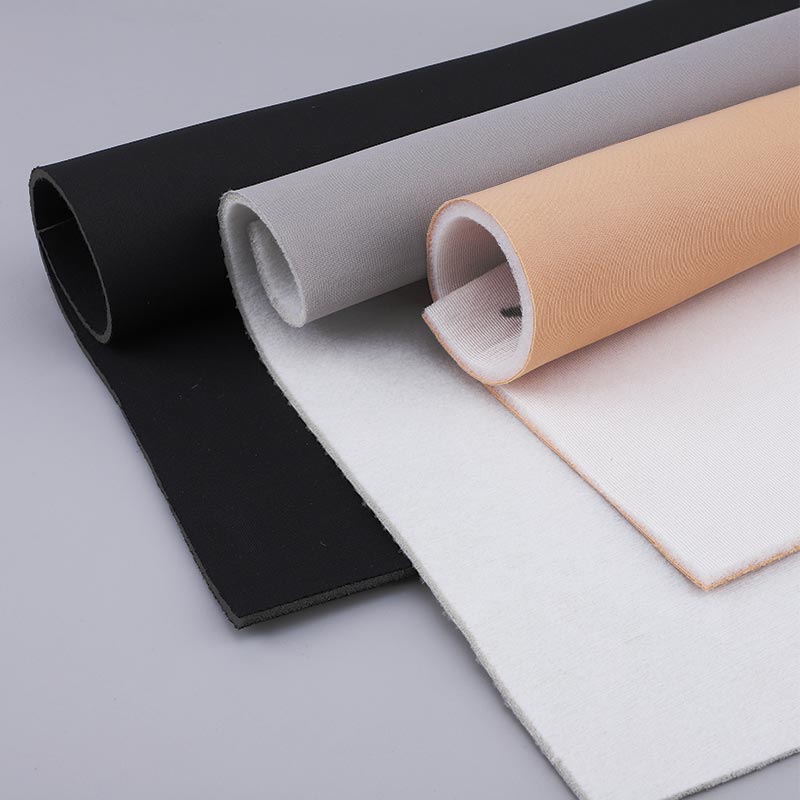
How Can Different Furniture Fabrics Be Combined with PU Foam?
When developing laminated materials for furniture, fabric and foam should be considered as a complete combination. Even when the same PU foam is used, combining it with different fabric substrates may produce different surface appearances, softness, and processing characteristics.
For sofa projects, buyers can evaluate different fabric and foam combinations according to the surface requirements and processing methods of the finished component.
Knitted Fabric with PU Foam
Knitted fabric has a structure formed by interlocking yarn loops. Some knitted structures can provide a degree of stretch and flexibility, making them potential substrates for laminated materials that require bending, wrapping, or a soft surface feel.
However, not all knitted fabrics have the same elasticity. Yarn material, knitting structure, GSM, and finishing treatments can all affect the final performance.
Woven Fabric with PU Foam
Woven fabric is formed by interlacing warp and weft yarns and generally has clearly defined fabric directions and surface structures.
For sofa components that require a particular fabric texture, surface appearance, or shape retention, woven fabric can be considered as a potential substrate.
Buyers should pay attention to the warp and weft directions, cutting direction, bending method, and sewing requirements. The actual result should be confirmed using laminated samples.
Nonwoven Fabric with PU Foam
Nonwoven fabric can have different material characteristics depending on its fiber composition, web structure, and manufacturing method.
In foam lamination development, nonwoven fabric can be considered as one possible substrate. Buyers should evaluate its suitability according to the actual surface requirements, structural function, and further processing methods of the sofa component rather than relying on the material name alone.
Mesh Fabric with PU Foam
Mesh fabric has a relatively open structure, with its specific construction and openings depending on how it is manufactured.
If a sofa project has requirements for surface structure, appearance, or a certain degree of air permeability, a suitable mesh fabric can be evaluated in combination with foam. However, actual air permeability is also affected by the foam structure, lamination method, and material combination. It cannot be determined from the appearance of the mesh alone.
JHC has experience with foam and fabric lamination involving PU and EVA foam, as well as different lamination approaches. However, the specific fabric, foam specifications, material combination, and production arrangements for each sofa project still need to be confirmed according to the customer's requirements.
Therefore, when selecting sofa upholstery material, buyers should not simply provide a description such as "PU foam + fabric." A more effective approach is to explain the sofa component, fabric type, foam requirements, and further processing methods, and then confirm the suitable structure through sample evaluation.
How Should Foam Thickness, Softness, and Lamination Structure Be Determined?
Foam thickness, softness, and lamination structure all affect the appearance, feel, and processing compatibility of the finished material. However, they should not be determined independently of the sofa component.
Foam Thickness
Different components may have different space and covering requirements. Seats, backrests, armrests, and headrests should not automatically use the same foam thickness.
Buyers need to clarify whether the specified thickness refers to the foam layer alone or the total thickness of the finished laminated material. If the material contains multiple layers, the structure and dimensions of each layer should also be specified.
Foam Softness
Softness should be evaluated according to the intended function of the finished component.
For example, a material used for surface cushioning or covering may require a different feel and compression response from foam used in another internal structure. It is not accurate to assume that softer foam is always more suitable for every sofa component.
If a project has specific firmness requirements, buyers should provide a reference sample or measurable technical specifications and verify them using the actual material combination.
Single-Sided and Double-Sided Lamination Structures
Single-sided lamination generally consists of fabric combined with a foam layer. Double-sided lamination can use a structure consisting of fabric, foam, and another fabric layer.
If one side of the material needs to serve as the visible surface while the other side connects to another component, a single-sided structure may be worth evaluating. If both sides require fabric covering, a double-sided structure can be considered.
However, the number of layers alone cannot determine whether a material is suitable for a sofa. Appearance, bending, sewing, cutting, and assembly requirements must also be confirmed.
Overall Thickness After Lamination
Buyers should distinguish between the thickness of the foam itself and the total thickness of the laminated material. The GSM and thickness of the fabric, together with the lamination method, may affect the final material dimensions and processing characteristics.
If a sofa component has strict installation space limitations, the actual thickness of the laminated material should be measured during sampling and checked in a processing condition close to the final application.
For more general purchasing guidance, buyers can also refer to our guide to foam laminated fabric specifications, which explains how to confirm substrates, foam, layers, thickness, and processing requirements.
Why Should Buyers Confirm the Material Using Actual Sofa Component Samples?
A foam laminated fabric that looks suitable when laid flat is not necessarily suitable for actual sofa production.
Sofa components often involve cutting, sewing, folding, bending, upholstery covering, and fixing. The softness and appearance of a material in a flat condition cannot fully represent its performance after processing.
Therefore, buyers should provide actual component samples or test pieces that closely resemble the final shape whenever possible.
Step 1: Confirm the Material's Installation Position
Identify whether the material will be used for a seat, backrest, armrest, headrest, or frame covering area. Explain its specific role in the overall sofa structure.
Step 2: Provide Component Drawings or Existing Samples
If the component has special curved surfaces, corners, stitching lines, or fixing positions, provide dimensioned drawings, photos, or physical samples to help the supplier understand the actual construction.
Step 3: Confirm the Laminated Material Structure
Specify the fabric type, foam type, single-sided or double-sided lamination method, and required total thickness and dimensions.
Step 4: Conduct Actual Processing Evaluation
According to the sofa production process, check whether the material is suitable for cutting, sewing, bending, upholstery covering, and fixing. Pay particular attention to any unacceptable wrinkling, shifting, edge problems, or separation between laminated layers after processing.
Step 5: Confirm the Assembly Result of the Finished Component
Install the laminated material into the actual sofa component and check the surface appearance, overall fit, material position, and assembly compatibility.
If a project has specific requirements for peel strength, compression performance, abrasion resistance, or other properties, the relevant test methods and acceptance standards should be confirmed before testing is arranged. Performance should not be inferred from hand feel or the material name alone.
What Information Should Sofa Manufacturers Provide Before Requesting a Quotation?
To help suppliers evaluate foam laminated fabric for sofa upholstery more accurately, sofa manufacturers should provide as much of the following information as possible before requesting a quotation.
Purchasing Information | Details to Provide |
Sofa Component | Seat, backrest, armrest, headrest, or upholstered frame panel |
End Use | Surface covering, auxiliary filling, internal lamination, or another function |
Fabric Type | Knitted, woven, nonwoven, mesh, or another fabric |
Fabric Composition | PET, nylon, or other fiber composition, if specified |
Foam Type | PU, EVA, or another specified foam |
Foam Specifications | Thickness, density, firmness, and other confirmed parameters |
Lamination Structure | Single-sided, double-sided, or other multilayer structure |
Overall Thickness | Target thickness after lamination |
Surface Requirements | Color, texture, softness, and appearance |
Processing Methods | Cutting, sewing, folding, upholstery covering, die cutting, or other processing |
Sample Information | Component photos, dimensioned drawings, existing material samples, or reference products |
Order Quantity | Sample quantity, initial order quantity, and estimated long-term demand |
Acceptance Requirements | Required performance properties, test methods, and acceptance standards |
If buyers do not yet have complete technical specifications, they can start by providing sofa component photos, existing material samples, and the intended application. The supplier can then assess which material structures need further evaluation.
For sofa projects requiring customized foam laminated fabric, it is recommended to confirm the specific component and material combination before developing samples. Buyers should not assign one uniform foam thickness or lamination method to every sofa component before the actual structure has been evaluated.
As a supplier of nonwoven and laminated materials, HuiZhou JinHaoCheng Nonwovens Co., Ltd. can discuss foam and fabric lamination options according to project requirements. Specific material combinations, specifications, processing methods, and supply arrangements need to be confirmed based on the customer's component information and sample requirements.
For sofa manufacturers, clearly explaining the material's installation position, intended function, and processing workflow is more helpful than simply providing a product name. This makes it easier for suppliers to recommend suitable material options and prepare a more accurate quotation.




