
Foam Thickness and Density in Upholstery Laminates: Matching Specifications to Furniture Components
When sourcing foam laminated fabric for furniture, buyers often provide only the required overall thickness or foam density. However, these two measurements describe different properties, and neither alone is enough to define the complete laminated material.
For furniture manufacturers, choosing the right upholstery foam backing requires more than checking a single number. Foam thickness, foam density, hardness, fabric construction, and the final laminated structure all need to be considered in relation to the intended furniture component.
A foam laminated material used for a sofa seat may have different requirements from one used for a backrest, armrest, or headrest. Understanding these differences helps buyers communicate specifications more accurately and avoid unnecessary adjustments during sample approval and production.
Why Should You Not Judge Upholstery Foam Laminates by Overall Thickness Alone?
The overall thickness of a foam laminated fabric does not tell buyers everything about its construction or performance.
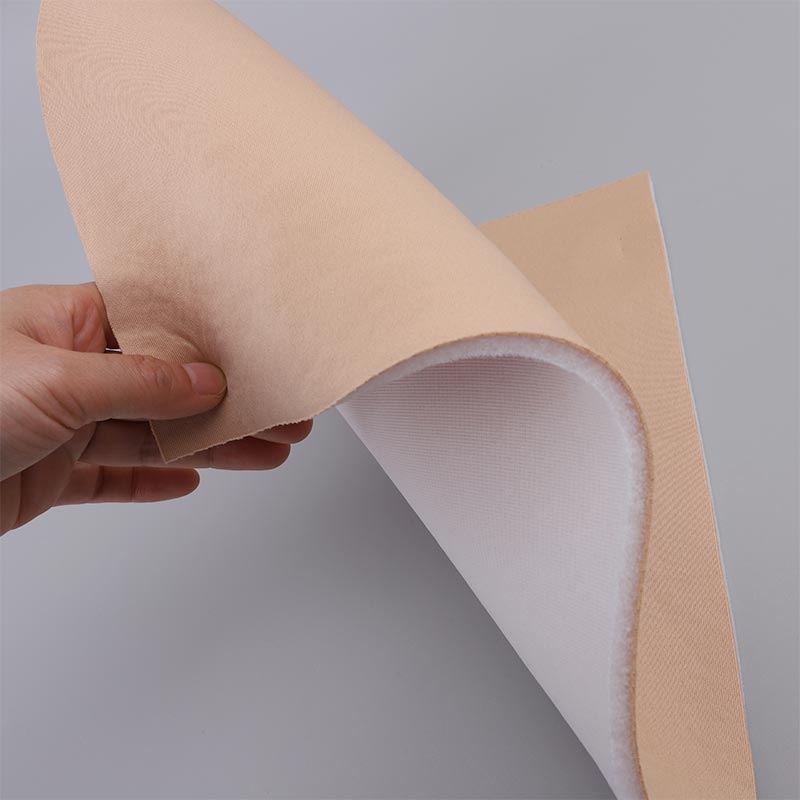
A laminated material may contain a face fabric, a foam layer, and other backing materials. The final thickness is affected by the thickness of each material, the number of layers, the condition of the materials, and the lamination process.
For example, two foam laminated fabrics may have the same overall thickness but use different foam thicknesses or different fabric constructions. Their flexibility, feel, and suitability for a particular furniture component may therefore be different.
Buyers should distinguish between foam thickness, foam density, and overall laminated thickness. These are separate specifications and should not be used interchangeably.
When requesting a quotation, it is better to specify the foam layer and the complete laminated structure separately rather than provide only the final thickness. This gives the supplier a clearer understanding of the required material and makes sample evaluation more meaningful.
What Do Foam Thickness and Foam Density Mean?
Foam thickness refers to the physical thickness of the foam layer itself. It is commonly measured in millimeters (mm). This measurement indicates how thick the foam is before it is laminated with the face fabric or other materials.
Foam density refers to the mass of foam material per unit of volume. It is commonly expressed in kilograms per cubic meter (kg/m³) or pounds per cubic foot (pcf). Density describes how much material is contained within a given volume.
Thickness and density represent different characteristics. A thicker foam layer is not necessarily denser, and a higher-density foam is not necessarily thicker.
It is also important to understand that foam density is not the same as foam hardness. Density does not directly determine whether a foam feels soft or firm. A high-density foam can still feel soft, while a lower-density foam may feel relatively firm.
Hardness is generally evaluated through separate measurements, such as indentation force or indentation force deflection (IFD), depending on the applicable testing method.
Therefore, buyers should not use density alone to judge the hardness, comfort, or support of a finished furniture component. They should also confirm the required hardness and physical feel through technical specifications and actual samples.
When discussing density with a supplier, make sure the value refers to the foam itself, rather than the combined weight or density of the foam laminated with fabric and other materials.
How Are Foam Thickness, Density, and the Overall Laminated Structure Related?
Foam thickness and density are two important foam specifications, but they do not independently define the complete laminated material.
The overall structure may include the face fabric, foam layer, and additional backing or supporting materials. Each layer contributes to the construction of the finished product.
The final laminated thickness is influenced by the thickness of the individual layers, the number of layers, the physical condition of the materials, and the processing conditions. It should not automatically be calculated by simply adding the stated thicknesses of all individual layers.
For example, the measured thickness of a finished laminate may differ from the theoretical total of its component layers because the materials can be affected by the lamination process and their physical condition.
Density also needs to be considered separately. It describes the mass per unit volume of the foam, not the thickness of the complete laminated fabric.
For this reason, buyers should clearly communicate three different specifications: the foam thickness, the foam density, and the required overall thickness of the laminated material.
If the project also has requirements for hardness, flexibility, resilience, or other physical properties, these should be listed separately rather than assumed from the density or thickness.
How Should Foam Thickness and Density Be Selected for Different Furniture Components?
Different furniture components have different structural and functional requirements. The appropriate upholstery foam thickness and density should therefore be determined according to the intended application, rather than applying one specification to every part.
Sofa Seats
Sofa seats are directly related to sitting comfort and support. When selecting foam laminated materials for seat applications, buyers should consider the required foam thickness, density, hardness, and overall feel.
The final material should be evaluated together with the actual seat construction. Foam specifications alone cannot fully determine the sitting experience of a finished sofa.
Sofa Backrests
Backrests have different support and comfort requirements from seat cushions. Their foam specifications should be selected according to the backrest design, intended softness, and overall construction.
The required foam thickness and density should be confirmed through the actual backrest sample rather than copied directly from the seat specifications.
Armrests
Armrests may require a different combination of thickness, softness, and structural support. Their shape and size, as well as the way the material is wrapped or assembled, can affect the suitable foam structure.
Buyers should provide the armrest design or a physical sample so that the material can be evaluated in its intended application.
Headrests and Other Upholstered Components
Headrests and other upholstered parts may have different requirements depending on their shape, contact area, and intended feel. Their specifications should be considered separately instead of assuming that the same foam structure used for the seat or backrest will also be suitable.
For all furniture components, the most reliable approach is to define the required foam properties according to the actual application and confirm the final structure through samples.
How Should Standard PU Foam and High-Resilience PU Foam Be Considered?
Standard PU foam and high-resilience PU foam are different foam options that should be evaluated according to the requirements of the finished product.
Buyers should not assume that one type is always better than the other. The appropriate choice depends on the required feel, resilience, hardness, intended application, and technical specifications.
When comparing these foam types, it is important to confirm the specific foam grade and its relevant technical information. Density alone is not enough to identify the performance of a particular foam.
If a project requires high resilience, the buyer should communicate this requirement clearly and confirm the relevant resilience characteristics with the supplier. Hardness and other required properties should also be evaluated separately.
The availability of specific standard or high-resilience PU foam grades should be confirmed for each project. Buyers should not assume that all suppliers offer the same foam types or specifications.
Why Must Foam Specifications Be Confirmed Through Actual Samples?
Technical figures are important for defining foam laminated fabric specifications, but they cannot fully replace physical sample evaluation.
Even when the foam thickness and density meet the requested values, the finished material still needs to be checked in its actual laminated construction and intended furniture application.
During sample approval, buyers and suppliers should evaluate the following aspects:
Evaluation Item | What to Confirm |
Foam thickness | Whether the foam layer meets the required thickness |
Foam density | Whether the foam density matches the specified value |
Hardness and feel | Whether the material provides the required softness or firmness |
Overall laminated thickness | Whether the finished laminate meets the required thickness |
Surface condition | Whether the fabric surface and laminated material meet the visual requirements |
Layer bonding | Whether the layers are properly bonded |
Cutting and sewing | Whether the material is suitable for the customer's subsequent processing |
Actual component performance | Whether the sample meets the requirements of the intended furniture component |
If the project involves compression, resilience, durability, or other performance requirements, the relevant test methods and acceptance criteria should also be agreed upon in advance.
A test result is meaningful only when the testing method, sample condition, and acceptance standard are clearly defined. Buyers should not rely on general descriptions or unverified performance claims when approving a material.
Testing the material in an actual furniture component, where possible, can help identify whether the selected foam structure is suitable before bulk production.
What Foam Specifications Should Furniture Manufacturers Provide Before Requesting a Quotation?
To obtain an accurate quotation for foam laminated fabric for furniture, buyers should provide sufficient information about the intended application and material requirements.
The more clearly the specifications are defined, the easier it is for the supplier to evaluate the required structure and prepare a suitable sample.
Information to Provide | Details to Confirm |
Final application | Sofa seat, backrest, armrest, headrest, or another upholstered component |
Foam type | Standard PU foam, high-resilience PU foam, or another specified foam type |
Foam thickness | Required thickness of the foam layer in mm |
Foam density | Required foam density in kg/m³ or pcf |
Hardness | Required hardness or indentation force, if specified |
Resilience | Any specific resilience requirements |
Face fabric | Fabric type, material composition, weight, color, and other relevant details |
Laminated structure | Number of layers and the materials used in each layer |
Overall thickness | Required thickness of the finished laminated material |
Subsequent processing | Cutting, sewing, quilting, or other processing requirements |
Sample and order quantity | Sample requirements and estimated order volume |
Acceptance criteria | Required inspection items, testing methods, and acceptance standards |
If buyers already have an existing material sample, technical data sheet, or furniture component sample, providing it to the supplier can make specification confirmation more efficient.
For projects involving multiple furniture components, it is also helpful to identify the requirements for each part separately. This prevents different applications from being grouped under one general foam specification.
For customized upholstery foam backing, the material structure should be confirmed according to the actual application, technical requirements, and sample evaluation. HuiZhou JinHaoCheng Nonwovens Co., Ltd. works with PU and EVA foam and different fabric lamination combinations. Specific foam grades, available specifications, and processing arrangements should be confirmed according to each project.
Clear specifications help both buyers and suppliers reduce misunderstandings during quotation, sampling, and production. Rather than choosing a foam laminated fabric based only on thickness or density, furniture manufacturers should evaluate the complete material structure and confirm that it meets the requirements of the intended furniture component.




