Waterproof vs Oil-Resistant vs Anti-Slip Grill Mats: How to Choose for Outdoor Decks
A grill mat may seem like a simple outdoor protection product, but when it is used on wooden decks, patios, concrete, tile, or other outdoor surfaces, heat resistance alone is often not enough.
During grilling, the surface underneath the grill may be exposed to high temperatures, sparks, hot grease, oil, water, drinks, and charcoal ash. If a grill mat allows liquids to pass through, absorbs too much grease, moves easily, or delaminates after repeated use, it may not provide reliable long-term floor protection.
For this reason, many outdoor grill protection products now combine several properties, including waterproof, oil-resistant, anti-slip, and heat-resistant performance, using needle punched felt with a waterproof backing.
So, what problems do waterproof, oil-resistant, and anti-slip properties solve? Why are these functions better when combined? And how should you choose a grill mat for different outdoor surfaces?
What Are the Functions of Waterproof, Oil-Resistant, and Anti-Slip Grill Mats?
Although waterproof, oil-resistant, and anti-slip properties are often listed together in grill mat product specifications, they solve different problems.
Waterproof performance mainly helps reduce the penetration of water and other liquids. Outdoor decks can be exposed to rain, drinks, cleaning water, and liquids generated during grilling. If the protective mat absorbs water easily or does not have a suitable waterproof structure, liquids may pass through the material and reach the wood, flooring, or underlying surface.
Oil resistance is mainly designed to deal with grease and food residue generated during grilling. When hot oil penetrates ordinary fiber materials, it can make cleaning more difficult and may affect the appearance and performance of the protective mat during long-term use.
Anti-slip performance helps improve the stability of the mat on the ground. Outdoor surfaces may contain dust, water, or grease. If the mat moves easily, it may no longer fully cover the intended grilling area.
Therefore, these three properties do not replace one another. They address different risks that can occur during outdoor grilling.
Why Should an Outdoor Grill Mat Not Focus Only on Heat Resistance?
When choosing a grill mat, heat resistance is usually one of the first things people consider.
This is certainly important because the area around a grill may be exposed to high temperatures, charcoal ash, sparks, and hot grease.
However, focusing only on heat resistance while ignoring waterproofing, oil resistance, anti-slip performance, and overall construction can still limit the product's performance in real outdoor environments.
For example, a material may withstand a certain level of heat, but if water can pass directly through the mat, a wooden deck may still be exposed to moisture.
Similarly, a grill mat may have good heat resistance but absorb large amounts of grease, making cleaning and repeated use more difficult.
If the mat does not have an appropriate anti-slip structure, it may also move when people walk around the area, the grill is moved, or the surface becomes wet or oily.
Therefore, for outdoor grill protection products, a more practical approach is not simply to find a material with the strongest single performance, but to combine different functions according to the actual application environment.
Why Is a Waterproof Grill Mat Better for Outdoor Decks?
One of the main differences between outdoor and indoor environments is the amount of liquid exposure.
Wooden decks, in particular, require attention to moisture because long-term exposure to water can affect the condition of wood surfaces. Therefore, a grill mat for outdoor decks should normally provide appropriate liquid protection.
A common construction is to add a waterproof backing beneath the needle punched felt.
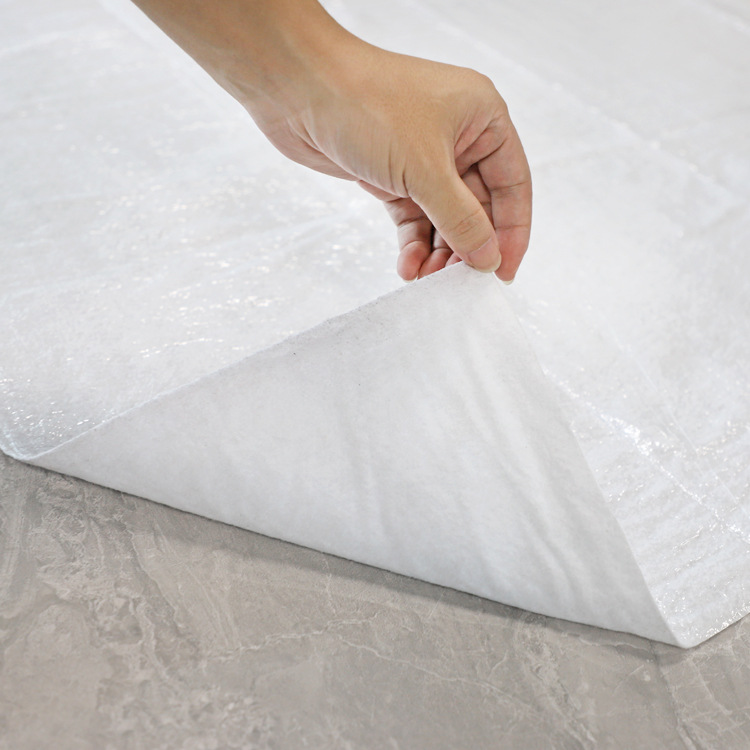
Needle punched felt can provide thickness, cushioning, and absorption, while a PE, TPE, or other suitable waterproof film can provide an additional liquid barrier on the bottom.
Compared with single-layer needle punched felt, this composite construction can better combine surface protection with protection of the underlying floor.
However, waterproofing requirements vary depending on the application. A product used on an ordinary outdoor surface may require a different backing material, thickness, or composite structure from a product that is exposed to rain for extended periods.
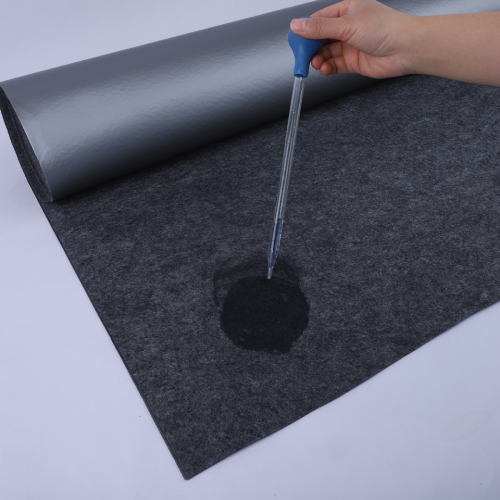
Why Is Oil Resistance Also Important?
A grill mat does not only need to deal with heat. It also needs to deal with grease.
Meat, sausages, burgers, and other grilled foods can release grease during cooking. When the grill is positioned above a protective mat, hot grease may drip onto the surface.
If the material absorbs large amounts of oil, long-term use may result in visible stains and make cleaning more difficult.
Therefore, the design of an oil-resistant grill mat needs to consider the combination of the surface material and the backing structure.
For products using needle punched felt as the top layer, the fiber composition, GSM, and material structure can be selected according to the final application. A waterproof backing can also help reduce the possibility of liquids reaching the underlying surface.
This is why an outdoor grill mat should not simply be considered “a thick piece of felt.”
Its actual performance depends on the entire composite structure.
Why Does Anti-Slip Performance Matter for Outdoor Use?
Outdoor decks are not always completely dry or smooth.
Rainwater, cleaning water, grease, and dust can all affect the stability between the protective mat and the floor.
Therefore, the design of an anti-slip grill mat needs to consider the weight of the mat, the backing material, the surface condition, and the type of floor where it will be used.
For wooden decks, tile, concrete, and other surfaces, different backing structures can be selected according to the actual application.
Anti-slip performance does not mean that every product must use exactly the same anti-slip material. Instead, the structure should be selected according to the floor conditions and product dimensions.
For grill mats that need to be moved and stored frequently, it is also important to find a reasonable balance between anti-slip stability and ease of movement.
Why Is Heat Resistance + Waterproofing + Oil Resistance + Anti-Slip Performance Better for Outdoor Use?
If the outdoor grilling process is considered step by step, different properties correspond to different stages of use.
When the grill is operating, attention needs to be paid to heat and sparks.
During cooking, grease and liquids need to be considered.
In changing outdoor weather conditions, rainwater and moisture become important factors.
When people walk around the area or move the grill, the stability of the protective mat becomes important.
Therefore, a comprehensive outdoor grill mat generally needs to be designed around multiple performance requirements rather than simply improving one individual property.
This is one reason why modern heat resistant grill mats increasingly use composite structures.
Why Is Needle Punched Felt Suitable for Grill Protection Mats?
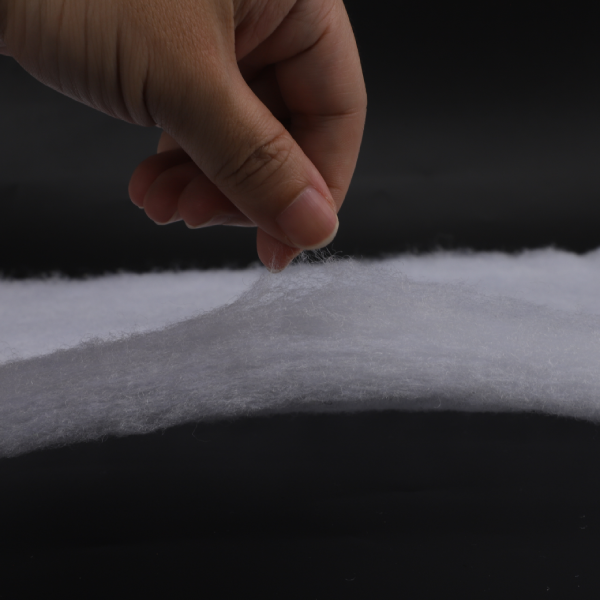
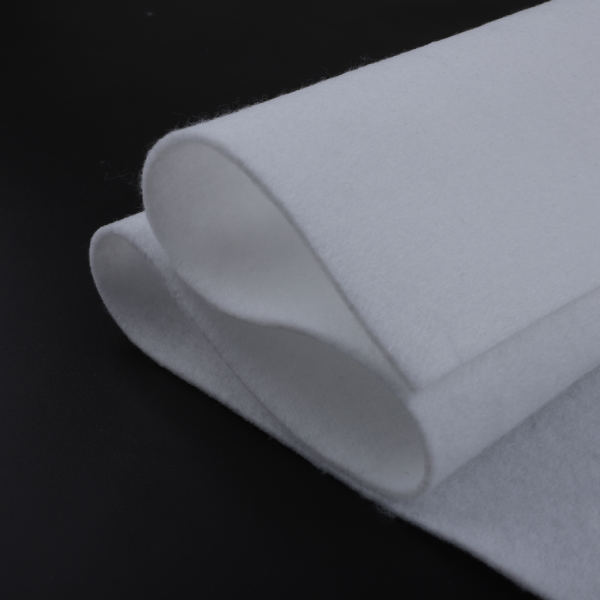
Needle punched felt is a nonwoven material made by mechanically entangling fibers through a needle punching process.
Depending on the intended application, manufacturers can adjust the fiber type, GSM, thickness, and needle punching density to create different material structures.
For grill mats, needle punched nonwoven can be used as the protective top layer, providing thickness, cushioning, and abrasion resistance.
If enhanced heat resistance or flame-retardant performance is required, suitable flame-retardant fibers and material systems can be selected according to the product structure.
For products with specific flame-retardant requirements, the selected material, thickness, color, and final structure need to be tested and verified. The final performance should not be determined simply by the material name.
Therefore, the key is not simply choosing “felt,” but developing a suitable flame retardant needle punched felt structure based on the final application.
Why Is Single-Layer Needle Punched Felt Usually Not the Best Structure for an Outdoor Grill Mat?
Single-layer needle punched felt can be used in many industrial and protective applications. However, for outdoor grilling areas, a single-layer material may not provide sufficient waterproof, oil-resistant, and anti-slip performance at the same time.
For example, needle punched felt can provide absorption and cushioning, but without an appropriate waterproof backing, liquids may still pass through the material.
For this reason, outdoor grill protection products often use composite structures according to their intended application.
A typical structure may include flame-retardant or heat-resistant needle punched felt on the top, a reliable bonding process in the middle, and PE, TPE, or another suitable waterproof, oil-resistant, or anti-slip backing on the bottom.
The final structure is not fixed. It can be adjusted according to the application environment, cost target, product dimensions, and performance requirements.
How Should You Choose Between PE and TPE Waterproof Backing?
The backing is an important part of a composite grill mat because it affects waterproof performance and overall usability.
PE backing is a commonly used waterproof backing option. Its thickness and structure can be adjusted according to product specifications.
TPE backing can be used for product designs that require different flexibility, surface feel, or overall performance.
In practice, it is not appropriate to simply consider one material permanently better than the other.
A more practical approach is to evaluate the final product application:
What type of floor will the mat be used on?
Will it be used outdoors for extended periods?
Is waterproof performance required?
Is oil resistance required?
Is anti-slip performance required?
Will the product be supplied in rolls or individual mats?
What are the target market's price and performance requirements?
For OEM products, the backing material and overall composite structure can be adjusted according to these conditions.
How Does the New Heat Resistant Felt Grill Mat Address These Requirements?
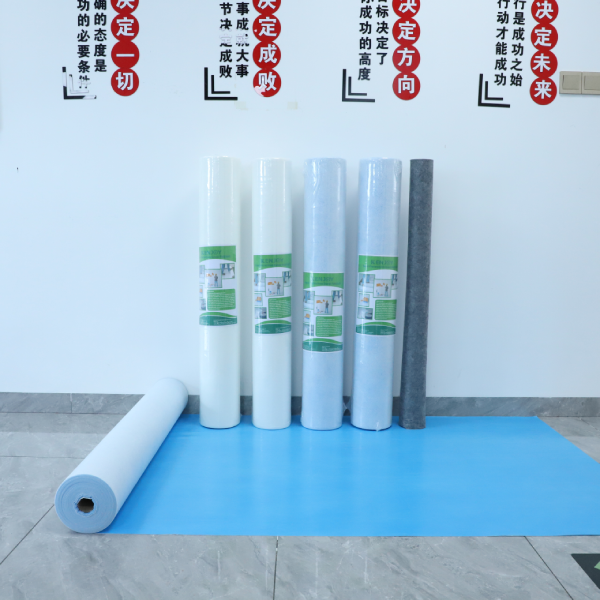
For outdoor grilling applications, our Heat Resistant Felt Grill Mat / BBQ Floor Protector uses a composite construction combining needle punched felt with a waterproof backing.
The surface layer uses needle punched felt designed for heat-resistant and flame-retardant requirements. The fiber composition and material GSM can be adjusted according to product requirements.
The bottom layer can use PE, TPE, or another suitable waterproof backing to help reduce the penetration of water, grease, and other liquids toward the underlying surface.
The product structure also focuses on interlayer bonding strength, helping the surface felt and backing form a stable composite structure and reducing the risk of visible delamination during repeated use or exposure to water and oil.
Different product specifications can also be customized, including GSM, thickness, size, color, backing material, packaging, and logo.
For products with specific flame-retardant requirements, corresponding testing or certification documents can be provided according to the selected material and final structure. It is important to note that UL 94 is a specific flammability testing system for materials under controlled conditions. The flame-retardant performance of a finished product still needs to be evaluated according to its actual materials and final structure.
How Should You Choose a Grill Mat for Different Outdoor Floors?
If the mat is used on a wooden deck, it is important to consider waterproofing, anti-slip performance, heat resistance, and protection of the wood surface.
If it is used on a patio, the product size and backing structure should be selected according to the specific patio material.
For a concrete floor, durability, heat resistance, and long-term stability may receive greater attention.
For a tile floor, particular attention should be paid to the anti-slip performance of the backing and the possibility of liquids reaching gaps between tiles.
For a garage BBQ area, a more abrasion-resistant and easy-to-clean construction may be suitable depending on the frequency of use.
Therefore, there is no single “standard” grill mat that is suitable for every application.
The right product should be selected according to the floor type + heat source + usage environment + cleaning method + product dimensions.
What Specifications Should Be Confirmed When Choosing a Grill Mat?
For individual consumers, important factors usually include size, intended use, heat resistance, waterproof performance, and anti-slip performance.
For importers, wholesalers, brands, and OEM customers, additional specifications and batch consistency should be confirmed.
First, confirm the material composition, including the fiber used in the needle punched felt and whether flame-retardant material is required.
Next, confirm GSM and thickness. Different weights and thicknesses can affect the hand feel, cushioning, abrasion resistance, and cost of the product.
Then confirm the backing material, such as PE, TPE, or another specified material.
For composite products, lamination strength should also be considered. If the surface and backing are not bonded properly, delamination or separation may occur during long-term use.
In addition, confirm the width, length, size, color, packaging, logo printing, and other OEM requirements.
The earlier these specifications are confirmed, the easier it is to reduce significant differences between samples and bulk production.
Why Should You Not Compare Grill Mats by Price Alone?
For bulk purchasing, comparing only the price per square meter does not fully reflect the actual product cost.
A lower-priced product may have GSM variation, unstable thickness, insufficient lamination strength, or inconsistent quality between batches. These issues can eventually increase the costs associated with returns, complaints, replacement orders, and inventory management.
Therefore, when comparing grill mats, it is more practical to consider the materials, construction, performance, specification consistency, packaging, and supply capability together.
Especially for OEM projects, once a product enters long-term sales, batch consistency can be more important than the initial sample price.
Why Choose a Professional Needle Punched Nonwoven Manufacturer for OEM?
For brands developing their own Grill Mat products, working with a manufacturer that has its own needle punched nonwoven production capabilities can reduce intermediate links and make material and structural adjustments easier.
A professional needle punched nonwoven felt manufacturer can work with customers on fiber selection, needle punching processes, GSM, thickness, and composite structures.
For high-volume projects, it is also important to evaluate production capacity, quality control, lead time, and long-term batch consistency.
As a nonwoven manufacturer with years of production experience, HUIZHOU JINHAOCHENG NONWOVENS CO., LTD. can provide OEM/ODM customization for needle punched nonwoven, composite nonwoven, and related protective materials according to product applications.
From materials and specifications to packaging and logo printing, products can be developed according to the final application requirements.
For customers developing products such as heat resistant grill mats, flame retardant grill mats, and BBQ floor protectors, a practical approach is not simply to look for the lowest quotation. It is better to define the final application first and then develop the appropriate material and composite structure according to the required performance.
How to Choose a Grill Mat That Is Suitable for Outdoor Decks?
When choosing an outdoor grill mat, start by identifying the floor type, such as a wooden deck, patio, concrete, or tile.
Then identify the main risks, including heat, sparks, grease, liquids, or mat movement.
Next, determine the required properties, including heat resistance, waterproofing, oil resistance, and anti-slip performance.
Finally, determine the appropriate materials, GSM, thickness, dimensions, and backing structure.
For OEM projects, also confirm packaging, logo requirements, MOQ, lead time, and batch consistency.
Choosing a product based on the application environment is more reliable than simply comparing which grill mat is thicker or which product has the lowest price.
Conclusion: Outdoor Grill Mats Need Comprehensive Protection
Waterproofing, oil resistance, anti-slip performance, and heat resistance are not simply marketing labels. Each property addresses a different practical issue during outdoor grilling.
For different surfaces such as wooden decks, patios, concrete, and tile, the protective mat should be selected according to the specific environment and application requirements.
Needle punched felt + waterproof backing is a composite construction with considerable customization potential. The fiber type, GSM, thickness, backing material, and dimensions can be adjusted according to different product requirements.
Therefore, when choosing a waterproof grill mat, oil-resistant grill mat, anti-slip grill mat, or heat resistant grill mat, the key is not to focus on one individual function, but to evaluate whether the entire product structure is suitable for the final application environment.