Fire Pit Mat vs Grill Mat: How Should Buyers Choose the Right Patio Protection Mat?
Outdoor grilling and fire pits are becoming increasingly common on patios, but for importers, wholesalers, brands, and outdoor product distributors, one question often comes up: What is the difference between a Fire Pit Mat and a Grill Mat? Can one product replace the other?
Many buyers searching for a heat resistant patio mat will find products that look very similar, but their actual applications, heat sources, product structures, and performance requirements may be different.
If the wrong product is selected, it may not meet the needs of end users. It can also lead to insufficient surface protection, more product complaints, and inventory specifications that do not match the target market.
Therefore, when evaluating fire pit mat vs grill mat, buyers should look beyond price and appearance. The better approach is to select the right product based on the heat source, application environment, protected surface, and overall product structure.
What Is the Difference Between a Fire Pit Mat and a Grill Mat?
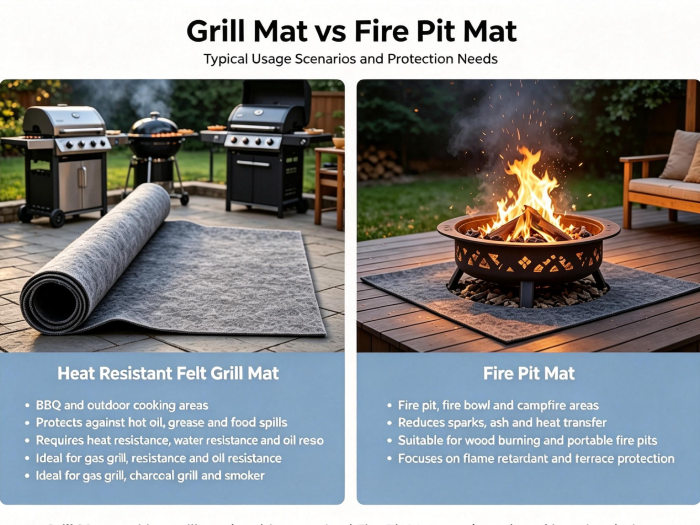
The simplest difference is that a Fire Pit Mat is mainly designed for ground protection around fire pits, fire bowls, and other open-fire applications, while a Grill Mat is primarily designed for BBQ grills and outdoor cooking areas.
Fire Pit Mats are commonly used with fire pits, portable fire pits, fire bowls, and wood-burning fire pits. Their main purpose is to help protect patio surfaces from sparks, ash, heat, and burning residue.
Grill Mats are more commonly used with charcoal grills, gas grills, smokers, and outdoor BBQ stations. In addition to heat and sparks, they also need to address grease, oil, food residue, and liquid spills generated during grilling.
Therefore, although both products are designed for outdoor floor protection, they should not simply be considered exactly the same product when making purchasing decisions.
Why Should Patio Protection Go Beyond “Heat Resistance”?
When buyers search for a heat resistant patio mat, heat resistance is often the first performance they consider.
However, for outdoor patio protection products, heat resistance is only one part of the overall performance requirements.
For example, a wooden patio may be exposed not only to heat, but also to grease, water, sparks, and ash. Concrete and tile surfaces may respond differently to heat, but they can still require protection from oil, liquids, and other residues.
Therefore, a suitable outdoor patio protection mat generally needs to consider multiple performance requirements, including heat resistance, flame retardancy, absorbency, waterproofing, oil resistance, anti-slip performance, abrasion resistance, and overall structural stability.
This is why professional fire pit protection mats and BBQ floor protectors are usually more than just a layer of ordinary felt.
What Applications Are Fire Pit Mats Better Suited For?
If the end user mainly uses a fire pit, fire bowl, or outdoor fire-burning equipment, a Fire Pit Mat is generally the more application-specific choice.
Common applications include fire pits, fire bowls, wood-burning fire pits, portable fire pits, and certain outdoor fire areas.
These products are mainly designed to help reduce the impact of sparks, ash, and heat on the patio surface underneath.
When a fire pit is used on a wooden patio, buyers should pay particular attention to the product's heat resistance, flame-retardant performance, and overall structure rather than judging protection simply by the thickness of the mat.
For different types of fire pits and patio surfaces, the final material, size, and structure should also be selected according to the actual application requirements.
What Applications Are Grill Mats Better Suited For?
Grill Mats are mainly designed for BBQ grills and outdoor cooking areas.
Common applications include charcoal grills, gas grills, smokers, BBQ stations, and commercial outdoor cooking areas.
Compared with fire pit applications, grilling usually produces more hot grease, oil, liquids, and food residue. Therefore, in addition to heat and sparks, Grill Mats need to consider absorbency, waterproofing, oil resistance, and anti-slip performance.
For buyers, if the product is mainly intended for BBQ users, simply sourcing an ordinary heat-resistant mat may not be the most suitable solution.
A more practical approach is to develop a composite protection mat with a combination of heat resistance, flame retardancy, absorbency, waterproofing, oil resistance, and anti-slip performance according to the grilling application.
Can Fire Pit Mats and Grill Mats Use the Same Material?
They can use similar base materials, but that does not mean the final products should have exactly the same specifications and structure.
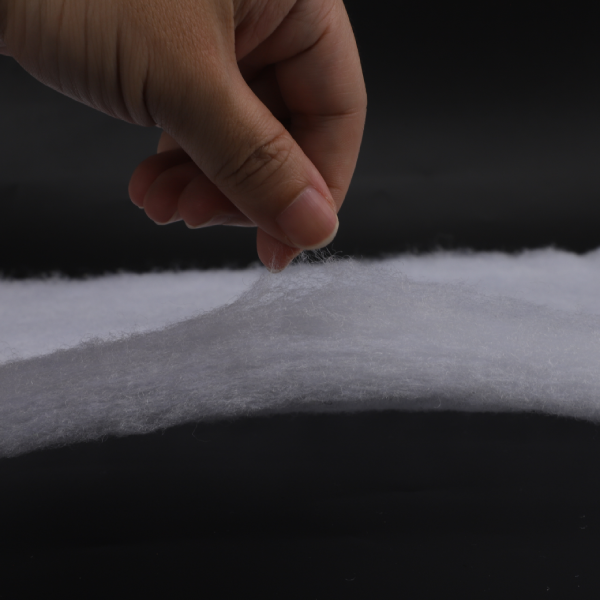
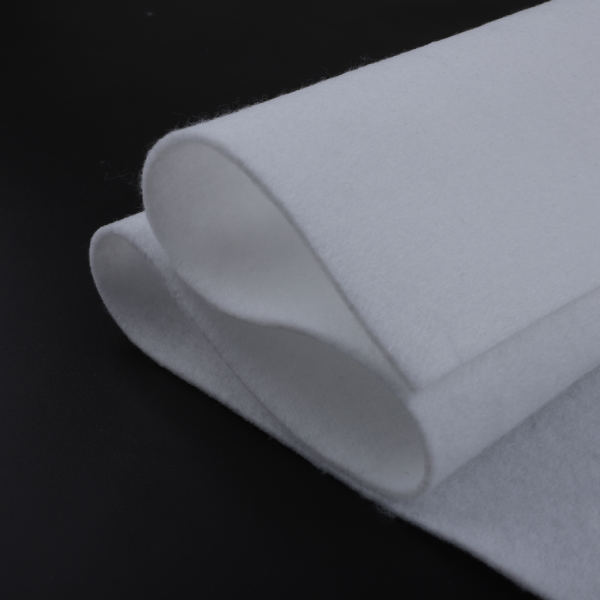
For example, needle punched felt can be used as one of the base materials for both types of products. Through the needle punching process, a nonwoven material with a certain thickness, density, and abrasion resistance can be produced.
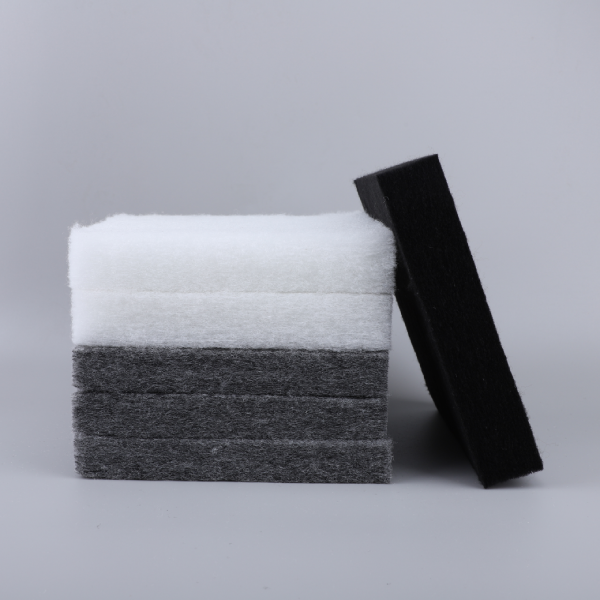
However, the fiber composition, GSM, thickness, needle punching density, and backing structure can be adjusted according to the final application.
If the product is mainly designed for Fire Pit Mats, the material structure can focus more on heat resistance and flame-retardant requirements.
If the product is mainly designed for Grill Mats, additional consideration can be given to absorbency, waterproofing, oil resistance, and anti-slip performance.
Therefore, buyers should not only ask a manufacturer whether they offer a “fire pit mat” or “grill mat.” They should also explain the final application and required performance.
Why Is Needle Punched Nonwoven Suitable for Outdoor Heat-Resistant Protection Mats?
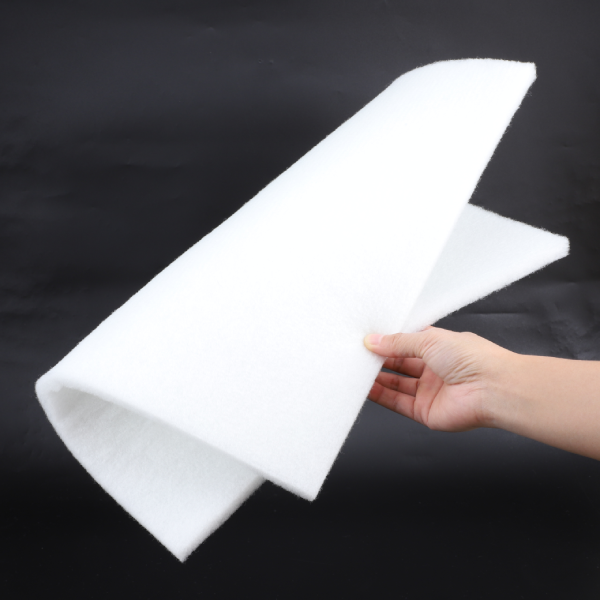
For outdoor protection products that need to combine heat resistance, absorbency, and abrasion resistance, needle punched nonwoven felt is a material with a high degree of development flexibility.
The needle punching process mechanically entangles fibers to create a stable three-dimensional nonwoven structure. The fiber composition, weight, and thickness can be adjusted according to the final application.
For Fire Pit Mats and Grill Mats, different needle punched felt structures can be developed according to the product positioning and further combined with flame-retardant materials, waterproof films, or other functional layers.
This structure can meet different product performance requirements while also making it easier for brands and wholesalers to develop different product specifications.
For customers requiring long-term supply, working with a professional needle punched nonwoven felt manufacturer can also provide greater flexibility for future material adjustments and OEM product development.
Why Is a Single-Layer Felt Usually Not the Ideal Patio Protection Solution?
Ordinary single-layer felt can provide a certain level of separation and absorbency, but for outdoor fire pit and grilling applications, its functionality may not be sufficient.
For example, grilling can produce grease and liquids. If the product does not have a suitable waterproof backing, liquids may reach the patio surface underneath.
Therefore, professional heat resistant grill mats or fire pit mats can use a composite structure.
A typical structure can include:
Top Layer: Flame Retardant Needle Punched Felt
Designed to provide absorbency, abrasion resistance, and the required heat-resistant and flame-retardant performance.
Middle Layer: Stable Composite Bonding Structure
Designed to improve the bonding stability between different material layers.
Bottom Layer: PE, TPE, or Other Suitable Waterproof Backing
Designed to reduce water and liquid penetration and provide anti-slip performance when required.
Compared with simply increasing felt thickness, this type of composite structure can be more suitable for addressing multiple outdoor application requirements.
How Should Buyers Choose Between PE and TPE Backing?
For Fire Pit Mats and Grill Mats, the backing material is one of the key specifications that buyers should confirm.
PE backing can be used in product structures where waterproof separation and cost control are important, while TPE backing can be used to develop composite products with different flexibility, weather resistance, or anti-slip requirements depending on the specific product design.
However, there is no single backing material that is suitable for every Fire Pit Mat and Grill Mat.
Buyers should select the appropriate backing according to the target market, patio surface, application environment, cost requirements, and final product performance.
Therefore, when requesting a quotation, it is better not to provide only the product name “fire pit mat” or “grill mat.” Buyers should also confirm specific specifications such as felt material, GSM, thickness, backing material, backing thickness, size, and packaging.
Why Is Size Important When Purchasing Fire Pit Mats and Grill Mats?
Many buyers focus heavily on materials and price while overlooking product size.
In reality, the size of a protection mat should be determined according to the actual footprint of the heat source equipment and the area that needs to be protected.
If the mat is too small, it may not cover the key area around the grill or fire pit. If it is too large, it can increase material costs, packaging volume, and shipping costs.
Therefore, for wholesalers and importers, a more practical approach is to develop different specifications according to the common fire pit, grill, and patio sizes used in the target market.
Manufacturers can customize width, length, roll specifications, individual mat sizes, and special shapes according to buyer requirements, making the products more suitable for different market needs.
How Should Buyers Evaluate the Quality of Fire Pit Mats and Grill Mats?
Quality should not be judged only by product images or thickness.
For bulk purchasing, buyers should focus on whether the materials and production specifications are stable.
First, confirm whether the GSM and thickness meet the requirements, because different weights and thicknesses can affect overall product performance and cost.
Second, confirm whether the needle punched structure is stable and whether there are significant differences between production batches.
For composite products, buyers should also pay attention to lamination strength to help prevent separation between the felt layer and backing during long-term use.
If the product involves flame-retardant performance, buyers should confirm the relevant testing documentation and whether the testing applies to the specific material or product specification.
For long-term cooperation, sample consistency and bulk production consistency are also important factors.
Fire Pit Mat vs Grill Mat: How Should Buyers Choose?
If the target customers mainly use fire pits, fire bowls, or outdoor fire pits, it is more appropriate to develop Fire Pit Mats, with greater emphasis on heat, sparks, ash, and patio surface protection.
If the target customers mainly use charcoal grills, gas grills, smokers, or BBQ stations, Grill Mats are generally more suitable. In addition to heat resistance and flame retardancy, buyers should also consider grease, liquids, absorbency, waterproofing, and anti-slip performance.
If a brand wants to enter both markets, it can also use the same needle punched nonwoven technology platform and develop different products by adjusting the material composition, GSM, thickness, backing, and size.
Therefore, Fire Pit Mat vs Grill Mat is not simply a question of which product is better, but which product is better suited to the specific application.
Why Is Purchasing from a Professional Needle Punched Nonwoven Factory Better for OEM?
For importers, wholesalers, brands, and outdoor product manufacturers, price may be one of the main considerations when purchasing standard products.
However, if a company wants to build its own Fire Pit Mat or Grill Mat product line, the manufacturer's material development and OEM capabilities become more important.
A professional needle punched felt manufacturer can control the product structure starting from the raw materials and needle punching process, while further developing composite products according to customer requirements.
Jinhaocheng has more than 20 years of nonwoven R&D and manufacturing experience, with a factory covering approximately 26,000 square meters, 15 automated production lines, and annual production capacity of more than 10,000 tons.
The company supports OEM and ODM customization, including fiber composition, flame-retardant materials, GSM, thickness, backing material, backing thickness, width, roll length, product size, shape, color, packaging, and brand labeling.
For Fire Pit Mat and Grill Mat development, the appropriate needle punched nonwoven composite structure can be designed according to the target market's requirements for heat resistance, flame retardancy, absorbency, waterproofing, oil resistance, anti-slip performance, and abrasion resistance.
This is particularly valuable for customers who require long-term purchasing and want to develop their own branded product lines.
Conclusion: The Key Difference Between Fire Pit Mats and Grill Mats Is the Application, Not the Product Name
When comparing fire pit mat vs grill mat, buyers should not focus only on the product name, appearance, or price.
Fire Pit Mats are more focused on patio protection around fire pits, fire bowls, and open-fire environments, while Grill Mats are more suitable for BBQ grills, smokers, and outdoor cooking areas where heat, grease, liquids, and food residue all need to be considered.
For both product types, needle punched nonwoven felt can be combined with PE, TPE, and other materials to create composite structures. Flame retardancy, heat resistance, absorbency, waterproofing, oil resistance, anti-slip performance, and abrasion resistance can then be adjusted according to the specific application.
Therefore, the right purchasing approach for wholesalers and brands is not simply to look for the “thickest” or “cheapest” product. Instead, buyers should follow the logic of final application → performance requirements → material → composite structure → specifications → OEM customization.
For customers looking for stable long-term supply, customized specifications, and private-label product development, working with a professional needle punched nonwoven felt manufacturer can provide stronger support for Fire Pit Mat and Grill Mat development and bulk purchasing.