Why Do Grill Mats Delaminate? Common Causes of Layer Separation and How to Prevent It
For importers, wholesalers, brand buyers, and OEM customers developing Grill Mats, one common quality issue is:
Why do Grill Mats delaminate?
When a sample is first received, the Felt Layer and Backing Layer may appear to be well bonded. However, after transportation, handling, cleaning, and long-term use, some areas may begin to separate between the layers.
This phenomenon is commonly referred to as Grill Mat Delamination.
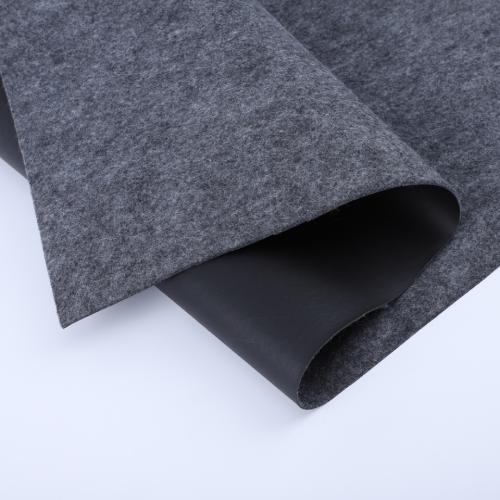
For composite Grill Mats, the product is not simply made from one layer of material. It consists of different materials that are bonded together through a specific lamination process to form an integrated structure.
Therefore, when delamination occurs, the problem may not simply be that one material is “not good enough.” It may also be related to Bonding Strength, Lamination Pressure, Lamination Temperature, Surface Cleanliness, Material Compatibility, and production process control.
For buyers, the real question is not:
“Why did this Grill Mat fail?”
Instead, it is:
“What causes the composite layers to become unstable during production, and how can the manufacturer reduce the risk of delamination?”
This article analyzes the common causes of Grill Mat Delamination from a composite manufacturing perspective and explains which process factors buyers should pay attention to during product development and bulk production.
What Is Grill Mat Delamination?
Grill Mat Delamination refers to the separation of different material layers that were originally bonded together in a composite product.
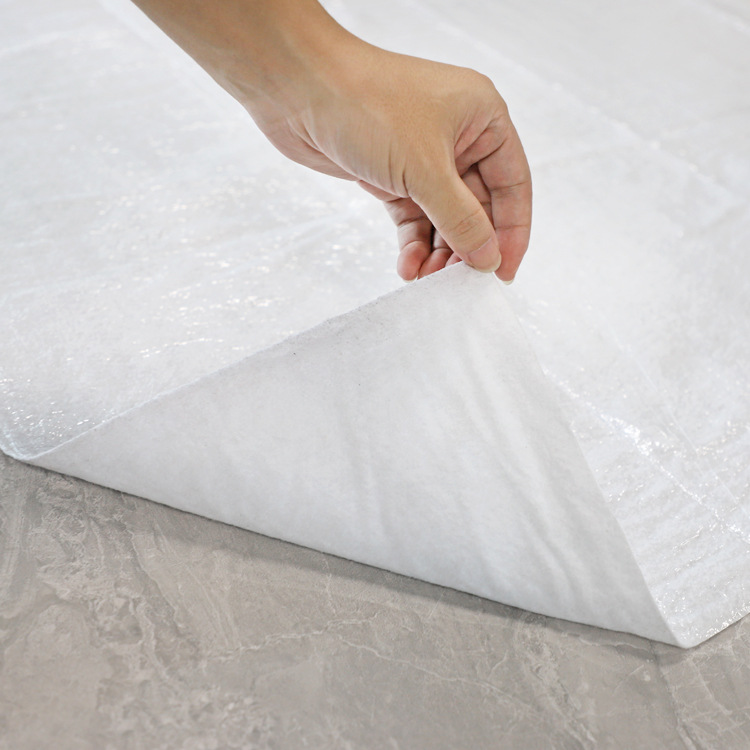
For a composite Grill Mat consisting of a Felt Layer and a Backing Layer, the ideal condition is for the different layers to form a stable and continuous bonded structure.
If the Bonding Strength between the layers is insufficient, the product may develop local lifting, edge separation, partial peeling, or even larger areas of Layer Separation.
This problem may not always be obvious immediately after production.
A product may look normal when it leaves the factory, but after transportation, bending, cleaning, handling, or long-term use, areas with weaker bonding may gradually become visible.
Therefore, Delamination should not be viewed only as a problem that occurs during product use. It is closely related to the composite structure design and manufacturing process from the beginning.
Why Does the Composite Structure of a Grill Mat Separate?
Delamination in composite products is usually not caused by one single factor.
Different materials need to be combined through a suitable Lamination Process to create a stable bond. If the bonding conditions are not properly controlled, insufficient bonding may occur between the material layers.
Common influencing factors include:
Bonding Strength between the Felt Layer and Backing Layer
Lamination Temperature
Lamination Pressure
Material Compatibility
Surface Cleanliness
Production Speed
Bonding Process Stability
In addition, the edges of the product also deserve attention.
The edge area may be affected differently by processing, cutting, bending, and handling than the central area. Therefore, Edge Separation can become one of the potential issues that should be monitored in composite products.
For this reason, solving Grill Mat delamination is not simply about adding another material. The key is to establish a stable lamination process.
Why Is Bonding Strength the Key to Preventing Grill Mat Delamination?
For a composite Grill Mat, Bonding Strength is a critical quality factor.
The Felt Layer and Backing Layer need to form a sufficiently stable bond so that the product is less likely to separate during transportation, processing, and use.
If the bonding strength is insufficient, bending, stretching, or repeated handling may gradually create small gaps between the layers.
These early changes may not be obvious visually.
However, over time, local areas may continue to expand and eventually appear as:
Layer Separation
Edge Lifting
Local Peeling
or obvious Delamination.
Therefore, buyers should not focus only on the final appearance when developing a Grill Mat.
They should also understand whether the manufacturer can consistently control the entire Lamination Bonding Process.
Does Lamination Temperature Affect Grill Mat Composite Stability?
Yes.
During the lamination process, Lamination Temperature is one of the important process parameters affecting material bonding.
Different material systems require suitable lamination conditions.
If the temperature does not reach the appropriate processing range, the materials may not form a stable bond.
At the same time, improper process conditions may also affect the structure or downstream processing performance of the materials.
Therefore, lamination is not simply a matter of “heating the materials and pressing them together.”
The manufacturer needs to adjust the lamination process according to the characteristics of the different materials.
For customized composite grill mat construction, the required process conditions may vary depending on the material system, thickness, and production method.
Therefore, during OEM product development, lamination parameters should be confirmed together with the actual material structure.
Why Is Lamination Pressure Also Important?
In addition to temperature, Lamination Pressure is another important factor in the composite manufacturing process.
During lamination, appropriate pressure is required to ensure sufficient contact between the different material layers.
If the pressure is unstable, some areas may have different bonding conditions from others.
For example, insufficient contact in a local area may result in lower Bonding Strength at that location.
This difference may not be easy to detect visually immediately after production.
However, when the product experiences bending, handling, or other mechanical forces during use, areas with weaker bonding may show problems first.
Therefore, stable pressure control is important for maintaining consistent composite bonding.
Why Does Surface Cleanliness Affect Lamination Bonding?
This is an issue that is easy to overlook.
During Lamination Bonding, different materials need to establish a stable and continuous contact relationship.
If dust, foreign particles, oil, or other contaminants are present on the material surface, they may affect the actual contact condition between the layers.
This may not immediately cause the entire product to delaminate, but it can reduce bonding strength in local areas.
For mass production, if the same problem repeatedly appears in individual areas, it may eventually become a batch-level Delamination Problem.
Therefore, stable lamination is not only about temperature and pressure control. It also involves maintaining appropriate surface cleanliness before and during the process.
For manufacturers, managing the condition of raw materials before they enter the lamination stage is also part of product quality control.
Why Does Material Compatibility Affect Composite Structure?
Not all materials can achieve an ideal composite result using exactly the same processing method.
Material Compatibility can affect the final bonding condition between different materials.
For example, if the composition, surface condition, thickness, or other characteristics of the Felt Layer change, while the properties of the Backing Layer also change, the original lamination conditions may need to be adjusted.
This is why an OEM project should not simply tell a supplier:
“Bond these two materials together.”
A more accurate approach is to define the final structure first:
Felt Layer + Bonding Method + Backing Layer
The production process can then be adjusted according to the actual material system.
For products requiring long-term bulk purchasing, keeping the material system stable is also important.
If the material changes, the existing lamination process may need to be re-evaluated even if the product name and dimensions remain unchanged.
Does Production Speed Affect Grill Mat Lamination Quality?
In continuous industrial production, Production Speed is another factor that needs to be considered.
The lamination process must be completed within a suitable production time and under appropriate operating conditions.
If production speed, temperature, pressure, and material input conditions are not properly matched, the final lamination result may be affected.
For example, if the time the material spends passing through the lamination area changes while other process parameters remain unchanged, the bonding condition may also change.
Therefore, stable Grill Mat Lamination is not simply a matter of one machine setting. It is the result of matching multiple production parameters.
For bulk orders, a factory needs not only to produce one sample with successful lamination, but also to reproduce the same composite structure consistently throughout continuous production.
Why Do Grill Mat Edges Need Special Attention for Delamination?
In composite products, Edge Separation is an issue buyers should pay particular attention to.
The center and edges of a product may experience different conditions during production, cutting, handling, and final use.
If the bonding condition at the edge is not sufficiently stable, the product may begin to separate from the edge after long-term use or repeated bending.
Therefore, during manufacturing, it is important to consider not only whether the central area has been successfully laminated.
The edge area also needs to maintain a stable bonding condition.
For customized Grill Mat dimensions, the cutting method and final edge condition should also be considered together with the overall composite structure.
This does not mean that every Grill Mat will necessarily delaminate from the edge, but the edge is an area of the composite structure that deserves particular attention.
Why Can a Grill Mat Have No Visible Delamination When It Leaves the Factory but Develop It During Use?
This is a question that buyers often encounter.
If a product does not show obvious Delamination immediately after production, that does not necessarily mean that its long-term bonding stability has been fully validated.
During transportation and use, composite products may experience:
Repeated bending
Packaging pressure
Handling
Cleaning
Friction
Long-term mechanical forces
These factors may gradually affect areas where the original bonding was relatively weak.
Therefore, composite structure stability should not be judged only by visual inspection immediately after production.
For long-term purchasing projects, it is more important to understand whether the manufacturer has a stable Lamination Process and whether it can maintain consistent composite structure across different production batches.
How Can Buyers Evaluate Whether a Supplier Takes Anti-Delamination Construction Seriously?
When purchasing Grill Mats, buyers should not ask only:
“Does it have strong lamination?”
This question is relatively broad.
A more effective approach is to ask about the manufacturing process.
For example, buyers can ask the manufacturer:
How are the Felt Layer and Backing Layer laminated?
Is the Lamination Temperature controlled?
Is the Lamination Pressure stable?
How does the factory ensure proper surface conditions before lamination?
When the material system changes, is the lamination process re-evaluated?
Are the edge areas inspected?
How does the factory maintain composite structure consistency during bulk production?
These questions can help buyers understand whether a supplier truly controls Grill Mat Lamination rather than simply asking whether the product is “anti-delamination.”
Why Do OEM Grill Mat Projects Need More Attention to Lamination Construction?
For standard products, manufacturers usually have a relatively fixed production structure.
However, OEM projects may involve different dimensions, thicknesses, material combinations, and final product structures.
When one material changes, the entire composite system may need to be re-evaluated.
Therefore, an OEM Grill Mat should not simply be treated as a copy of a standard product.
During product development, a more appropriate process is:
Final Application → Material Structure → Bonding Method → Lamination Parameters → Sample → Bulk Production
This allows the composite structure to be confirmed from the development stage.
For customers requiring long-term bulk production, stable Composite Grill Mat Construction is more important than simply producing one successful initial sample.
Why Can Laminated Foam Fabric Experience Help With Material Development?
Laminated Foam Fabric is also a type of composite nonwoven product where bonding between multiple material layers needs to be carefully considered.
Although the final structure and applications of different products are not the same, composite material manufacturing generally requires attention to bonding methods, production conditions, and structural stability.
For customers developing Grill Mats, laminated nonwoven materials, and other functional nonwoven products at the same time, the manufacturer's experience with composite processing can be an important consideration during product development.
However, the composite structure of a Grill Mat should still be designed and validated according to the actual product requirements.
Experience with one type of composite material does not automatically mean that another product will have exactly the same bonding performance.
How Does Jinhaocheng Support Grill Mat Composite Structure Development?
HUIZHOU JINHAOCHENG NONWOVENS CO., LTD. specializes in the manufacturing of needle punched nonwoven materials and related composite nonwoven products, with more than 20 years of nonwoven manufacturing experience.
The company has a production base of approximately 26,000 m², 15 automated needle punching production lines, and annual production capacity exceeding 10,000 tons, together with manufacturing capabilities for different nonwoven materials and composite processing.
For Grill Mat projects, Felt Layer, Backing Layer, GSM, Thickness, Dimensions, and the lamination method can be developed and adjusted according to the customer's product structure and actual requirements.
Jinhaocheng also has experience in the development of Laminated Foam Fabric and other composite material products, providing corresponding manufacturing support for OEM projects requiring multi-layer nonwoven bonding.
For importers, wholesalers, and brand customers requiring customized products, after sample approval, it is also necessary to ensure that the composite structure can be reproduced consistently during bulk production.
How Can the Risk of Grill Mat Delamination Be Reduced During Production?
Solving Grill Mat Delamination is not simply a matter of adding another material.
The more important objective is to maintain a stable composite process.
From the moment materials enter production, attention should be paid to:
Material Compatibility
↓
Surface Condition
↓
Lamination Temperature
↓
Lamination Pressure
↓
Production Speed
↓
Bonding Strength
↓
Edge Condition
These factors work together to influence the final composite structure.
For OEM projects, it is recommended to define the final material structure and lamination requirements during the sample stage, and then maintain consistency through sample approval, process confirmation, and bulk production control.
Conclusion: Grill Mat Delamination Is Essentially a Composite Structure Stability Problem
Grill Mat Delamination is not simply an appearance issue.
When the Felt Layer and Backing Layer separate, the underlying causes may involve Bonding Strength, Lamination Temperature, Lamination Pressure, Surface Cleanliness, Material Compatibility, Production Speed, and edge structure.
Therefore, instead of asking only:
“Does this Grill Mat have anti-delamination performance?”
buyers can ask:
“How is the composite structure manufactured?”
A stable product depends not only on the materials themselves, but also on proper structural design and a stable Lamination Process.
For importers and wholesalers looking for a Grill Mat Manufacturer, nonwoven manufacturer China, or customized nonwoven product manufacturer capable of composite structure development and bulk production, understanding the supplier's materials, lamination process, and mass-production capabilities is an important step toward reducing future quality risks.