
Custom Aquarium Filter Fleece Rolls: What to Include in an RFQ
For aquarium equipment manufacturers, automatic roller filter brands, importers, and wholesalers, sourcing custom aquarium filter fleece rolls involves more than telling a supplier that you need PET filter fleece. The first step is to explain how the material will be used, what roll specifications are required, and how the sample should be evaluated.
If an RFQ only states “PET aquarium filter fleece,” the supplier may not know whether you require needle-punched or thermally bonded material. The supplier may also lack the information needed to confirm equipment compatibility, target roll length, and winding requirements. Even if a quotation is issued quickly, differences in specification interpretation can lead to repeated clarification, unsuitable samples, or material that does not fit the intended equipment.
An effective custom aquarium filter media RFQ does not require buyers to define every technical parameter from the beginning. It should provide enough application information, known specifications, and reference materials for the supplier to determine which requirements can be quoted directly and which need further confirmation through samples, equipment information, or testing.
Why Is “PET Aquarium Filter Fleece” Not Enough for an Accurate Quotation?
“PET aquarium filter fleece” identifies the general material type, but it does not fully describe the purchasing requirements.
Different projects may require different fiber structures, manufacturing processes, basis weights, thicknesses, and roll dimensions. Even when two products are both made primarily from polyester fibers, they may not have the same water-flow characteristics, structural stability, or equipment compatibility.
For continuous rolls used in automatic roller filters, suppliers also need to understand the feeding method, installation space, core requirements, maximum roll diameter, and target roll length. These details affect whether the roll can be installed and fed through the equipment as intended.
If the buyer requires specific particle-retention performance, fiber-shedding checks, or other water-contact requirements, these should also be stated during the RFQ stage rather than added after sample production.
A practical RFQ should therefore separate the requirements into several categories: material specifications, roll dimensions, equipment information, performance and testing, packaging and logistics, and the sample and bulk-order approval process.
Material Specifications: Which Basic Parameters Should You Confirm?
Material requirements should be as specific as possible, but buyers do not need to guess parameters that have not yet been established.
Material Type and Manufacturing Process
First, state whether the target material is PET polyester filter fleece and whether a specific manufacturing process is required, such as needle punching or thermal bonding. If you are replacing an existing material and need to maintain its current construction, make that requirement clear.
If you are unsure which process is suitable, provide an existing material sample, product photos, or an application description so the supplier can evaluate possible options. Different manufacturing processes produce different material structures, so the final selection should be based on the equipment's operating conditions and sample testing.
If you need more background on PET filter cotton composition, review the relevant material guide and then include your known material requirements in the RFQ.
GSM and Thickness
GSM refers to the mass per unit area, usually expressed in g/m². In the RFQ, specify the target GSM and thickness, and indicate whether each value is mandatory, a reference value, or open to discussion.
If the existing material has already been validated, provide an approved sample or specification sheet. GSM alone does not guarantee that materials from different suppliers will have the same thickness, fiber structure, or performance in use.
If the appropriate values have not yet been established, describe the current material specifications and any issues encountered during use. Ask the supplier to propose options for evaluation based on the sample and application conditions instead of adopting generic parameters from other equipment.
Other Essential Performance Requirements
Depending on the application, buyers may also specify water-flow behavior, particle-retention requirements, structural stability, visible fiber shedding, and cleaning or replacement methods.
If a requirement has a defined target value or specified test method, include it in the RFQ and state the test conditions. If the requirement is currently qualitative, such as maintaining the water-flow performance of an existing material, provide the existing material as a comparison reference.
Unverified performance descriptions should not be treated as universal industry standards. Specific criteria should be established according to the equipment design, application requirements, and testing methods agreed upon by both parties.
Roll Specifications: Which Dimensions Must Be Included in the RFQ?
Roll dimensions directly affect equipment installation, operating time, packaging, and transportation. For continuous filter fleece rolls, buyers should confirm at least the following details.
Specification | Information to Provide |
Roll width | Target width, unit of measurement, and any acceptable range |
Roll length | Required length per roll or reference length based on the intended operating duration |
Core inner diameter | Required core inner diameter; provide equipment information if unknown |
Maximum roll outer diameter | Maximum diameter the equipment can accommodate; confirm if unknown |
Winding configuration | Winding direction, installation orientation, and any special requirements |
Dimensional tolerances | Permitted tolerances for critical dimensions, to be agreed upon based on equipment requirements and manufacturing feasibility |
Roll weight | State any weight restrictions related to equipment operation, manual handling, or transportation |
Do not assume that all automatic roller filters use the same core dimensions, maximum roll diameter, or feed direction. Even equipment from the same brand may have different configurations across models.
If you cannot confirm the dimensions, provide the equipment model, relevant pages from the equipment manual, photos of the roll installation area, or a sample of the roll currently in use. The supplier can use these references to help assess compatibility, but the final specifications must still be confirmed by both parties.
For projects with strict equipment compatibility requirements, refer to the aquarium roller filter fleece roll dimensions and equipment compatibility guide to review roll width, length, core dimensions, and maximum roll diameter.
Equipment Information: How Can You Help the Supplier Confirm Roll Compatibility?
For automatic roller filter projects, equipment information can be just as important as material specifications. Include the following details in your RFQ where available.
Equipment Brand and Model
State the equipment brand, full model number, or project code. For OEM equipment, you can also provide drawings, a technical specification sheet, or key installation dimensions.
Roll Installation and Feed Direction
Explain how the roll is installed, the direction in which the fleece feeds into the equipment, and whether the material is subject to tension, compression, or other mechanical forces during operation. If the equipment has a specific winding direction or installation configuration, provide photos or a diagram whenever possible.
Existing Roll or Reference Sample
If you are replacing material from an existing supplier, providing a current roll or a representative material sample is often more useful than simply requesting the “same specifications.”
Also explain which characteristics must remain unchanged and which can be adjusted. For example, roll width and core dimensions may be fixed requirements, while GSM or thickness may need to be confirmed through testing.
The supplier can use these details to assess a customized solution, but a product photo alone cannot guarantee full compatibility. Sample installation or actual feeding tests may be necessary.
Performance and Testing: Which Requirements Should Be Specified Before Sampling?
The intended operating conditions of aquarium filter fleece affect how a sample should be evaluated. An RFQ should explain what the buyer wants to verify and how the results will be used to make purchasing decisions.
Water-Flow Conditions
If water-flow performance is critical, provide the relevant operating conditions of the equipment, an existing test method, or reference performance from an approved material. Results obtained under different test conditions may not be directly comparable.
If no specific numerical target has been established, describe the equipment type and the performance of the current material. The buyer and supplier can then agree on a suitable sample-testing method.
Particle-Retention Requirements
If the material must achieve a specified level of particle retention, state the target particle characteristics, test method, or applicable equipment requirements. If no measurable acceptance standard has been established, avoid relying on vague descriptions such as “high filtration efficiency.”
Material structure, actual water-flow conditions, and testing methods can all affect the results. The final requirements should be confirmed for the specific application.
Fiber Shedding and Water-Contact Requirements
If the material will be used for extended periods in a recirculating water system, state whether visible fiber shedding needs to be checked, whether specific water-contact requirements apply, and whether test reports or material documents are required.
Basic visual inspection cannot prove that a material releases no fibers, nor can it replace tests or documentation required for specific water-contact safety requirements. If the equipment has special requirements related to water quality or aquatic life, identify them clearly and confirm the appropriate verification methods before placing an order.
Test Reports and Documentation
If test reports, material declarations, or other documents are required, specify the document type, applicable standard or customer requirement, and whether the documents must be provided before sample approval.
Do not assume that every material comes with the same test documentation or that general material information proves compliance with every aquarium application requirement. The supplier should confirm which documents are available for the specific product and project.
Packaging and Logistics: How Can You Avoid Missing Delivery Requirements?
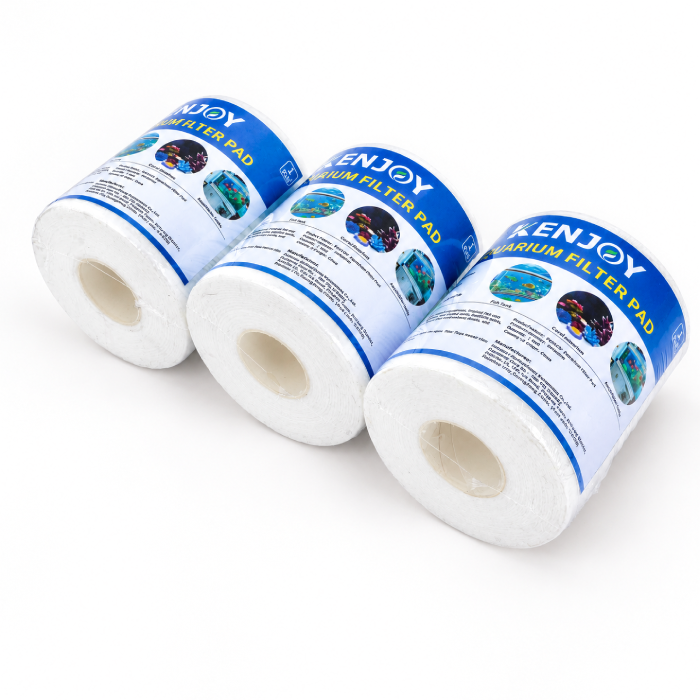
Packaging can affect the condition of filter fleece rolls during transportation, storage, and delivery. It also affects how buyers receive, store, and identify the products.
Confirm the following items during the RFQ stage.
Individual Roll Packaging
Specify whether each roll requires individual packaging and whether dust, moisture, or compression protection is needed. If the roll may deform under stacking or transportation pressure, discuss suitable protective packaging in advance.
Outer Cartons and Packing Configuration
State the planned number of rolls per carton, carton dimensions, or weight restrictions. If these requirements have not yet been established, explain any limitations related to warehousing, transportation, or sales channels so both parties can confirm a feasible packing arrangement.
Labels and Batch Identification
Specify whether labels must display the product name, specifications, roll length, batch number, customer part number, brand logo, or other traceability information. For OEM projects, confirm the approval process for label content, language, barcodes, and packaging artwork.
Order Quantity and Delivery Arrangements
Include the expected sample quantity, trial-order quantity, and anticipated bulk purchasing volume. If you have a target delivery date, partial-shipment requirements, or a preferred shipping method, state these details in advance.
Complete logistics information helps suppliers evaluate packaging and delivery arrangements and reduces the risk of discovering additional requirements after the quotation has been confirmed.
From RFQ to Bulk Production: How Should Specifications Be Confirmed?
A clear RFQ is more than a completed form. It establishes a shared basis for sample evaluation and subsequent orders.
Step 1: Submit the RFQ Information.
The buyer provides the application description, known material specifications, roll dimensions, equipment information, performance requirements, packaging preferences, and estimated order quantity. Any unresolved parameters should be marked as pending confirmation rather than guessed.
Step 2: The Supplier Reviews the Technical Information.
The supplier reviews the available information, identifies missing details, and confirms which parameters can be quoted directly and which require drawings, physical samples, or further discussion.
Step 3: Send Samples and Conduct Testing.
Samples are prepared according to the discussed specifications. The buyer should evaluate dimensions, installation, feeding performance, and other critical requirements using the intended equipment or agreed testing conditions.
Step 4: Approve the Final Specifications in Writing.
After sample approval, compile the final material requirements, dimensions, test methods, packaging and labeling details, and relevant documentation requirements into a specification version accepted by both parties. Do not rely solely on vague email descriptions or unconfirmed verbal agreements.
Step 5: Confirm the Order and Begin Bulk Production.
The purchase order should reference the approved specifications and sample, while clearly stating quantity, packaging, lead time, and other agreed requirements. Any subsequent changes to the material or specifications should follow a process confirmed by both parties.
For long-term purchasing projects, establish separate quality-control and acceptance requirements for production batches. The RFQ stage defines the purchasing requirements; the production stage verifies whether delivered products continue to meet the approved requirements.
A Ready-to-Use RFQ Checklist for Aquarium Filter Fleece Rolls
The following template can be used when requesting a quotation from a filter fleece manufacturer. If some details are not yet available, enter “To Be Confirmed” and attach existing samples or equipment information.
RFQ Item | Buyer Information |
Company name and contact | |
Product application | Automatic roller filter / aquarium filtration equipment / Other |
Equipment brand and model | |
Target material | PET polyester / Specified fiber blend / Supplier evaluation required |
Manufacturing process | Specified process / Options may be evaluated |
Target GSM | |
Target thickness | |
Roll width | |
Roll length | |
Core inner diameter | |
Maximum roll outer diameter | |
Winding and feed direction | |
Water-flow or filtration requirements | |
Particle-retention requirements and test method | |
Fiber-shedding inspection requirements | |
Water-contact requirements and required documents | |
Sample quantity and testing arrangements | |
Individual roll packaging and carton requirements | |
Label, customer part number, or branding requirements | |
Expected sample quantity | |
Expected trial-order and bulk quantities | |
Target delivery date | |
Other special requirements |
Before submitting the RFQ, attach any materials that can help the supplier understand the project, such as photos of the existing roll, a physical sample, equipment installation drawings, technical specifications, or relevant test records.
If some technical parameters are not yet established, you do not need to delay all communication. Clearly separate known requirements, items awaiting confirmation, and non-negotiable equipment limitations. This usually makes it easier for the supplier to determine what information is needed next.
What If Some Specifications Are Still Unknown Before Requesting a Quote?
Not every buyer has a complete material specification sheet. For projects involving new equipment or replacement materials, you can begin by providing three categories of information.
First, explain the intended application, including the equipment type, roll installation position, operating method, and intended use.
Second, provide available reference materials, such as the equipment model, installation photos, drawings, existing material, or a previously validated sample. If no existing material is available, provide the technical requirements supplied by the equipment manufacturer.
Third, distinguish mandatory requirements from parameters that can be evaluated. For example, roll width may be restricted by the equipment design, while GSM, thickness, or manufacturing process may need to be confirmed through sample testing.
As a customized nonwoven materials manufacturer, HuiZhou JinHaoCheng Nonwovens Co., Ltd. can discuss material structure, roll specifications, and OEM/ODM customization requirements based on project information. Parameters that have not yet been established should be confirmed through technical discussions and sample evaluation rather than through unsupported performance commitments.
Conclusion
An effective custom aquarium filter media RFQ should clearly explain the material application, target specifications, equipment limitations, performance verification, packaging requirements, and purchasing plan.
Buyers do not need to resolve every technical question before requesting a quotation. However, they should provide available equipment information, reference samples, and clear acceptance requirements, while identifying parameters that still need confirmation.
When RFQ information, sample testing, and final approved specifications remain aligned, buyers and suppliers can reduce repeated clarification, lower the risk of sample mismatch, and establish a clearer technical basis for OEM customization and consistent bulk purchasing.




