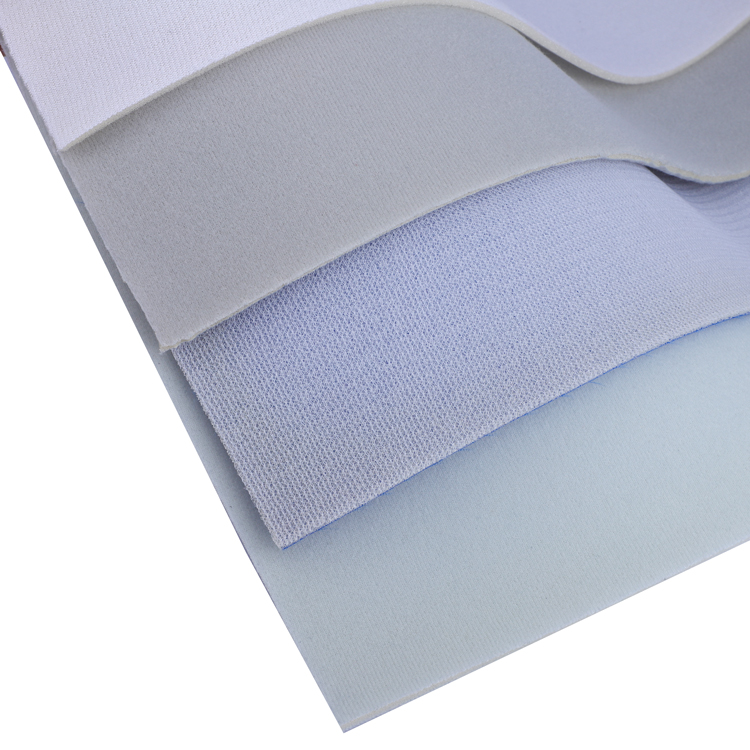
Your Laminated Nonwoven Fabric RFQ Checklist: What Suppliers Need Before Quoting
When overseas buyers request quotations from Chinese laminated nonwoven fabric manufacturers, they often face a common problem: they know they need laminated nonwoven fabric, but they are not sure what technical information to provide.
Some RFQs only include the product name and a general application. Others specify GSM and width but do not explain the base material or laminated layers. Some buyers already have complete product drawings but have not clearly defined the functions the material needs to perform.
These information gaps can affect how suppliers evaluate a project. Different manufacturers may make different assumptions about the material structure, resulting in quotations based on different specifications. Even if buyers receive several quotations, the prices may not be directly comparable.
An effective RFQ (Request for Quotation) does not necessarily need to contain every technical detail. However, it should give suppliers a clear understanding of the final application, basic material structure, key specifications, estimated order quantity, and sample requirements.
For customized laminated nonwoven fabric, it is useful to divide RFQ information into three categories: information that should be provided before quotation, recommended information that improves quotation accuracy, and testing or compliance documents required only for specific applications.
This approach helps reduce repeated communication without delaying the initial quotation simply because some technical parameters have not yet been finalized.
Why Should a Laminated Nonwoven Fabric RFQ Start with the Final Application?
Before defining material specifications, buyers should explain what the laminated nonwoven fabric will be used to manufacture and what function the material needs to perform in the finished product.
This is important because the same laminated structure may be used in different products, while different applications may require completely different material combinations.
For example, laminated materials used for surface protection may require greater attention to waterproofing, abrasion resistance, and roll-processing performance. Materials used in insulation structures may place more emphasis on the overall structure, thickness, and insulation-related requirements. Materials used for packaging or industrial protection may focus more on barrier properties, support, or surface protection.
If buyers simply tell a supplier that they need “waterproof laminated nonwoven fabric,” the supplier still cannot determine the required film type, nonwoven substrate, or specific laminated structure.
Therefore, buyers should provide the following information in their RFQs:
Information | Recommended Details |
Final product | What finished product or component will use the laminated material? |
Application location | Indoor, outdoor, inside equipment, building structures, or other locations |
Working environment | Exposure to water, moisture, oil, high temperatures, friction, or other environmental factors |
Processing methods | Whether the material will undergo cutting, die cutting, sewing, heat pressing, forming, or other processes |
Main functions | Waterproofing, breathability, insulation, cushioning, absorbency, reinforcement, or surface protection |
Buyers do not need to prepare a complicated product development report for an initial inquiry. Clearly explaining the finished product, working environment, and most important functions is already enough to help suppliers narrow down the material options.
If buyers have not selected a specific material yet, they can also provide finished product photos, technical drawings, or samples of existing materials to help suppliers understand the actual application.
What Basic Technical Information Should Be Provided Before Requesting a Quotation?
Not every RFQ needs complete laboratory data. However, the following information is usually an important starting point for suppliers to evaluate project feasibility, prepare an initial quotation, and discuss a sample proposal.
Base Material, Fiber Composition, and Nonwoven Structure
First, buyers should identify the base material used in the laminated product.
If the material has already been selected, provide its type, such as PET, PP, or another material, together with the fiber composition and nonwoven structure.
Nonwoven materials may be produced through needle punching, thermal bonding, or other processes. Different structures may have different thickness, softness, strength, surface characteristics, and processing performance.
If buyers already have an existing material specification sheet, they should provide the specific material information instead of simply writing “nonwoven fabric.”
If they do not know which type of nonwoven fabric is suitable, there is no need to guess. They can first explain the required functions, product application, and existing material details so that the supplier can discuss possible base material options.
Laminated Layer Materials, Number of Layers, and Layer Sequence
A laminated material cannot be adequately described by its product name alone.
Suppliers need to know what material is laminated to the nonwoven fabric and what role each layer plays in the overall structure.
Common laminated materials may include PE film, PP film, PET film, breathable membrane, aluminum foil, kraft paper, PVC film, foam, textile materials, or other compatible materials.
For example, the following two structures are not the same product:
Nonwoven fabric + PE film
Nonwoven fabric + foam + fabric
For multilayer laminated materials, buyers should also specify the sequence of the layers. This can be explained through a simple written description, a structural diagram, or a product cross-section drawing.
If buyers only know that the finished product needs waterproofing, cushioning, or insulation but have not selected the specific laminated layers, they can explain the functional requirements and indicate that the material structure needs to be evaluated by the supplier.
Lamination Method and Single-Sided or Double-Sided Requirements
If buyers already know the required lamination method, they should specify it in the RFQ.
For example, a project may involve adhesive lamination, hot-melt lamination, thermal lamination, film lamination, or another suitable method. The actual process needs to be confirmed according to substrate compatibility, laminated layer materials, and product requirements.
Buyers should also specify which side of the material needs to be laminated.
Is the film laminated to one side of the nonwoven fabric, or are both sides laminated? Does the product require three or more layers? Are specific materials required for the surface and backing layers?
If buyers have not selected a lamination method, they should not choose a process arbitrarily just to complete the RFQ. Instead, they can provide the target structure and functional requirements for the supplier to evaluate a feasible solution.
Estimated Order Quantity and Supply Format
Order quantity affects how suppliers evaluate materials, production arrangements, and quotation conditions.
Therefore, RFQs should include the estimated sample quantity, initial order quantity, and expected future purchasing volume whenever possible.
If the product is supplied in rolls, buyers should also specify whether they need full-width rolls, rolls slit to specified widths, or converted sheet materials.
If buyers currently only need samples, they should clarify whether the samples are intended for material evaluation, product development, or validation before mass production.
Avoid using vague descriptions such as “large quantity” or “regular orders.” If the quantity has not yet been finalized, provide an estimated range and indicate that the final quantity is still to be confirmed.
Which Specifications Can Make a Quotation More Accurate?
Basic information helps suppliers understand the project, but more detailed material specifications are usually needed to prepare a more specific quotation.
The following parameters are not necessarily mandatory for every project. Buyers should provide confirmed values where available and clearly indicate which specifications still need discussion.
GSM, Thickness, and Allowable Tolerances
GSM refers to the weight per unit area, usually expressed in g/m². Thickness should be specified with its measurement unit and relevant requirements.
For laminated materials, buyers should pay particular attention to the difference between the basis weight of an individual layer and the total basis weight of the finished laminated product.
If a technical specification only states the GSM of the base material without clarifying whether a total GSM requirement applies to the finished laminated product, suppliers may make different assumptions when preparing quotations.
Thickness should also be identified as either the total thickness of the finished laminated material or the thickness of a specific layer.
If the product requires dimensional consistency, buyers should also provide allowable tolerances. These may include the target thickness, acceptable range, and whether variations between production batches need to be controlled.
If buyers have not determined the appropriate GSM or thickness, they can provide an existing material sample and explain the final application so that the supplier can help evaluate suitable specifications rather than entering an arbitrary value.
Roll Width, Length, Diameter, and Core Requirements
If buyers are purchasing laminated nonwoven rolls, roll specifications should also be clearly defined whenever possible.
For width, specify whether the requirement refers to the finished roll width or the material width before further processing.
For roll length, state how many meters are required per roll. If several roll lengths are acceptable, buyers can provide an acceptable range.
For buyers using automatic unwinding or continuous processing equipment, the maximum roll diameter, core inner diameter, and core material should also be confirmed.
These details are not mandatory for every purchasing project. For example, if buyers have no equipment limitations or special storage requirements, they may not need to specify the roll diameter during the initial inquiry.
However, if the rolls must fit existing equipment, core dimensions and maximum roll diameter may become important factors affecting whether the material can be used properly.
Color, Appearance, and Surface Finish
If the product has appearance requirements, buyers should explain the required color, surface finish, and whether printing or other treatments are needed.
For example, does the product require a specific color? Is a matte finish or another surface effect required? Is noticeable color variation acceptable? Does the material need printed patterns or brand logos?
If an accurate color standard is available, buyers can provide the corresponding color code or a reference sample. If they only want a color similar to a picture, the image should be treated as a reference rather than using the color displayed on a screen as the final acceptance standard.
For products with appearance requirements, buyers should also explain which surface defects are unacceptable and whether a reference sample needs to be approved by both parties.
Which Functional Tests and Compliance Documents Are Only Needed for Specific Applications?
Not every laminated nonwoven fabric needs waterproof, breathable, insulation, flame-retardant, or peel strength testing.
Whether these tests are required should depend on the final product application and the buyer's actual quality requirements.
If a product has specific performance targets, the RFQ should explain which functions need to be verified and, whenever possible, provide the corresponding test methods or acceptance criteria.
Waterproofing and Liquid Barrier Requirements
If the laminated material is used for waterproofing or liquid barrier applications, buyers should explain the type of liquid involved, the working environment, and the expected performance.
Simply writing “waterproof” is not enough to establish a complete technical requirement.
Depending on the product application, buyers may need to clarify whether the material must resist surface water penetration, prevent liquid from passing through, or meet a specified hydrostatic pressure or other testing requirement.
Different film materials and laminated structures may have different barrier properties. The final waterproof performance cannot be guaranteed based on the material name alone.
Breathability and Water Vapor Transmission Requirements
If the material needs to be breathable, buyers should clarify whether they require air permeability or water vapor transmission.
These are not the same properties and should not both be described simply as “breathability.”
If buyers have a specified air permeability rate, water vapor transmission rate, or testing standard, they should provide the relevant values and testing conditions.
If no specific value has been established, buyers can explain the working environment and actual requirements so that the supplier can discuss suitable material options.
Insulation, Flame Retardancy, and Other Special Properties
If the product is intended for insulation, fire protection, or another specialized application, buyers should explain the specific performance requirements.
For example, insulation-related requirements need to be evaluated according to the actual structure and working environment. For flame-retardant materials, the applicable test standard, rating, or customer-specific requirement should be clearly identified.
If the product is intended for automotive, medical, food-contact, or other applications subject to regulations or customer specifications, buyers should also provide the applicable compliance requirements and required documentation.
Simply writing “flame retardant” or “medical grade” does not mean that a supplier can automatically provide materials meeting every market or industry standard.
Bonding Strength and Lamination Integrity
If the laminated material may be exposed to pulling, bending, or peeling forces during further processing or actual use, buyers can consider including interlayer bonding performance as a verification item.
Whenever possible, buyers should provide the specified peel test method, target value, specimen requirements, and acceptance conditions.
If no specific testing standard or target value has been established, buyers can first explain the actual application and then discuss a suitable sample validation plan with the supplier.
Different laminated structures may not be suitable for the same peel test method. Therefore, peel strength values from other materials should not be directly applied as universal requirements.
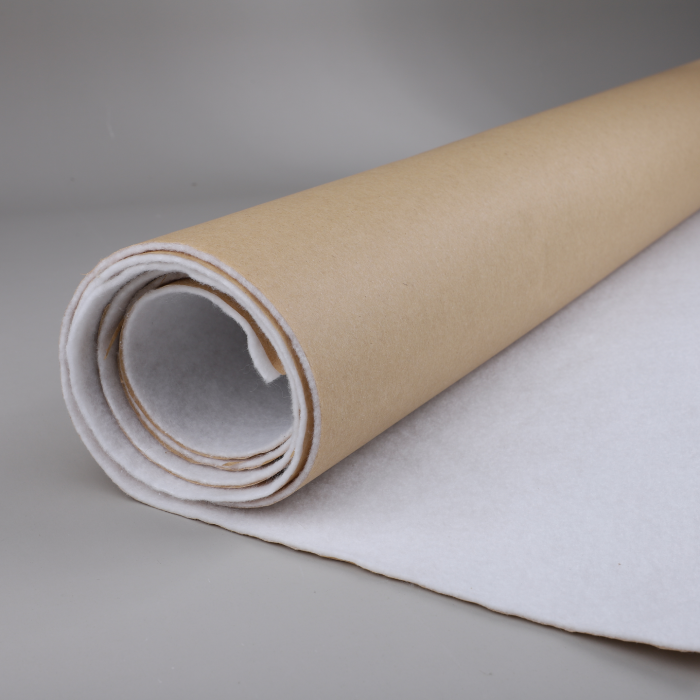
What Should Buyers Provide If They Do Not Have Complete Technical Specifications?
Not every overseas buyer has a complete material specification sheet.
For new product development, material replacement, or OEM projects, buyers may only know the final product application or have a sample of an existing material.
This does not mean that the quotation process cannot begin.
If specific parameters are missing, the following materials can help suppliers understand the project.
Reference Material | What It Helps Suppliers Confirm |
Existing material sample | Material structure, hand feel, thickness, appearance, and preliminary specification references |
Product drawing | Finished product dimensions, material location, and processing requirements |
Product photos | Finished product appearance, application scenario, and structural reference |
Material specification sheet | Confirmed fiber composition, GSM, thickness, width, and performance requirements |
Structural diagram | Material layers, layer sequence, and single-sided or double-sided lamination requirements |
Competitor or reference product | Appearance and application performance of the target product |
It is important to understand that a reference sample does not automatically mean that all technical specifications have been confirmed by both parties.
For example, a sample can help evaluate the material's hand feel and structure. However, without measurement and confirmation, its exact GSM, thickness, or peel strength cannot be determined simply by touch.
If buyers provide a material sample from an existing supplier, they should also explain which characteristics must remain consistent and which aspects can be adjusted.
For customized projects, suppliers should identify the parameters that are still missing based on the information provided and confirm them with buyers before finalizing the sample specifications.
How Should Sample Requirements Be Included in an RFQ?
Samples are an important step in moving from initial technical discussions to product validation.
Instead of simply writing “Please send samples,” buyers should explain what the samples will be used for.
For example, are the samples intended for an initial check of material appearance and hand feel, or will they be used for further cutting, processing, assembly, or performance testing?
If the sample requirements have already been determined, buyers can specify the sample dimensions, quantity, material structure, and items that need to be verified in the RFQ.
If the samples will undergo internal customer testing or third-party testing, these requirements should also be explained in advance so that the sample specifications can be checked for suitability.
Before sample approval, both parties should record the final material structure, key specifications, testing requirements, and sample version.
If the material structure, thickness, lamination method, or other important parameters need to be changed later, the revised sample should be checked again to confirm whether it still meets the original product requirements.
The purpose of a sample is not only to let buyers see the physical material. More importantly, it confirms that both parties have the same understanding of the final material specifications and provides a reference for subsequent bulk purchasing.
How Can Buyers Check Whether an RFQ Specification Is Complete Before Sending It?
Before contacting suppliers, buyers can review their RFQ documents to identify missing or inconsistent information.
Pay particular attention to the following points.
Is the Material Structure Clearly Defined?
Have the base material, laminated layers, number of layers, and layer sequence been specified? If some parts of the structure are not yet confirmed, have they been clearly marked for supplier evaluation?
Do the Parameters Refer to the Same Finished Product?
Does GSM and thickness refer to an individual layer or the finished laminated material? Do width and roll length refer to the finished roll or the material before processing? These details should not be open to different interpretations.
Can the Functional Requirements Be Verified?
If waterproofing, breathability, flame retardancy, or peel strength is required, have the corresponding test methods, target values, or acceptance criteria been specified? If these details are not yet confirmed, they should be marked for further discussion rather than written as finalized acceptance standards.
Are the Order Quantity and Supply Format Clear?
Have the sample requirements, initial order quantity, and estimated future purchasing volume been provided? Has the buyer specified whether the material is required in rolls, sheets, or another supply format?
Are There Any Special Packaging and Labeling Requirements?
Does the buyer require moisture-resistant packaging, individual roll packaging, cartons, pallets, product labels, barcodes, or customer branding? If there are no special requirements, a standard packaging solution can be discussed and confirmed by both parties.
Are All Reference Documents Using the Same Version?
If drawings, specification sheets, and sample photos are provided, their file names, versions, or dates should be identified whenever possible. This helps prevent suppliers from quoting according to outdated documents when the actual requirements have already changed.
Laminated Nonwoven Fabric RFQ Information Checklist
The following table can be used as a reference when preparing an initial inquiry. Not every item needs to be completed for every project. Information that has not yet been determined can be marked as “To Be Confirmed” or “Supplier Recommendation Required.”
Information Category | Recommended Details | Importance |
Final application | Finished product, application location, and working environment | Essential |
Base material | Nonwoven type, fiber composition, and structure (if known) | Essential or to be confirmed |
Laminated layers | Film, paper, aluminum foil, foam, or other materials | Essential or to be confirmed |
Number of layers and structure | Single-layer, double-layer, multilayer, and layer sequence | Essential or to be confirmed |
Lamination method | Adhesive, hot-melt, thermal lamination, etc. (if known) | Recommended |
Laminated sides | Single-sided, double-sided, or specified interlayer lamination | Essential |
GSM | Target basis weight and allowable tolerance | Recommended |
Thickness | Finished material thickness and allowable tolerance | Recommended |
Roll dimensions | Width, length, roll diameter, and core | Provide according to supply format |
Appearance | Color, surface finish, and printing requirements | Provide according to product requirements |
Functions | Waterproofing, breathability, insulation, flame retardancy, absorbency, etc. | Provide according to application |
Testing requirements | Test methods, target values, standards, and report requirements | Required for specific applications |
Order quantity | Sample quantity, initial order quantity, and estimated annual demand | Essential |
Packaging | Individual roll packaging, cartons, pallets, labels, etc. | Recommended |
Reference materials | Samples, drawings, photos, and existing specification sheets | Provide if available |
Delivery requirements | Destination, trade terms, and estimated purchasing schedule | Provide during quotation |
An effective RFQ is not defined by how many fields are completed. What matters is whether the key parameters are clear and whether any unconfirmed information has been explicitly identified.
Frequently Asked Questions
Can Buyers Request a Quotation Without Knowing the GSM and Thickness of Laminated Nonwoven Fabric?
Yes. Buyers can first explain the final product application, working environment, and required functions. They can also provide existing material samples, product photos, or drawings. Suppliers can discuss possible material structures and specifications based on the available information, but the final parameters still need to be confirmed through technical discussions and sample evaluation.
Must Buyers Specify the Lamination Method in an RFQ?
Not necessarily. If buyers already have a specified production process or existing material structure, they should provide it whenever possible. If the method has not yet been determined, they can explain the target functions and material combination so that suppliers can evaluate suitable lamination methods. Buyers should not specify a process arbitrarily just to complete the document.
Must Buyers Provide Complete Test Reports When Requesting a Quotation for Laminated Nonwoven Fabric?
No. Ordinary purchasing projects do not necessarily require complete test reports at the initial quotation stage. Relevant testing requirements and documents are only needed when the product has specific performance requirements, industry regulations, or customer-designated standards. Buyers should distinguish between the performance targets a product needs to meet and test reports that have already been completed.
Why Can Different Suppliers Provide Different Quotations for the Same RFQ?
If suppliers have different interpretations of the material structure, base material, laminated layers, process, GSM, thickness, tolerances, or packaging requirements, they may prepare quotations based on different assumptions. Buyers should clarify key specifications whenever possible and ask suppliers to state the material structure and any unconfirmed details used as the basis for their quotations. This helps avoid comparing prices alone without considering the actual specifications.
What If Buyers Only Have an Existing Laminated Material Sample but No Drawings?
They can provide the reference sample together with the finished product application, working environment, characteristics that need to be maintained, and any areas that may be adjusted. The sample can be used as a preliminary evaluation reference, but the exact material composition, GSM, thickness, and functional specifications still need to be confirmed according to the actual requirements. These details cannot be reliably determined from appearance alone.
Must Buyers Confirm MOQ and Lead Time When Requesting a Quotation?
Buyers can provide their estimated order quantity and preferred delivery schedule in the RFQ. However, the MOQ and actual lead time should be confirmed by the supplier according to the material structure, specifications, order quantity, and production arrangements. Unconfirmed quantities or delivery schedules should not be treated as conditions already agreed upon by both parties.
Conclusion
Preparing an RFQ specification for laminated nonwoven fabric does not mean that buyers must understand every material and manufacturing process before contacting a factory. The purpose is to communicate confirmed requirements clearly and identify the information that still needs to be discussed with the supplier.
The most important information usually includes the final product application, base material, laminated layers, number of layers, key specifications, order quantity, and sample requirements. For specialized applications, buyers can add waterproofing, breathability, insulation, flame retardancy, bonding strength, or compliance testing requirements according to their actual needs.
If drawings, samples, or existing material specification sheets are available, they should be provided whenever possible. For GSM, thickness, or lamination methods that have not yet been determined, buyers can start the discussion with the final application and target functions.
For overseas buyers looking for a custom laminated nonwoven fabric manufacturer, an RFQ with clear structure and accurate information helps suppliers understand the project more effectively. It also allows quotations from different suppliers to be based on more consistent technical requirements, reducing unnecessary communication during sample approval and bulk purchasing.